Close
Back


From now on you can download videos from our website
If you would also like to subscribe to the newsletter and receive our latest updates, click on the button below.
Enter the email address you registered with and we will send you a code to reset your password.
The password must be at least 12 characters long, no spaces, include upper/lowercase letters, numbers and symbols.
Click the button to return to the page you were on and log in with your new password.
Updated: 30 April 2026
NATO has a long-standing commitment to arms control, disarmament and non-proliferation, including the full implementation of the Treaty on the Non-Proliferation of Nuclear Weapons (NPT). Allies’ efforts in this area aim to reduce risk and enhance security, contributing to strategic stability while ensuring that the Alliance can meet its collective defence obligations and carry out the full range of its operations, missions and other activities.
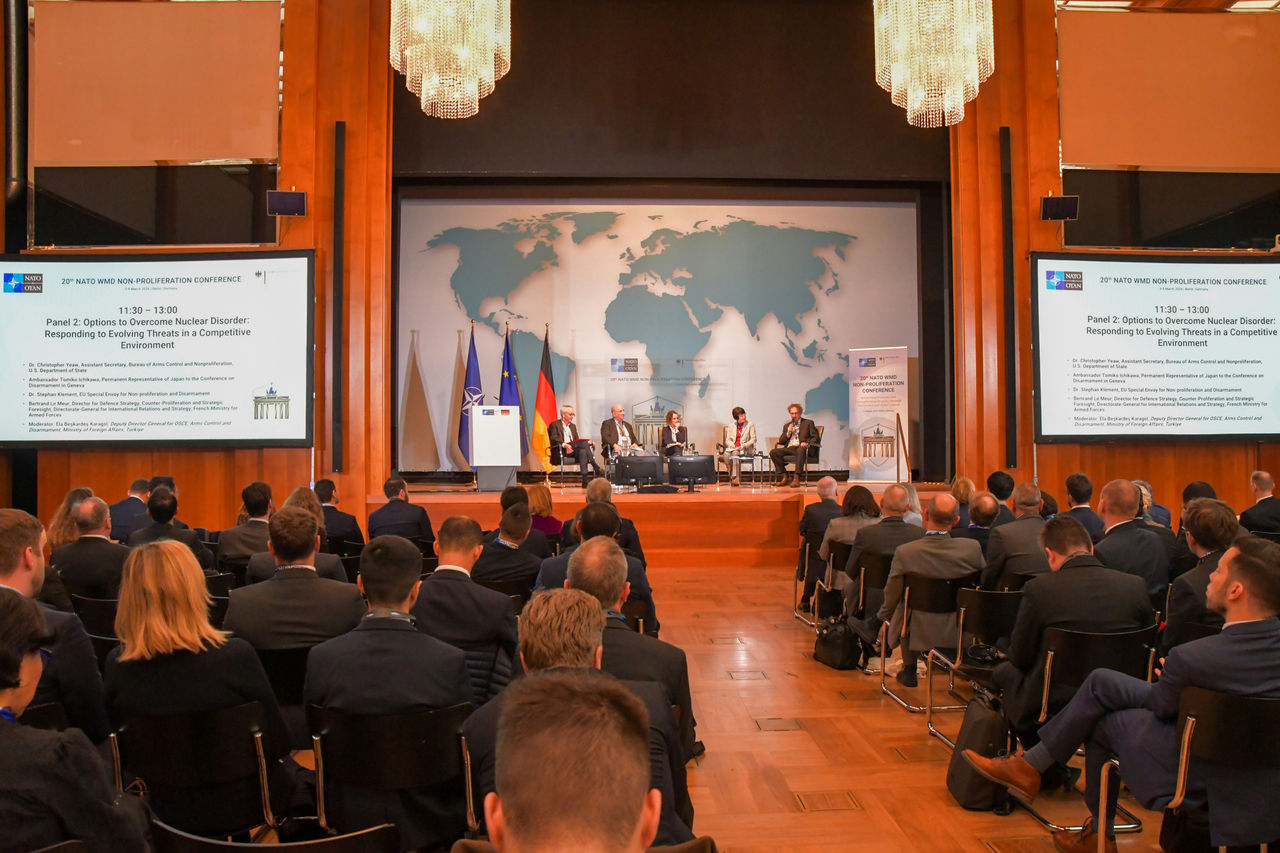
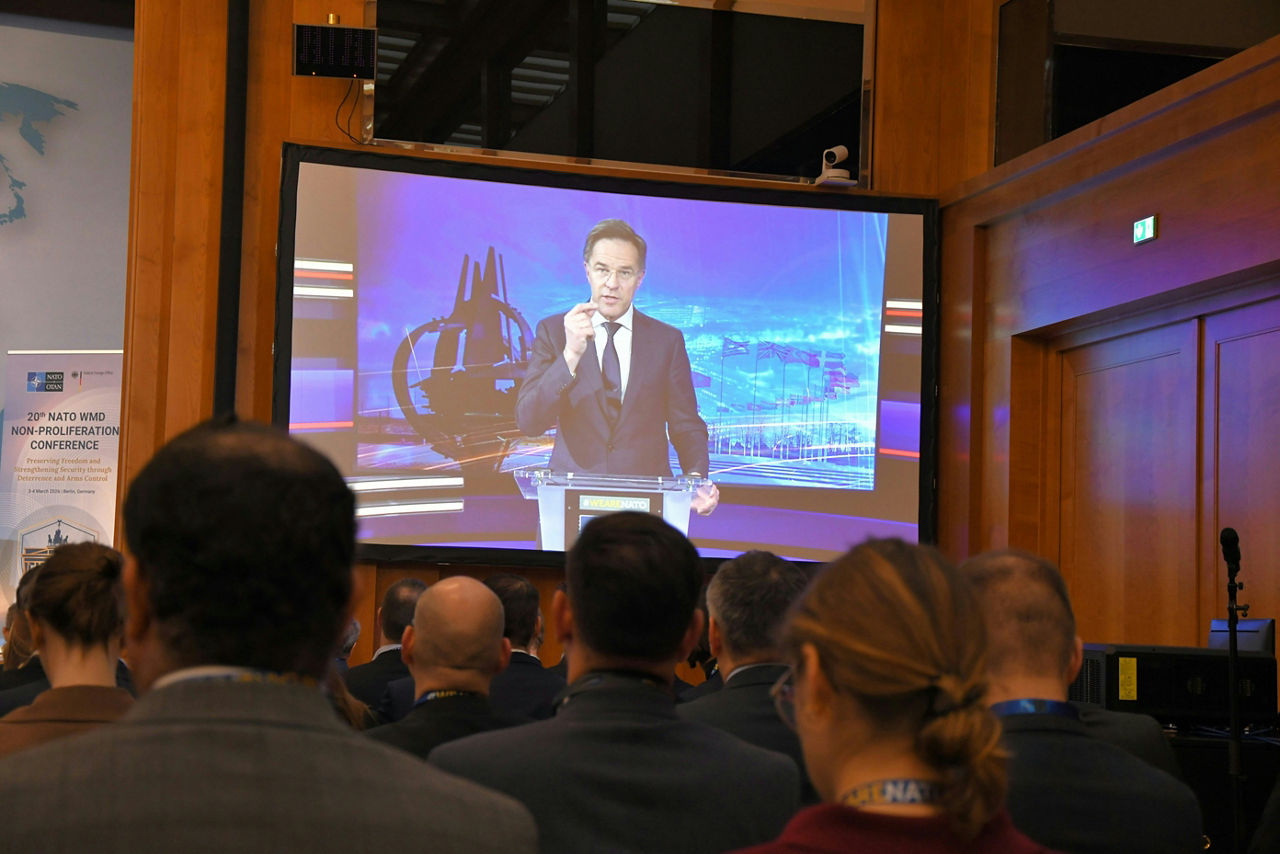
NATO promotes international cooperation on arms control through an annual WMD Non-Proliferation Conference. The 20th edition was held in Berlin, Germany on 3-4 March 2026.
While often used together, the terms arms control, disarmament and non-proliferation do not mean the same thing.
Arms control is the broadest of the three terms and generally refers to mutually agreed upon restraints or controls (usually between states) on the development, production, stockpiling, proliferation, deployment and use of troops, small arms, conventional weapons and weapons of mass destruction (including chemical, biological, radiological and nuclear weapons). Arms control includes agreements that increase the transparency of military capabilities and activities, with the intention of reducing the risk of misinterpretation or miscalculation.
Disarmament refers to the act of eliminating or abolishing weapons (particularly offensive arms) either unilaterally or reciprocally. It may refer either to reducing the number of arms, or to eliminating entire categories of weapons.
Non-proliferation refers to all efforts to prevent the development and spread of weapons, or should this occur, to reverse it by any other means than the use of military force. Non-proliferation applies to both weapons of mass destruction and conventional capabilities such as missiles and small arms.
WMD proliferation refers to attempts by state or non-state actors to develop, acquire, manufacture, possess, transport or transfer chemical, biological, radiological or nuclear (CBRN) weapons or devices and their means of delivery or related material, including precursors, without prejudice to the rights and obligations of the States Parties to the following agreements: the Treaty on the Non-Proliferation of Nuclear Weapons, or Nuclear Non-Proliferation Treaty (NPT); the Convention on the Prohibition of the Development, Production, Stockpiling and Use of Chemical Weapons and on their Destruction, or Chemical Weapons Convention (CWC) and the Convention on the Prohibition of the Development, Production and Stockpiling of Bacteriological (Biological) and Toxin Weapons and on their Destruction, or Biological Weapons Convention (BWC).
NATO's policies support consultations and practical cooperation in a wide range of areas, including:
The proliferation of weapons of mass destruction (WMD) – including chemical, biological, radiological and nuclear (CBRN) weapons – is one of the greatest threats to global security. NATO Allies work to prevent the proliferation of WMD by state and non-state actors through an active political agenda of arms control, disarmament and non-proliferation. These efforts complement and reinforce NATO's deterrence and defence, and contribute to broader strategic stability.
In addition to the role that Allies play, NATO itself also contributes through its engagement with partner countries and other international organisations. NATO's partnership programmes provide effective frameworks for dialogue, consultation and coordination, contributing to NATO's arms control, disarmament and non-proliferation efforts. Of particular importance is the outreach to and cooperation with the United Nations (UN), the European Union (EU) and other organisations and multilateral initiatives that address WMD proliferation.
Learn more: Weapons of mass destruction
NATO Allies support the ultimate goal of a world without nuclear weapons. However, as long as nuclear weapons exist, NATO will remain a nuclear alliance.
NATO has reduced the number of nuclear weapons stationed in Europe by more than 90 per cent since the height of the Cold War. Allies remain committed to creating the conditions for further reductions in the future on the basis of reciprocity, recognising that progress on arms control and disarmament must take into account the prevailing international security environment.
All NATO Allies are States Parties to the Nuclear Non-Proliferation Treaty (NPT), which entered into force in 1970. The NPT is the cornerstone of international efforts to prevent the spread of nuclear weapons and weapons technology, and to achieve the goal of nuclear disarmament. It provides a legal framework for the nuclear-weapon states to give security assurances against the use of nuclear weapons to non-nuclear-weapon states that are Parties to the Treaty. It also provides a balanced, step-by-step framework for nuclear disarmament and is forged on three mutually reinforcing pillars: non-proliferation (Art. I, II), nuclear disarmament (Art. VI) and the peaceful uses of nuclear energy, science and technology (Art. IV). The NPT represents the only binding commitment in a multilateral treaty, including both nuclear-weapons possessor states and non-possessor states, to the goal of nuclear disarmament.
NATO Allies have repeatedly reaffirmed their commitment to the NPT. Most recently, on 20 April 2026, the North Atlantic Council (NAC) issued a statement ahead of the NPT’s 11th Review Conference in which Allies underlined their strong commitment to the full implementation of the NPT, describing it as “an essential cornerstone of the global non-proliferation and disarmament architecture”, and “the framework for international cooperation in sharing the benefits of the peaceful uses of nuclear energy, science and technology”. In the 2022 Strategic Concept – NATO’s core policy document – Allies underscored their strong commitment to the NPT as the essential bulwark against the spread of nuclear weapons and their support for its full implementation, including Article VI. On the 50th anniversary of the NPT’s entry into force (5 March 2020), the NAC issued a statement confirming Allies’ support for the NPT and affirming that there is no credible alternative to this treaty.
NATO does not support the Treaty on the Prohibition of Nuclear Weapons (or Ban Treaty), which is at odds with the existing non-proliferation and disarmament architecture, is inconsistent with the Alliance's collective defence commitments, and will not enhance any country's security. Unlike the NPT, the Ban Treaty lacks a verification mechanism and risks undermining the NPT, which has been at the heart of global non-proliferation and disarmament efforts for more than 50 years, and the International Atomic Energy Agency's Safeguards regime that supports it.
NATO Allies were strongly in favour of preserving the Intermediate-Range Nuclear Forces (INF) Treaty. However, despite years of US and Allied engagement, Russia continued to violate the Treaty by developing and deploying the SSC-8/9M729 missile system, ultimately leading to the United States’ withdrawal from the Treaty on 2 August 2019. Allies agree that Russia bears sole responsibility for the demise of the Treaty.
On 3 February 2021, the United States and Russia agreed on a five-year extension of the New Strategic Arms Reduction Treaty (New START), with a North Atlantic Council statement expressing its full support to the extension. On 3 February 2023, the North Atlantic Council released a further statement noting with concern that Russia had failed to comply with legally binding obligations under the New START Treaty. NATO Allies called on Russia to fulfil its obligations under the Treaty by facilitating New START inspections on Russian territory and by returning to participation in the Treaty’s implementation body, the Bilateral Consultative Committee. The New START Treaty expired on 5 February 2026, with the United States announcing its intention to put in place a new framework to meet today’s context and challenges.
Since its entry into force in 1997, the Chemical Weapons Convention has become one of the pillars of the global non-proliferation regime. The Convention prohibits the development, transfer and use of chemical weapons. States Parties to the Convention include all NATO member countries. They commit not to develop, produce or acquire, stockpile or retain chemical weapons, nor to transfer, directly or indirectly, chemical weapons to anyone. States Parties also undertake not to engage in any military preparations to use chemical weapons, nor to commit to assist, encourage or induce anyone to engage in prohibited activity.
NATO considers any use of chemical weapons by state or non-state actors to be a threat to international peace and security.
All NATO Allies are States Parties to the Biological Weapons Convention (BWC) and fully abide by its prohibitions on the development, production, acquisition, transfer, stockpiling and use of biological and toxin weapons. Allies are committed to strengthening the implementation of the BWC as a cornerstone of the international regime against WMD proliferation.
Myth
NATO does not support the objective of nuclear disarmament.
Fact
NATO Allies have a long track record of doing their part on arms control and disarmament, including in the nuclear domain. NATO has reduced the number of nuclear weapons stationed in Europe by 90 per cent since the height of the Cold War.
The North Atlantic Council’s statement on the Nuclear Non-Proliferation Treaty of 20 April 2026 expressed Allies’ continued support to all the objectives of the Treaty, including Article VI, with a view towards worldwide verifiable elimination of nuclear weapons, based on the principle of undiminished security for all.
Even in a challenging security environment, Allies continue to support the measures that can foster the cooperation and confidence needed to advance nuclear disarmament as envisioned under Article VI of the NPT, including to verifiably eliminate nuclear testing across the globe, end the production of fissile materials for use in nuclear weapons, increase transparency by nuclear-weapon states, and reduce nuclear risks.
The United States has repeatedly affirmed its willingness to engage on nuclear arms control discussions with Russia and China without preconditions. So far, however, it has not received a positive response.
Myth
NATO’s nuclear sharing arrangements are contrary to the NPT.
Fact
NATO’s nuclear sharing arrangements have always been and continue to be fully consistent with the NPT.
The first US forward-deployed nuclear weapons arrived in Europe in 1954, well before the NPT entered into force in 1970, and NPT negotiations accounted for NATO’s nuclear posture, which was also well known when indefinite extension of the NPT was agreed in 1995. This has long been accepted by all States Party to the NPT, including by Russia until 2015. Articles I and II of the NPT prohibit the transfer of nuclear weapons. The treaty was negotiated to preclude any loophole that would provide for the proliferation or joint control of nuclear weapons through military alliances. As the United States retains full custody and control over its nuclear weapons forward-deployed in Europe, NATO’s nuclear sharing arrangements are in strict compliance with both articles. All NATO members have always adhered to their obligations under the NPT, and will continue to do so.
Myth
NATO uses its nuclear capability to escalate tensions with Russia.
Fact
NATO does not seek confrontation and poses no threat to Russia.
The fundamental purpose of NATO’s nuclear capability is to preserve peace, prevent coercion and deter aggression. Allies seek to reduce risk and prevent misunderstanding through their commitment to transparency. Allies regularly brief on national and NATO-led military exercises, including NATO’s annual nuclear exercise Steadfast Noon. Allies also regularly explain and report on their nuclear policies, doctrines, threat assessments and capabilities – both with the international community at large and in specific fora with China and Russia such as the five permanent members (P5) of the UN Security Council.
In contrast, Russia has increased its reliance on nuclear weapons systems and has continued to expand and diversify its nuclear arsenal, including by testing new systems and employing a suite of short- and intermediate-range dual-capable systems in its war against Ukraine. Russia has violated, selectively implemented and walked away from long-standing arms control obligations and commitments, and repeatedly uses irresponsible nuclear rhetoric and coercive nuclear signalling, including its announced stationing of nuclear weapons in Belarus.
Since the end of the Cold War, NATO Allies have contributed to a wide range of arms control activities that seek to reduce the proliferation of conventional weapons (i.e. non-chemical, biological, radiological and nuclear weapons). This includes confidence- and security-building measures (CSBMs) that increase transparency, enabling all parties to understand the scale and scope of other parties’ military forces and activities, and thereby reducing risks of miscalculation and unintentional conflict.
NATO supports conventional arms control efforts by assisting Allies in their implementation of three key international instruments: the Vienna Document 2011 on Confidence- and Security-Building Measures (VD11), the Conventional Armed Forces in Europe (CFE) Treaty and the Open Skies Treaty (OST). Russia’s withdrawal from the OST in 2021, its withdrawal from the CFE Treaty in 2023, and its non-adherence to VD11 (under the guise of the COVID-19 pandemic) have all eroded Euro-Atlantic security.
Learn more: Conventional arms control
Small arms and light weapons (SALW), anti-personnel mines and explosive remnants of war can persist in former conflict zones long after the end of hostilities, continuing to cause harm to people. To address this challenge, NATO Allies work with partners and other international organisations to support the full implementation of the UN Programme of Action to Prevent, Combat and Eradicate the Illicit Trade in SALW in All its Aspects. NATO also supports mine action activities across the globe.
NATO Trust Funds are used to assist partner countries with humanitarian demining activities, as well as the safe destruction of stocks of anti-personnel landmines, surplus munitions, unexploded ordnance and SALW, and assisting partner countries in the management and safe storage of SALW and their ammunition as a contribution to combatting their illicit diversion and traffic.
Learn more: Small arms and light weapons (SALW) and mine action (MA)
Active policies in arms control, disarmament and non-proliferation have been an inseparable part of NATO's contribution to security and stability since 1957, when Allies put forward the first NATO Disarmament Proposal in London and subsequently established regular meetings of disarmament experts at NATO Headquarters. These policies were most clearly articulated in the Harmel Report of 1967.
The December 1967 “Report of the Council on the Future Tasks of the Alliance”, also known as the Harmel Report, forms the basis for NATO's security policy. It outlined two objectives: (1) maintaining a sufficient military capacity to act as an effective and credible deterrent against aggression and other forms of pressure, and, on that basis, (2) seeking to improve East-West relations through dialogue. The Alliance's objectives in arms control are tied to the achievement of both aims. Deterrence and defence help to deter adversaries from starting wars; arms control and dialogue help sides find a common interest in avoiding conflict and war by limiting and constraining destabilising weapons and weapons systems. It is therefore important that deterrence and defence policies and arms control policies remain mutually reinforcing with the common goal of preventing war.
In May 1989, NATO adopted the Comprehensive Concept of Arms Control and Disarmament, which allowed the Alliance to move forward in the sphere of arms control. It addressed the role of arms control in East-West relations, the principles of Alliance security and a number of guiding principles and objectives governing Allied policy in the nuclear, conventional and chemical fields of arms control.
It clearly set out the interrelationships between arms control and defence policies and established the overall conceptual framework within which the Alliance sought progress in each area of its arms control agenda.
The NATO Deterrence and Defence Posture Review (DDPR), agreed at the Chicago Summit in May 2012, addresses issues of arms control, disarmament and non-proliferation. It underscores: “The Alliance is resolved to seek a safer world for all and to create the conditions for a world without nuclear weapons in accordance with the goals of the Nuclear Non-Proliferation Treaty, in a way that promotes international stability, and is based on the principle of undiminished security for all”. It also repeats that as long as nuclear weapons exist, NATO will remain a nuclear alliance.
NATO’s stance on nuclear deterrence has been laid out in the Alliance’s Strategic Concepts (NATO’s core policy documents) since 1949. NATO’s Strategic Concepts have evolved over the decades to reflect the security environment, providing strategic guidance on both nuclear policy and arms control efforts.
The most recent version, the 2022 Strategic Concept, continues this approach. With regard to nuclear weapons, it notes that:
"The fundamental purpose of NATO's nuclear capability is to preserve peace, prevent coercion and deter aggression. As long as nuclear weapons exist, NATO will remain a nuclear alliance. NATO's goal is a safer world for all; we seek to create the security environment for a world without nuclear weapons."
Regarding arms control, the Strategic Concept states that:
“Allies’ efforts on arms control, disarmament and non-proliferation aim to reduce risk and enhance security, transparency, verification, and compliance. We will pursue all elements of strategic risk reduction, including promoting confidence building and predictability through dialogue, increasing understanding, and establishing effective crisis management and prevention tools.”
Allied Leaders have reiterated their commitment to arms control, disarmament and non-proliferation since the first NATO summit in 1957. For instance, at the 2008 Bucharest Summit, they took note of a report on raising NATO's profile in the fields of arms control, disarmament and non-proliferation, and at the 2009 Strasbourg/Kehl Summit, they endorsed NATO's Comprehensive, Strategic-Level Policy for Preventing the Proliferation of Weapons of Mass Destruction and Defending against Chemical, Biological, Radiological and Nuclear Threats. In the 2016 Warsaw Summit Declaration, the Alliance reaffirmed its commitment to conventional arms control and emphasised the importance of full compliance with and implementation of arms control agreements to rebuild trust and confidence. In 2016, Allied Leaders also stated that Russia's unilateral military activity in and around Ukraine has undermined peace, security and stability across the region; they also stressed that Russia's selective implementation of agreements such as the Vienna Document and Open Skies Treaty and its long-standing non-implementation of the Conventional Armed Forces in Europe (CFE) Treaty have eroded the positive contributions of these arms control instruments. At Warsaw, NATO also continued to call on Russia to preserve the viability of the Intermediate-Range Nuclear Forces (INF) Treaty and condemned the Democratic People's Republic of Korea (DPRK) for its multiple ballistic missile tests and its nuclear tests, calling on the DPRK to immediately cease and abandon all its existing nuclear and ballistic missile activities in a complete, verifiable and irreversible manner and re-engage in international talks.
At the Brussels Summit in July 2018, Allies expressed their position that the INF Treaty had been crucial to Euro-Atlantic security. They also underlined the importance of effective multilateralism and international cooperation, including through the Chemical Weapons Convention and the Organisation for the Prohibition of Chemical Weapons (OPCW), in addressing WMD threats. In that spirit, NATO welcomed the decision by the June 2018 OPCW Conference of States Parties, in particular to ask the independent experts of the OPCW Technical Secretariat to put in place arrangements to identify the perpetrators of the use of chemical weapons in Syria. Allies demanded that all perpetrators of chemical weapons attacks worldwide be held accountable and called upon all countries to join the International Partnership against Impunity for the Use of Chemical Weapons.
At the 2021 Brussels Summit in June, Allies welcomed talks between the United States and Russia on future arms control measures, and fully supported their agreement to extend the New START Treaty for five years. However, Allies regretted that the conditions for achieving disarmament had not been realised since the 2018 Brussels Summit. Following the termination of the Intermediate-range Nuclear Forces (INF) Treaty, Allies stated they would continue to respond in a measured and responsible way to the significant risks posed by the Russian 9M729 missile and other short- and intermediate-range missiles. They reiterated their support for the Treaty on the Non-Proliferation of Nuclear Weapons (NPT) as the essential bulwark against the spread of nuclear weapons, and their opposition to the Treaty on the Prohibition of Nuclear Weapons. They also condemned the repeated use of chemical weapons and welcomed the decision by the April 2021 Conference of the States Parties of the Chemical Weapons Convention (CWC) to suspend Syria's rights and privileges under the CWC. Furthermore, Allies reasserted their commitment to conventional arms control and called on Russia to return to the full implementation of and compliance with the letter and spirit of all its international obligations and commitments.
At the Madrid Summit in June 2022, NATO Leaders condemned in the strongest possible terms Russia's war of aggression against Ukraine and its blatant violation of international law. The 2022 Strategic Concept, endorsed in Madrid, states that Russia is the most significant and direct threat to Allies' security and to peace and stability in the Euro-Atlantic area. It also notes that “the erosion of the arms control, disarmament and non-proliferation architecture has negatively impacted strategic stability” and that “the Russian Federation’s violations and selective implementation of its arms control obligations and commitments have contributed to the deterioration of the broader security landscape.” Furthermore, the Strategic Concept recognises that “Iran and North Korea continue to develop their nuclear and missile programmes” and that China “is rapidly expanding its nuclear arsenal and is developing increasingly sophisticated delivery systems, without increasing transparency or engaging in good faith in arms control or risk reduction.” In this context, “the potential use of Chemical, Biological, Radiological and Nuclear materials or weapons against NATO by hostile state and non-state actors remains a threat to our security."
Allies continued to reiterate the importance of arms control, disarmament and non-proliferation at the 2023 Vilnius and 2024 Washington summits, noting the important contribution it makes to the Alliance’s security objectives. In the North Atlantic Council’s statement of 20 April 2026, in advance of the 11th NPT Review Conference, Allies reaffirmed their firm commitment to arms control, disarmament and non-proliferation efforts, with a focus on promoting transparency, reducing risk and enhancing security.
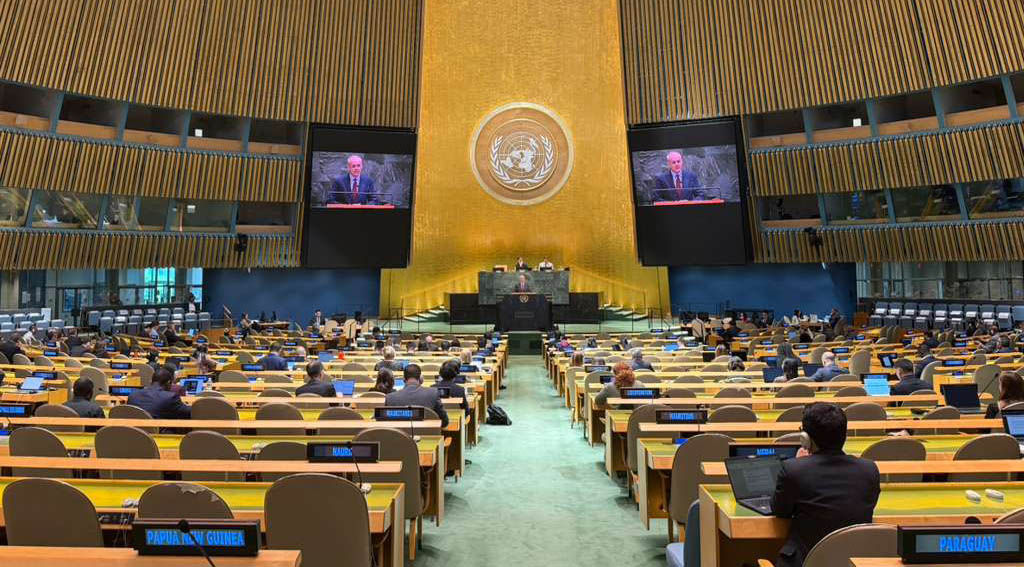
20 April 2026
7 November 2023
3 February 2023
29 June 2022
18 June 2021