From now on you can download videos from our website
If you would also like to subscribe to the newsletter and receive our latest updates, click on the button below.
Enter the email address you registered with and we will send you a code to reset your password.
Didn't receive a code? Send new Code
The password must be at least 12 characters long, no spaces, include upper/lowercase letters, numbers and symbols.
Click the button to return to the page you were on and log in with your new password.
Since NATO was founded on 4 April 1949, the Alliance has marked many milestone anniversaries with an array of unique celebrations. From a documentary film to a horse jumping contest and music performances, these commemorations have honoured NATO’s enduring relevance and fostered a sense of community among its member countries.
Discover below the most original celebrations that NATO has marked over the decades!
For the Alliance’s 10th anniversary on 4 April 1959, the NATO Information Service worked with the national governments of the then 15 NATO Allies to coordinate public communications marking NATO’s birthday. The United States government worked with an advertising agency to launch a publicity campaign, which included commissioning “The NATO Song” by Bing Crosby.
Preserved in The Crosby Archive, the surviving recording of the studio session offers a glimpse into how the song was created, featuring multiple takes and discussions between the sound engineers and the producers.
The song serves as a reminder to the citizens of NATO Allies that the Alliance has safeguarded their peace and security since 1949, and would continue to uphold these values in the future.
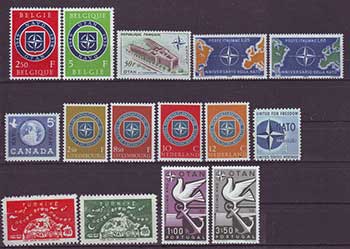
To mark NATO’s 10th anniversary, nine NATO Allies (Belgium, Canada, France, Italy, Luxembourg, the Netherlands, Portugal, Türkiye and the United States) issued a variety of commemorative stamps in 1959.
Read about the history of NATO stamps.
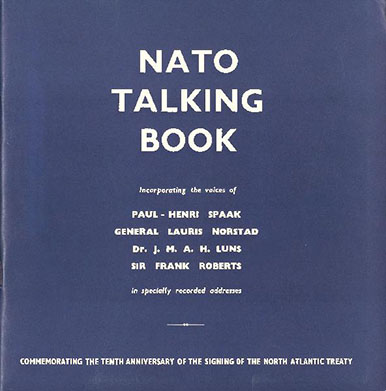
1959 –The NATO Talking Book for the 10th anniversaryAnother commemorative item produced for the 10th anniversary was the ”NATO Talking Book”.
This publication included short essays about NATO’s purpose and its accomplishments from leaders such as US President Dwight D. Eisenhower, French President Charles de Gaulle and German Chancellor Konrad Adenauer. Besides their contributions, the project housed voice recordings with messages from NATO Secretary General Paul-Henri Spaak, Supreme Allied Commander Europe General Lauris Norstad, Dutch Foreign Minister (and future NATO Secretary General) Joseph Luns and the UK Permanent Representative to NATO, Sir Frank Roberts.
The book intended to introduce NATO to the general public, presenting the basic principles of NATO membership, decision-making processes and the Alliance’s political-military structure. It also included period advertisements for various services and companies.
Unfortunately, there are no surviving voice recordings of the “NATO Talking Book”. But you can read the text here.
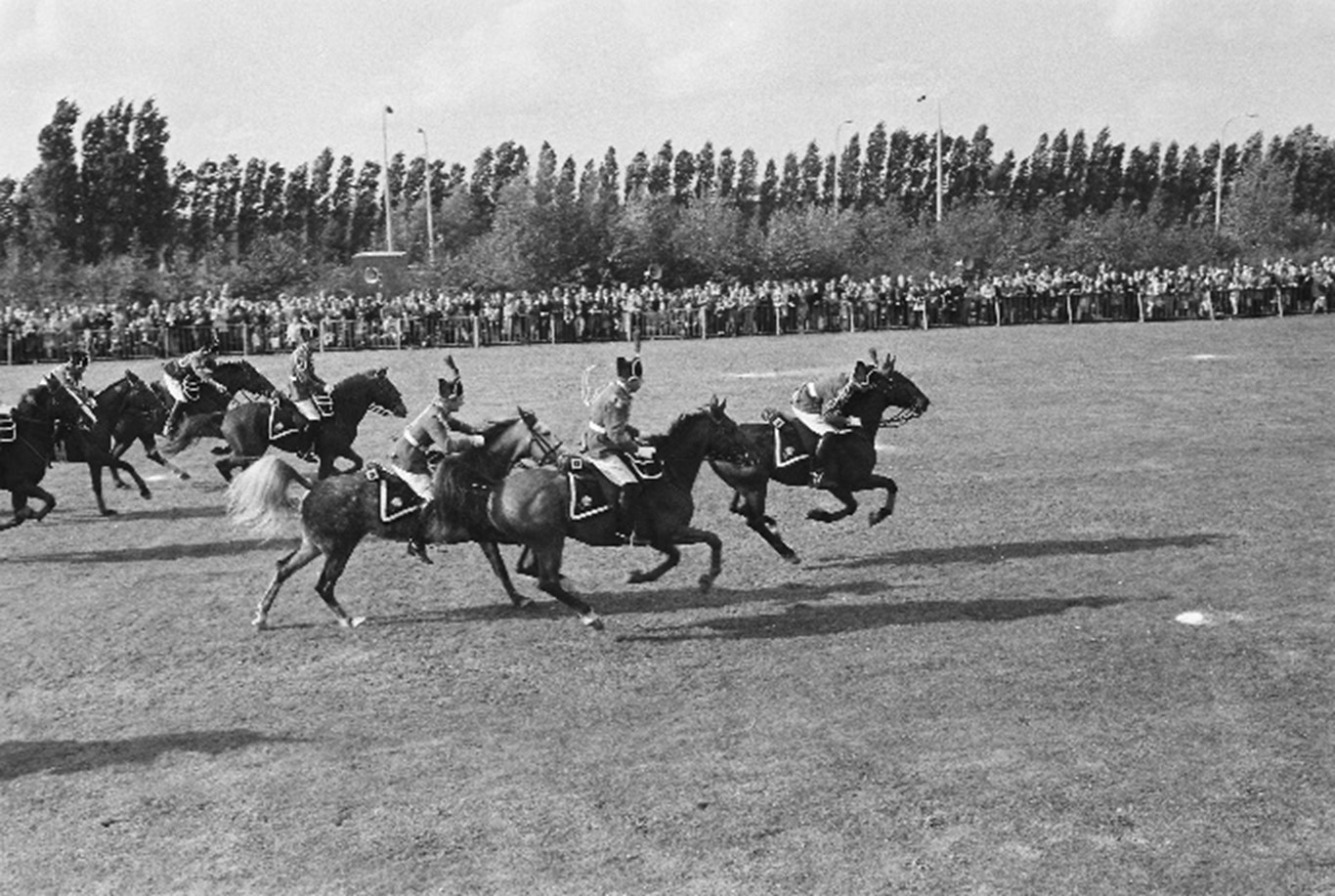
During NATO’s 25th anniversary year, the NATO Riding Club arranged a horse jumping contest in Overijse, Belgium on 15 and 16 July 1974. This event, one of the many silver anniversary celebrations that year, showcased the equestrian skills of participants from various NATO member countries, fostering a sense of camaraderie and friendly competition. The goal was to reach people that had no or little contact with NATO.
In addition to international participants, such as from the Supreme Headquarters Allied Powers Europe (SHAPE) and the European Economic Community (EEC), 60 riding clubs from the Belgian province of Brabant were invited to join the jumping contest.
The Brabant province (which was later split into Flemish Brabant, Walloon Brabant and the Brussels-Capital Region) has a rich tradition for equestrians – the Brabant horse breed, known as the Belgian Draught Horse, originates from the area. The breed is famous for its muscular build, remarkable strength and gentle nature, adding to the province’s equestrian legacy.
In 1979, NATO produced a short documentary film called “Lives”. The movie portrays five families from various countries of the Alliance: the family of an Italian Navy officer, a German school instructor, a Danish scientist, a UK civil servant working at NATO on arms control and disarmament, and a US Navy pilot. Although coming from different backgrounds and facing unique challenges, the families presented in the movie stand for a common commitment to NATO and its values of peace and security.
The documentary highlights the families' shared dedication to the Alliance and their ability to reach their full potential under the peace and security that NATO provides, despite their diverse backgrounds and individual struggles.
As part of the Alliance’s 40th anniversary celebrations in 1989, the Luxembourg Military Band (La Musique Militaire Grand-Ducale du Luxembourg) performed a ‘NATO anthem’ composed by its director, Captain André Reichling.
The composition, scored for 20 musical instruments, was successful and became a popular choice for NATO events, essentially becoming NATO’s unofficial hymn for almost 30 years.
On 3 January 2018, the North Atlantic Council approved it as the official NATO Hymn.
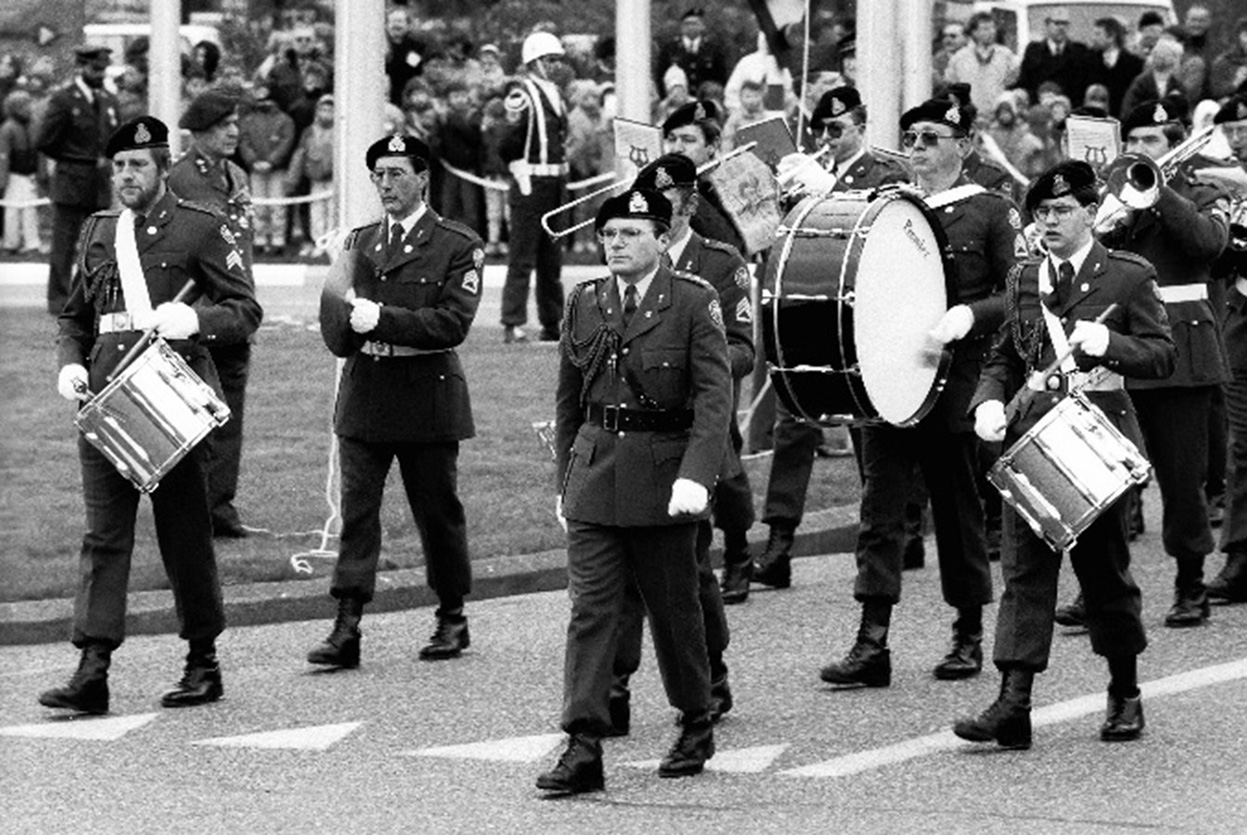
The Luxembourg Military Band performing the NATO Hymn in 1989
At the same ceremony in 1989, a large NATO choir performed another piece of music: the “Atlantic Hymn”, by the Portuguese composer José Ludovice with lyrics by Ramiro Guedes de Campos. Composed in 1952, this piece was the only choral work explicitly written for NATO.
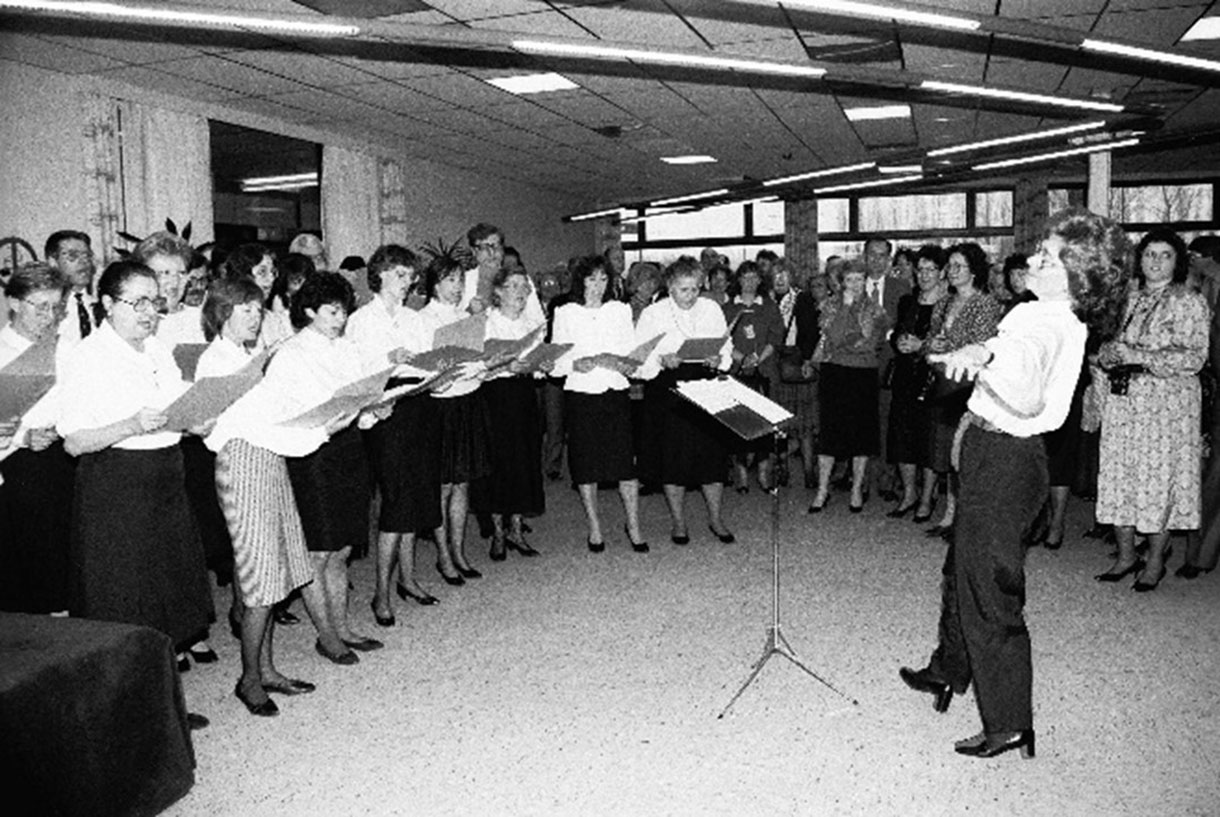
NATO choir performing the "Atlantic Hymn" in 1989 at NATO Headquarters in Brussels, Belgium
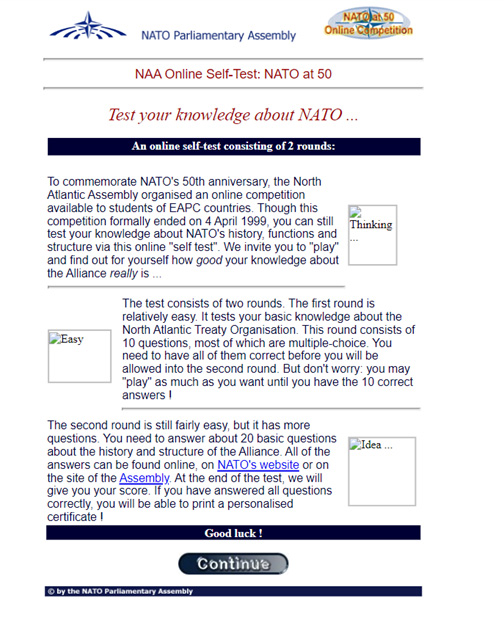
For NATO’s golden anniversary in 1999, the North Atlantic Assembly, the association of legislators from NATO member countries (now known as the NATO Parliamentary Assembly), organized an online ‘Test of Knowledge’ game – innovative for the 1990s. The retro website game and competition was open to students from NATO Allies and Partnership for Peace (PfP) countries, with the winner receiving a EUR 1,000 prize and a trip to Warsaw to attend a North Atlantic Assembly session.
The game consisted of two rounds. The first round was relatively easy, testing basic knowledge about NATO, including:
It included 10 questions, most of which were multiple-choice. Participants had to provide correct answers to all of them before they could move to the second round, but they could play as often as they wanted to get all 10 answers correct.
The second round was still fairly easy, but it had more questions. Participants had to answer 20 questions about the history and structure of the Alliance. All answers could be found online, on the NATO or Assembly websites. Participants who answered all questions correctly, could print a personalised certificate, and the winner was chosen from those who had achieved perfect scores. The competition was open until NATO’s 50th birthday, on 4 April 1999.
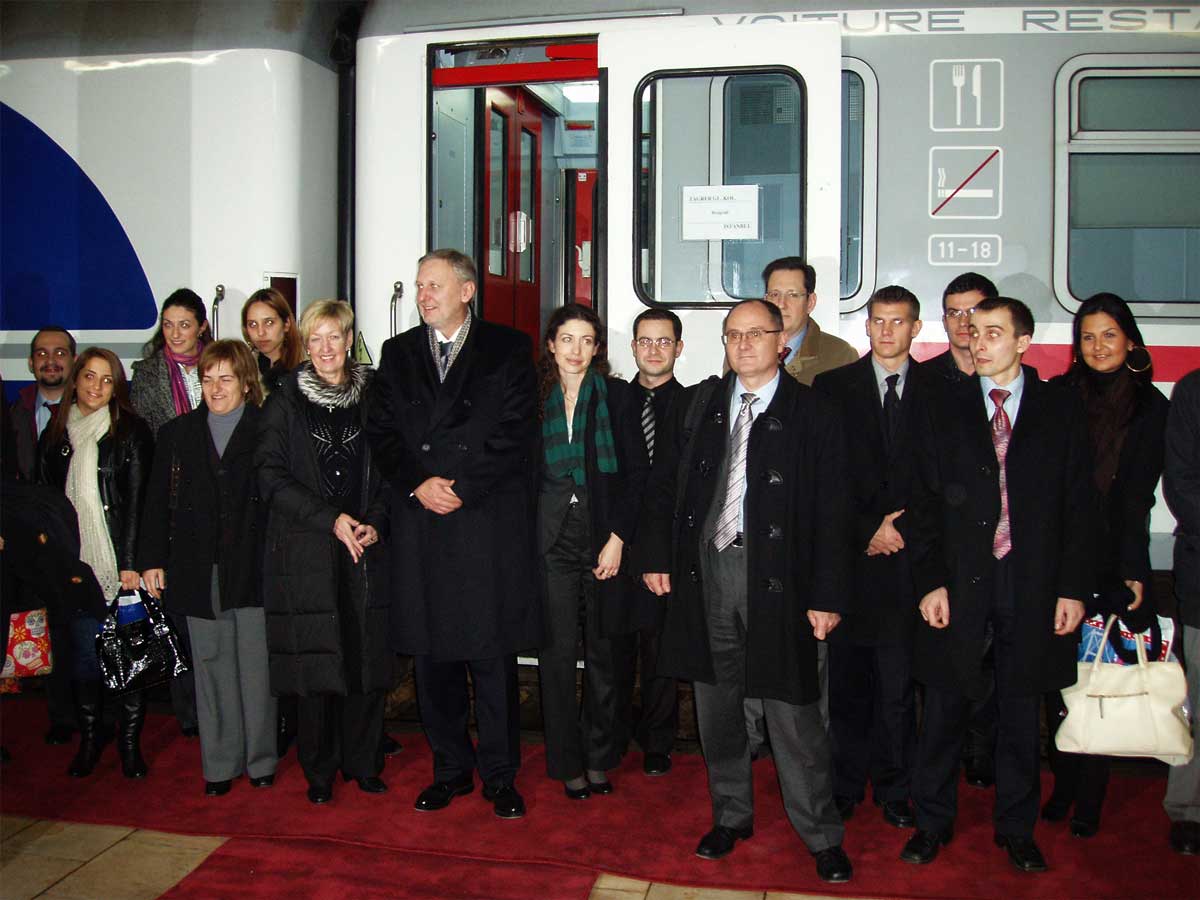
In December 2008, in the run-up to the Alliance’s 60th anniversary on 4 April 2009, a special train followed the route of the famous Orient Express to carry the message that security and cooperation know no borders. The train, also called the “GLOBSEC Express”’, started running already in 2007 as a project pioneered by the Slovak Atlantic Commission and Euro Atlantic Centre with NATO’s support, and aimed to give youth from Central and South-Eastern Europe an informal space to discuss NATO’s integration and security issues.
On 8 December 2008, the train departed from Zagreb, Croatia with 30 young people from 11 countries from South-Eastern Europe. On the 31-hour journey that ended in Istanbul, Türkiye, the participants held discussions with NATO experts about the Euro-Atlantic integration of NATO’s newest member countries and the role of the Alliance in the region.
On 6 November 2019, to celebrate NATO’s 70th anniversary year, NATO Headquarters came to life with the music of the Oxford Philharmonic Orchestra. The first concert to be held in the Alliance’s newly constructed headquarters opened with the NATO Hymn, followed by Bruch’s Violin Concerto No. 1 and Beethoven’s Symphony No. 5. The concert concluded with a light-hearted rendition of “Happy Birthday”. The performance struck a chord with over 700 spectators from dozens of countries, proving that the language of music is universal.
Other initiatives for the 70th anniversary:
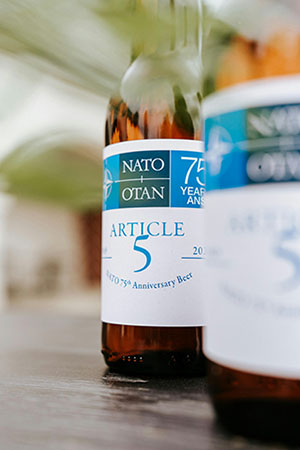
In 2024, a group of NATO employees decided to celebrate the landmark anniversary with a unique project: NATO’s 75th anniversary beer. They partnered up with the Valmiermuiza brewery in Latvia, which was established in 1688 and almost destroyed during both World Wars, but resumed beer production in 2006.
Using traditional ingredients and brewing processes, they created a special edition of amber lager called ‘Article 5’ to celebrate the collective defence clause at the heart of NATO’s founding treaty. The anniversary beverage was sold at the 2024 NATO Charity Bazaar at NATO Headquarters, with the proceeds going towards Belgian and international charities.
Start
History timeline Start
Nine of the most original celebrations over the years
Discover the most original celebrations that NATO has marked over the decades!
NATO Headquarters flags
1959
3 April 1959
NATO commemorative stamps for the 10th anniversary
To mark NATO’s anniversary, nine NATO Allies issued a variety of commemorative stamps in 1959.
(Belgium, Canada, France, Italy, Luxembourg, the Netherlands, Portugal, Türkiye and the United States)
1959
4 April 1959
The NATO Song for the 10th anniversary
For the Alliance’s 10th anniversary on 4 April 1959, the NATO Information Service worked with the national governments of the 15 NATO Allies to coordinate public communications marking NATO’s birthday. The United States government worked with an advertising agency to launch a publicity campaign, which included commissioning “The NATO Song” by Bing Crosby.
Preserved in The Crosby Archive, the surviving recording of the studio session offers a glimpse into how the song was created, featuring multiple takes and discussions between the sound engineers and the producers.
The song serves as a reminder to the citizens of NATO Allies that the Alliance has safeguarded their peace and security since 1949, and would continue to uphold these values in the future:
Bing Crosby is most famous for singing the hit song “White Christmas” – the best-selling physical single of all time. Images from Wikimedia Commons (public domain). Left: Publicity photo, 1930s, unknown author. Right: Decca Records, 1949.
1959
4 April 1959
The NATO Talking Book for the 10th anniversary
Another commemorative item produced for the 10th anniversary was the ”NATO Talking Book”.
This publication included short essays about NATO’s purpose and its accomplishments from leaders such as US President Dwight D. Eisenhower, French President Charles de Gaulle and German Chancellor Konrad Adenauer. Besides their contributions, the project housed voice recordings with messages from NATO Secretary General Paul-Henry Spaak, Supreme Allied Commander Europe General Lauris Norstad, Dutch Foreign Minister Joseph Luns and the UK Permanent Representative to NATO, Sir Frank Roberts.
The book intended to introduce NATO to the general public, presenting the basic principles of NATO membership, decision-making processes and the Alliance’s political-military structure. It also included period advertisements for various services and companies.
The NATO Talking Book 1959-1960
1974
15 July 1974
The horse jumping contest for the 25th anniversary
During NATO’s 25th anniversary year, the NATO Riding Club arranged a horse jumping contest in Overijse, Belgium on 15 and 16 July 1974. This event, one of the many silver anniversary celebrations that year, showcased the equestrian skills of participants from various NATO member countries, fostering a sense of camaraderie and friendly competition. The goal was to reach people that had no or little contact with NATO.
In addition to international participants, such as from the Supreme Headquarters Allied Powers Europe (SHAPE) and the European Economic Community (EEC), 60 riding clubs from the Belgian province of Brabant were invited to join the jumping contest.
The Brabant province (which was later split into Flemish Brabant, Walloon Brabant and the Brussels-Capital Region) has a rich tradition for equestrians – the Brabant horse breed, known as the Belgian Draught Horse, originates from the area. The breed is famous for its muscular build, remarkable strength and gentle nature, adding to the province’s equestrian legacy.
1979
4 April 1979
The NATO film “Lives” for the 30th anniversary
In 1979, NATO produced a short documentary film called “Lives”. The movie portrays five families from various countries of the Alliance: the family of an Italian Navy officer, a German school instructor, a Danish scientist, a UK civil servant working at NATO on arms control and disarmament, and a US Navy pilot. Although coming from different backgrounds and facing unique challenges, the families presented in the movie stand for a common commitment to NATO and its values of peace and security.
The documentary highlights the families' shared dedication to the Alliance and their ability to reach their full potential under the peace and security that NATO provides, despite their diverse backgrounds and individual struggles.
1989
14 December 1989
The NATO anthem for the 40th anniversary
As part of the Alliance’s 40th anniversary celebrations in 1989, the Luxembourg Military Band (La Musique Militaire Grand-Ducale du Luxembourg) performed a ‘NATO anthem’ composed by its director, Captain André Reichling.
The composition, scored for 20 musical instruments, was successful and became a popular choice for NATO events, essentially becoming NATO’s unofficial hymn for almost 30 years.
On 3 January 2018, the North Atlantic Council approved it as the official NATO Hymn.
The Luxembourg Military Band performing the NATO Hymn in 1989.
1989
15 December 1989
The Atlantic Hymn
At the same ceremony in 1989, a large NATO choir performed another piece of music: the “Atlantic Hymn”, by the Portuguese composer José Ludovice with lyrics by Ramiro Guedes de Campos. Composed in 1952, this piece was the only choral work explicitly written for NATO.
NATO choir performing the "Atlantic Hymn" in 1989 at NATO Headquarters in Brussels, Belgium.
1999
4 April 1999
A retro NATO Test of Knowledge for the 50th anniversary
For NATO’s golden anniversary in 1999, the North Atlantic Assembly, the association of legislators from NATO member countries (now known as the NATO Parliamentary Assembly), organized an online ‘Test of Knowledge’ game – innovative for the 1990s. The retro website game and competition was open to students from NATO Allies and Partnership for Peace (PfP) countries, with the winner receiving a EUR 1,000 prize and a trip to Warsaw to attend a North Atlantic Assembly session.
The game consisted of two rounds. The first round was relatively easy, testing basic knowledge about NATO, including:
It included 10 questions, most of which were multiple-choice. Participants had to provide correct answers to all of them before they could move to the second round, but they could play as often as they wanted to get all 10 answers correct.
The second round was still fairly easy, but it had more questions. Participants had to answer 20 questions about the history and structure of the Alliance. All answers could be found online, on the NATO or Assembly websites. Participants who answered all questions correctly, could print a personalised certificate, and the winner was chosen from those who had achieved perfect scores. The competition was open until NATO’s 50th birthday, on 4 April 1999.
NATO at 50
2008
8 December 2008
The train journey ahead of the 60th anniversary
In December 2008, in the run-up to the Alliance’s 60th anniversary on 4 April 2009, a special train followed the route of the famous Orient Express to carry the message that security and cooperation know no borders. The train, also called the “GLOBSEC Express”’, started running already in 2007 as a project pioneered by the Slovak Atlantic Commission and Euro Atlantic Centre with NATO’s support, and aimed to give youth from Central and South-Eastern Europe an informal space to discuss NATO’s integration and security issues.
On 8 December 2008, the train departed from Zagreb, Croatia with 30 young people from 11 countries from South-Eastern Europe. On the 31-hour journey that ended in Istanbul, Türkiye, the participants held discussions with NATO experts about the Euro-Atlantic integration of NATO’s newest member countries and the role of the Alliance in the region.
This symbolic journey passed through several countries participating in NATO’s Partnership for Peace programme at the time, including Bulgaria, Croatia and Serbia.
2019
6 November 2019
The concert by the Oxford Philharmonic Orchestra for the 70th anniversary
On 6 November 2019, to celebrate NATO’s 70th anniversary year, NATO Headquarters came to life with the music of the Oxford Philharmonic Orchestra. The first concert to be held in the Alliance’s newly constructed headquarters opened with the NATO Hymn, followed by Bruch’s Violin Concerto No. 1 and Beethoven’s Symphony No. 5. The concert concluded with a light-hearted rendition of “Happy Birthday”. The performance struck a chord with over 700 spectators from dozens of countries, proving that the language of music is universal.
NATO 70th Anniversary Celebration Concert
2024
17 December 2024
NATO’s beer for the 75th anniversary
In 2024, a group of NATO employees decided to celebrate the anniversary with a unique project: NATO’s 75th anniversary beer. They partnered up with the Valmiermuiza brewery in Latvia, which was established in 1688 and almost destroyed during both World Wars, but resumed beer production in 2006. Using traditional ingredients and brewing processes, they created a special edition of amber lager called ‘Article 5’ to celebrate the collective defence clause at the heart of NATO’s founding treaty.
The anniversary beverage was sold at the 2024 NATO Charity Bazaar at NATO Headquarters, with the proceeds going towards Belgian and international charities.