
Close
Back


From now on you can download videos from our website
If you would also like to subscribe to the newsletter and receive our latest updates, click on the button below.
Enter the email address you registered with and we will send you a code to reset your password.
The password must be at least 12 characters long, no spaces, include upper/lowercase letters, numbers and symbols.
Click the button to return to the page you were on and log in with your new password.
NATO has many official symbols, from the widely recognised NATO compass star to the lesser-known NATO hymn. But one thing that NATO does not have is an official mascot.
However, over the years, the hedgehog has become the unofficial mascot of the North Atlantic Treaty Organization - primarily because it perfectly embodies NATO's role as a defensive alliance. Hedgehogs are peaceful creatures, but they bristle when attacked to protect themselves and frighten their aggressors. In the same way, NATO deters aggression by that an attack on any of its members will incur a very high cost.
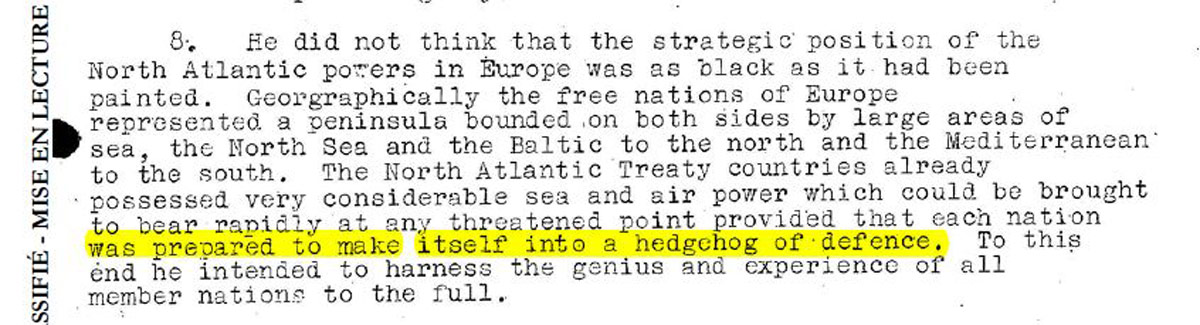
The earliest mention of the hedgehog in a NATO context was by Supreme Allied Commander Europe (SACEUR) General Dwight D. Eisenhower in January 1951 at a meeting of the Defence Planning Working Group (D-R(51)4). At this meeting, Eisenhower noted that European countries should adopt a 'hedgehog' defence to slow down enemy forces long enough for the full weight of NATO to turn the tide.
The hedgehog metaphor had become a common reference in the military context before and during the Second World War. In the 1930s, Czechoslovakia developed the ‘Czech hedgehog’ - a spiky metal barricade that was easy to produce and highly effective against tanks. During the war, both Allied and Axis armies used the hedgehog to describe defensive tactics for encircled troops. A Time Magazine article from 1952 described this historical progression in the context of a 'NATO hedgehog' military exercise, including the use of hedgehog units by SACEUR Matthew Ridgway during the Korean War.
Following the creation of NATO, the hedgehog was adopted as a symbol of peaceful (but potent) defence by various pro-NATO groups in Germany, Italy and Norway. But no NATO Ally embraced the hedgehog as enthusiastically as Denmark did.
In July 1951, the Danish Atlantic Association adopted the hedgehog as a symbol for its organisation. The choice was in part meant to contrast the dove badges sold by Danish communists during the Cold War. The Association put the hedgehog on their own badges, documents, stamps and other souvenirs.
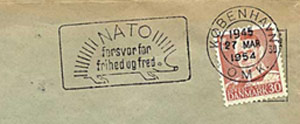
It also commissioned a special golden hedgehog pin and presented it to several important advocates of the Atlantic movement, such as General Eisenhower, Winston Churchill and NATO's first Secretary General Lord Ismay. You can watch Eisenhower receiving his golden hedgehog pin in 1951, courtesy of British Pathé:
General Eisenhower presented with golden hedgehog pin (1951)
Denmark also used the hedgehog on the cover of a newsletter from September 1959, with 15 hedgehogs (representing the 15 Allies in 1959) following a larger hedgehog (representing NATO) as it plays a flute to fend off a bear, the animal often used to portray the Soviet Union.
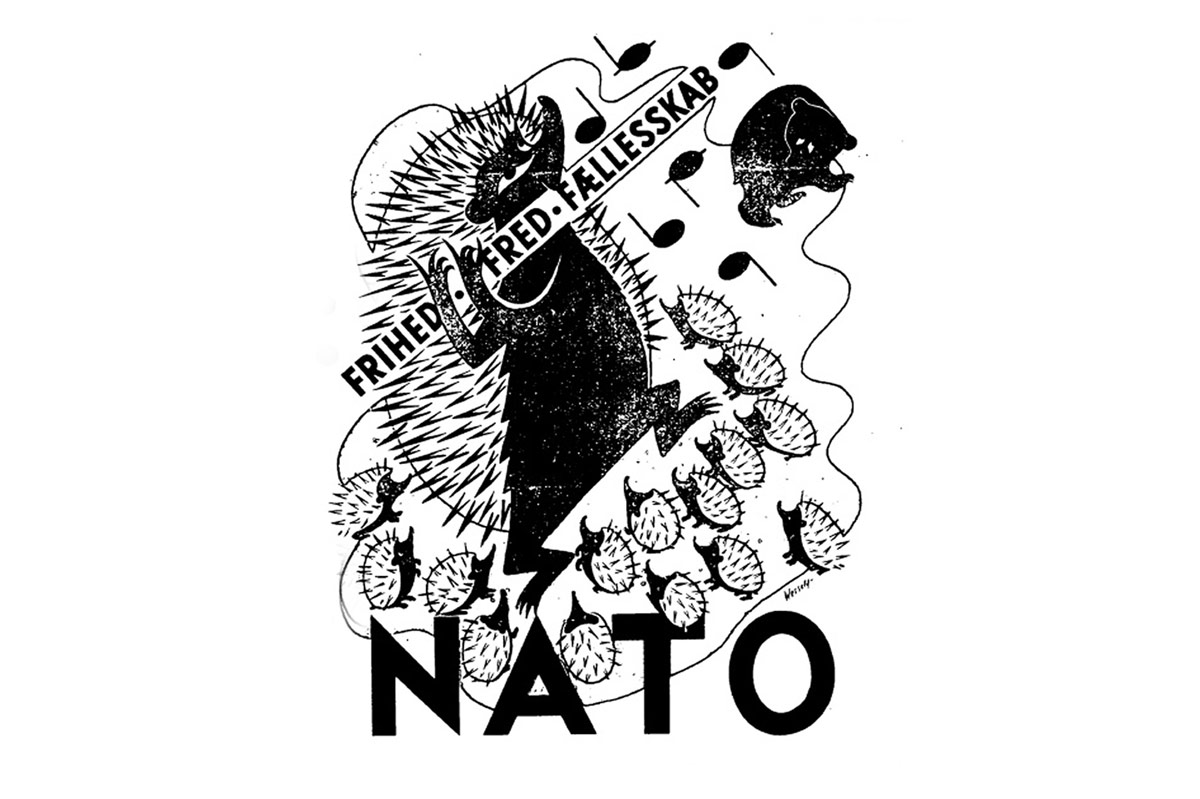
The cover text reads “Freedom, Peace, Community” in Danish.
The hedgehog continued to be used by member countries into the 1980s, with the NATO Information Service noting its unofficial status as a NATO symbol. Afterwards, the hedgehog was dropped both internally and externally by NATO, perhaps due to the changes that occurred with the end of the Cold War.
In 2025, NATO participated for the first time in a World Expo, which was held that year in Osaka, Japan. The 'NATO Days' were hosted by various Allied pavilions, part of the Expo's 'Peace, Human Security, and Dignity Week' in August 2025.
Like many other countries and organisations at the Expo, NATO followed the popular Japanese custom of creating a mascot for the event. And what else could it be but the NATO Hedgehog:
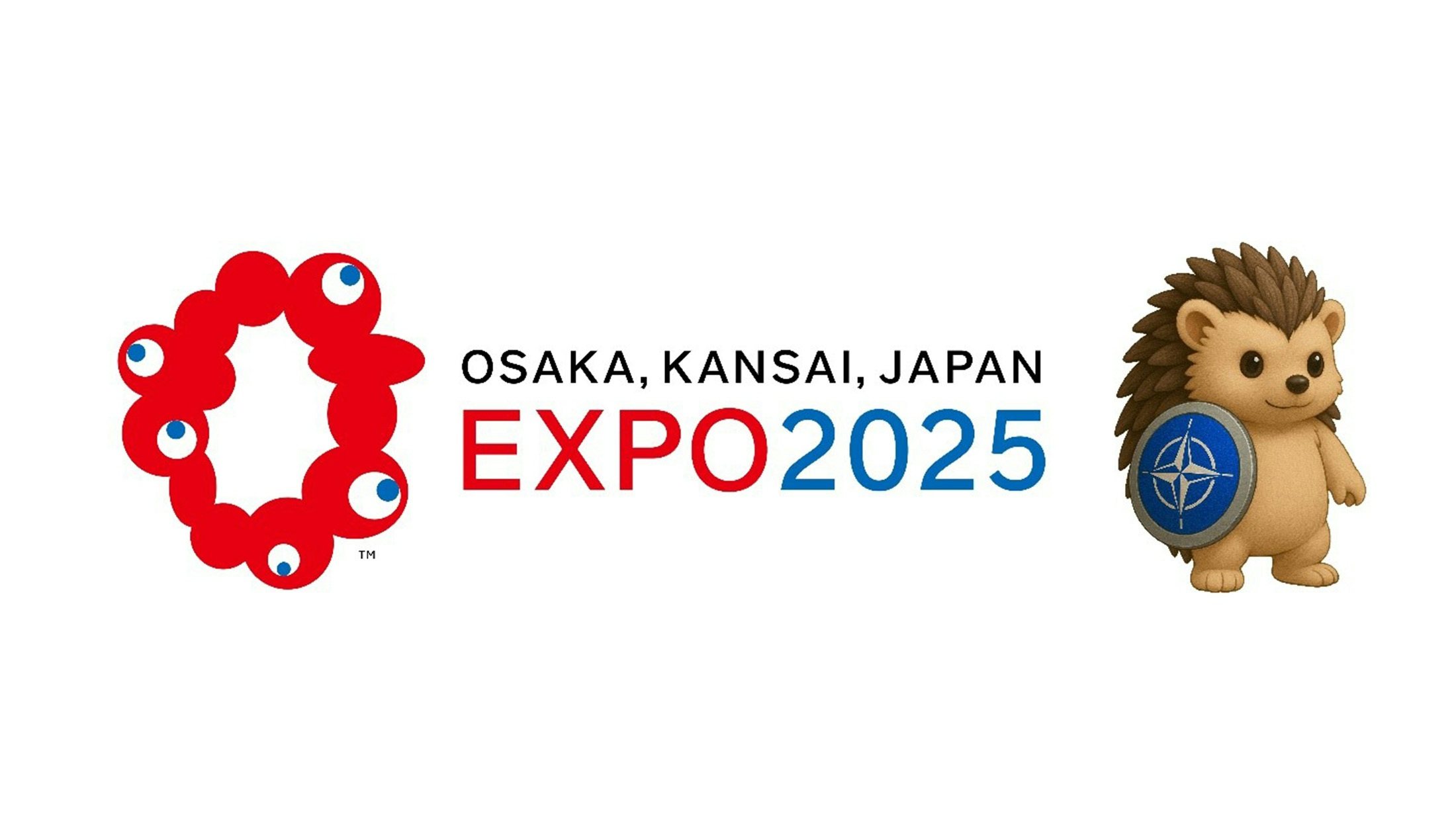
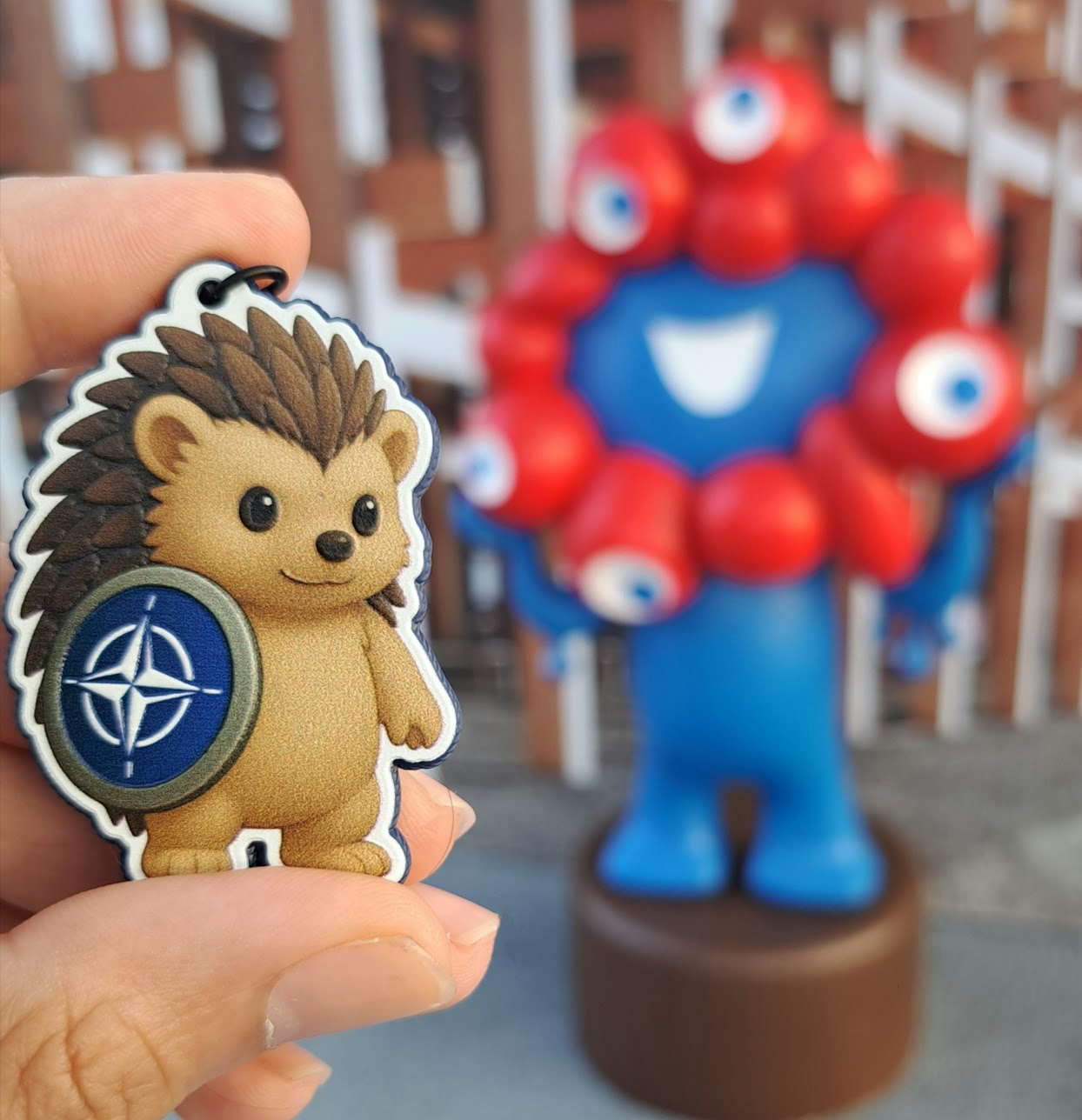
The NATO Hedgehog mascot represents defence through its spikes, and also through the NATO shield it carries. NATO produced keychains and other memorabilia featuring the hedgehog mascot, sharing them with visitors who attended the event.
In the same year, a NATO military exercise in Estonia carried on the tradition of training Allied forces in hedgehog defence. Exercise Hedgehog 25 brought together over 16,000 troops from 13 NATO Allies, giving them valuable experience working together to reinforce Estonia and defend it from any potential attack.
These informal uses of hedgehog defence and the hedgehog mascot will no doubt continue. Although the North Atlantic Council has not adopted the hedgehog as NATO's official mascot, it remains a powerful symbol of the Alliance's core duties, no matter how the security environment changes. As Secretary General Lord Robertson once said:
We are still fully capable of safeguarding our territorial security; in that respect we remain – and will always remain – 'hedgehogs'.
NATO Secretary General 2 February 2001 Norwegian Nobel Institute - Oslo, Norway


