
Close
Back


From now on you can download videos from our website
If you would also like to subscribe to the newsletter and receive our latest updates, click on the button below.
Enter the email address you registered with and we will send you a code to reset your password.
The password must be at least 12 characters long, no spaces, include upper/lowercase letters, numbers and symbols.
Click the button to return to the page you were on and log in with your new password.
14 July 2022
1 MIN READ
Earlier this month, NATO has participated to the Eighth Biennial Meeting of State Parties on the Programme of Work to prevent, combat and eradicate the illicit trade of small arms and light weapons, held in New York, under the United Nations’ auspices.
“As stated during the Summit in Madrid this past June, NATO is committed to continue work with partners to meet common interests and to address shared security concerns,”
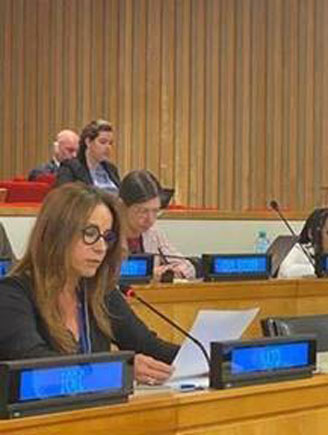
Mrs. Eirini Lemos-Maniati, Deputy Director of the Arms Control Directorate at the Political Affairs and Security Policy Division at NATO Headquarters said. “NATO is committed to support partners, including in the Western Balkans region, to right size their weapons stocks, to manage them safely and securely, and to destroy excess and aged arms and ammunition. NATO will also continue supporting international initiatives to address these challenges in the region; NATO’s approach is not only about destroying weapons, ammunitions and securing stockpiles, but also about building sustainable institutional capacities and regulatory frameworks as these challenges require long-term solutions; this is the core aim of NATO partnerships: to help partners building their capacities to address and mitigate security concerns,” she added.