Close
Back


From now on you can download videos from our website
If you would also like to subscribe to the newsletter and receive our latest updates, click on the button below.
Enter the email address you registered with and we will send you a code to reset your password.
The password must be at least 12 characters long, no spaces, include upper/lowercase letters, numbers and symbols.
Click the button to return to the page you were on and log in with your new password.
NATO Spokesperson Allison Hart
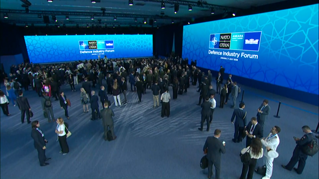
Good morning, everyone, and welcome. We are very pleased to have so many representatives from our Allies, industry and the press here with us this morning.
I would also like to welcome those of you who are joining us via livestream. We will be making a series of important announcements here this morning, and for those of you participating in this segment, I will ask you to be ready to come to the stage when I call your country or your company.
Our first segment this morning will last around half an hour, and we will then take a short break and move up to the plenary room, for more announcements.
For now, I would like to invite the NATO Secretary General Mark Rutte to the stage.
NATO Secretary General Mark Rutte
Good morning and welcome. Welcome to the NATO Summit Defence Industry Forum. This is really the, the platform bringing NATO and industry together. And above all, it’s the opportunity to showcase the capabilities and innovation coming out of our industries across the Alliance, across NATO. And I am proud to say that we have a lot to show today.
One year ago in The Hague, Allies committed to invest a lot more in defence – 5% of GDP by 2035. We’re already making remarkable progress.
And they agreed to ramp up defence production and innovation. And here we are now, one year later in Ankara, already delivering results.
Throughout the day, Allies and industry, from both sides of the Atlantic, will reveal new major projects and sign contracts worth billions, literally billions of dollars. These are billions that are invested in our security, boosting our economies and supporting hundreds of thousands of new jobs. It’s money well spent.
Today, you will see – and the world will see – industries from North America and Europe working hand-in-hand, innovating together, and developing next generation capabilities. These are capabilities that are really ‘Made in NATO’ – not by one nation, but several – working together in close cooperation. And that’s how we make our Alliance more powerful. It’s how we defend our one billion people and every inch of our territory – now and in the future. So, I would say, let’s get started.
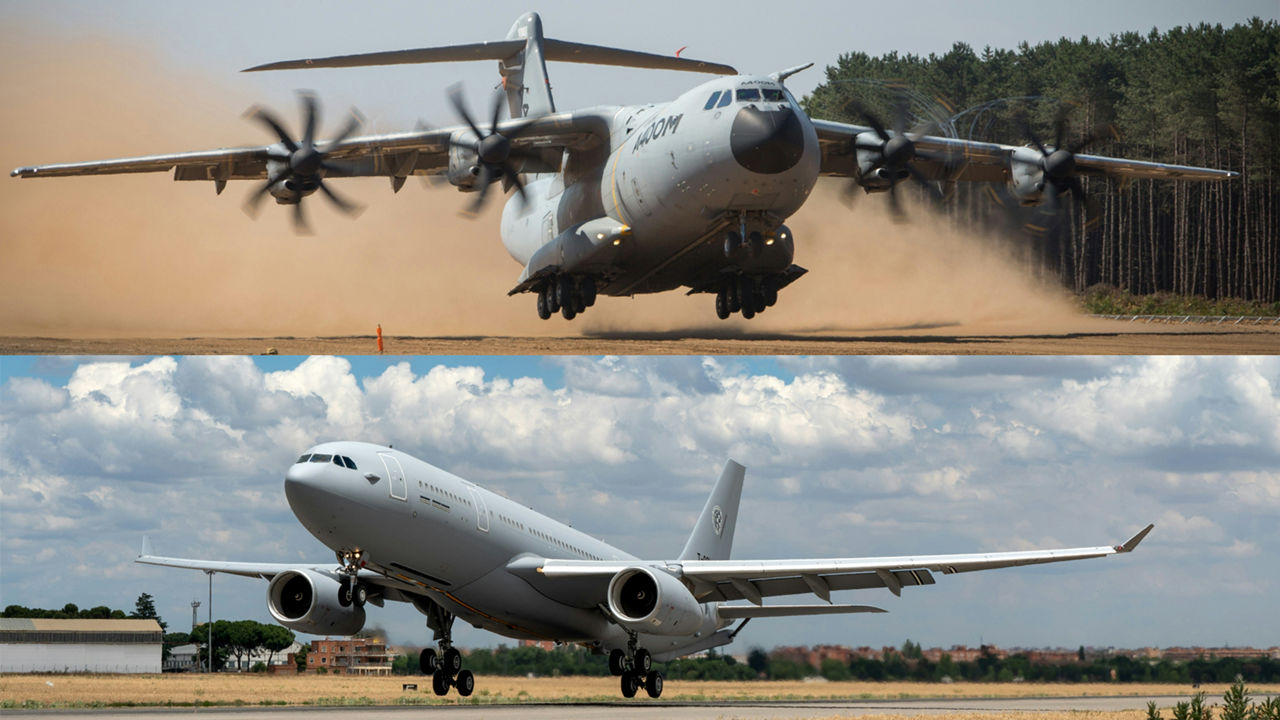
The first announcement this morning is about the platforms that deliver air-to-air refuelling and rapidly move equipment across the Alliance. It’s about air power – which is essential to strengthen our deterrence and defence. Today, several Allies are officially announcing the forthcoming delivery of the tenth Airbus A330 MRTT aircraft to the Multinational Multi-Role Tanker Transport Fleet. This is bringing us one step closer to the full MRTT fleet of 12 aircraft.
Allies are also launching a new multinational project focused on the Airbus A400M. This is world-class strategic airlift capability. The A330 MRTT and the A400M will provide the Alliance with two highly capable, multinational fleets. This first “Made in NATO” announcement is an excellent example, I believe, of multinational cooperation in action. The Airbus platforms are built on strong European industrial leadership, close NATO-EU cooperation, and with contributions from U.S. industry partners. They keep NATO’s air power strong, credible, and ready for decades to come.
NATO Spokesperson Allison Hart
Thank you very much Secretary General. I would now like to invite the Airbus chairman of Defence and Space UK, Ben Bridge, to the stage. And now I would like to invite the participating Allied representatives of the Airbus MRTT Initiative to the stage: Belgium, Czechia, Denmark, Finland, Germany, Luxembourg, the Netherlands, Norway, and Sweden.
Alright. Thank you very much. I would invite the representatives of Belgium and Airbus to remain on stage, for the A400M initiative. The other Allied representatives may return to their seats. And now I would like to invite the additional participating Allied representatives of the A400M initiative to the stage: Croatia, France, Poland, Spain, Türkiye, and the United Kingdom.
Alright, thank you very much. You may all return to your seats, as we prepare for our next announcement. And our next announcements is on Triton.
NATO Secretary General Mark Rutte
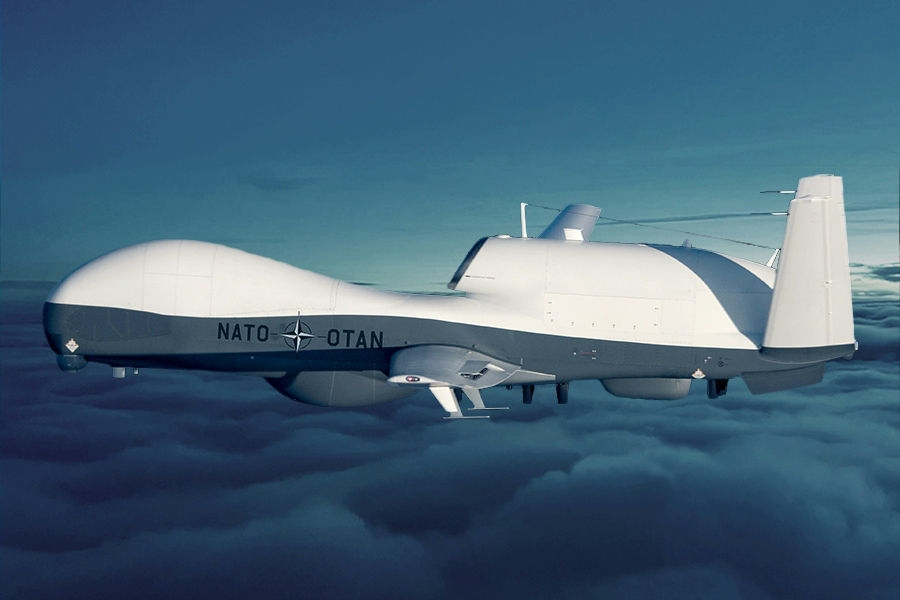
Intelligence, surveillance and reconnaissance, or ISR in our jargon, is a vital capability for the Alliance. It gives us the situational awareness we need to make the right decisions and stay ahead of threats. Today, Allies are taking a concrete step to strengthen this capability. We are adding up to five Triton high-altitude, long-endurance unmanned aircraft to our NATO’s ISR Force.
These additional aircraft will provide persistent surveillance over large maritime areas, day and night. They can fly for long periods at high-altitude and cover large areas, including over open water, more efficiently than most other aircraft can. The Triton will help us detect threats early, protect our sea lines of communication, and support operations in demanding regions, such as the High North.
So all-in-all, they are making NATO’s ISR posture significantly stronger. Northrop Grumman is building the Triton aircraft, and transatlantic industry is working on mission support, data systems and infrastructure. It is genuinely “Made in NATO” and creating jobs on both sides of the Atlantic. This is transatlantic cooperation in action.
NATO Spokesperson Allison Hart
Thank you very much, and now I would like to invite the president of Northrop Grumman International, Frank Morley, to the stage. And now I would like to invite the participating Allied representatives of the Triton initiative to the stage: Denmark, Finland, Germany, and Norway. Okay, thank you very much. You may return to your seats, as we prepare for the third and final announcement of this segment this morning on the initial Alliance Future Surveillance and Control initiative. And we will be showing one more video, here we go.
NATO Secretary General Mark Rutte
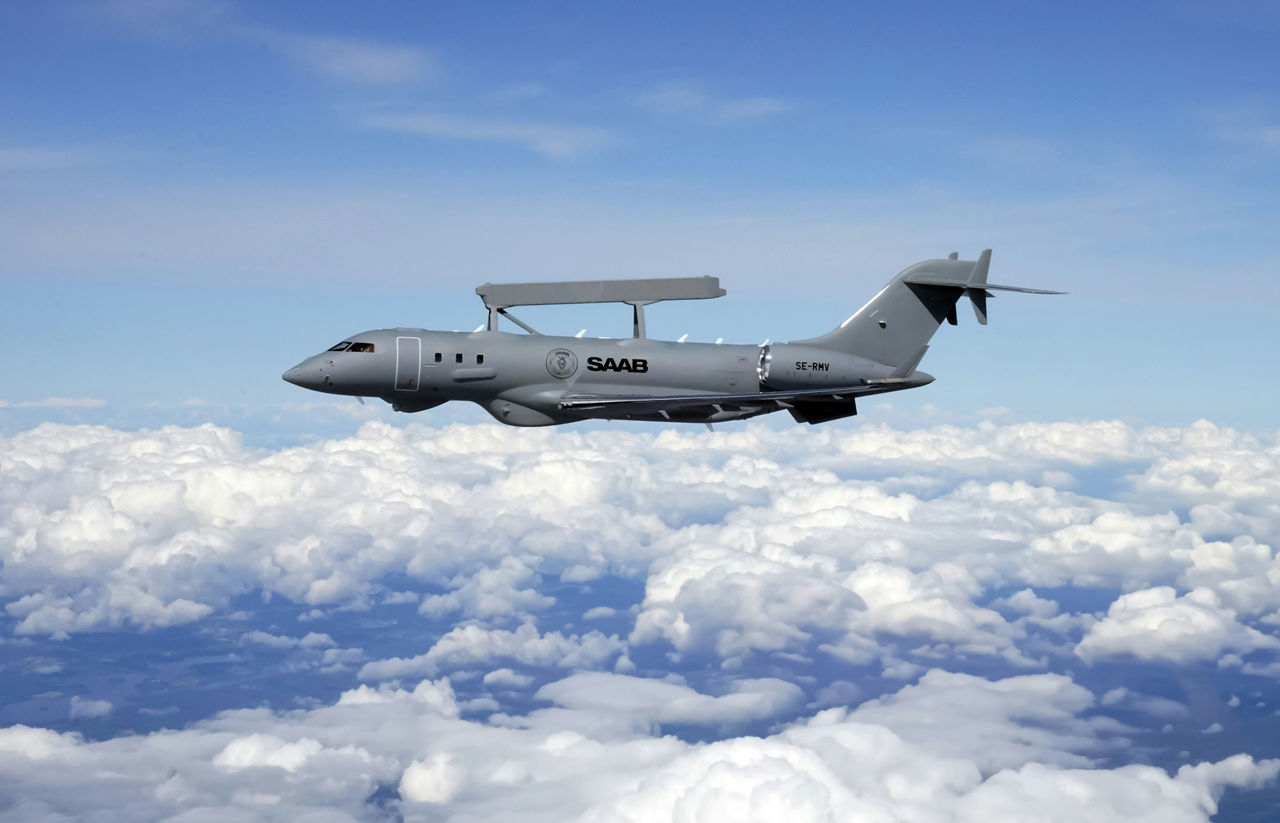
SAAB’s GlobalEye system takes airborne warning and control to a new level. For decades, NATO has relied on a fleet of E3 Airborne Warning and Control Systems, that have been our ‘eyes in the skies’. They have been deployed from Northern Norway to Southern Türkiye. They have served us well and continue to do so, but they are reaching the end of their lives.
Today, several Allies are announcing the joint procurement of up to 10 SAAB GlobalEye aircraft to replace them. This will ensure we keep NATO’s owned and operated surveillance and early warning capability strong and credible for decades to come.
In addition, several Allies are launching today a multinational project to cooperate on procuring and fielding more airborne early warning capabilities, such as GlobalEye, to respond to their national requirements. GlobalEye will provide simultaneous surveillance across air, maritime and land domains from a single platform, giving commanders a clear operational picture. It is a proven system, with a demonstrated ability to detect, track and identify complex threats, including drone swarms, ballistic missiles and cruise missiles. Like its predecessor, GlobalEye is a transatlantic programme, delivered by European and Canadian industries, with essential contributions from U.S. industries. It is a real success story, again, “Made in NATO”.
NATO Spokesperson Allison Hart
Thank you very much. I would now like to invite the Prime Minister of Sweden, Ulf Kristersson, to the stage.
Prime Minister of Sweden Ulf Kristersson
Thank you so much. Thank you all. Thank you, dear Mark. I am immensely proud to stand here together with you today, during these important announcements. And it is of course a moment of great pride for Sweden, obviously. The GlobalEye is a result of decades of ingenuity, innovation, investment and commitment by so many people. I am even prouder of what today’s announcement entails for NATO, for our Allies, and for Euro-Atlantic security.
GlobalEye actually provides the Alliance with a powerful capability for surveillance and reconnaissance. It will also strengthen our ability to identify and respond to threats, both present and future, across different domains and directions. 360, 24/7. Moreover, GlobalEye is a testament to partnerships. It is in fact a prime example of what Allied defence industries can achieve when partnering together, delivering advanced capabilities made within the Alliance, for the Alliance.
In this spirit, I am pleased that also Canada and France recently decided to join the family. And starting from 2027, you will see them operating also from Swedish air bases, for the benefit to the Alliance. With these words, I look forward to welcoming NATO into the GlobalEye family. It will strengthen our collective ability to deter aggression, to defend Allied territory, and safeguard freedom and security of nearly one billion citizens. Thank you so much.
NATO Spokesperson Allison Hart
Thank you very much Prime Minister. And I would now like to invite the president and CEO of SAAB, Micael Johansson, to the stage. And now I would like to invite the additional participating Allied representatives of the initial Alliance Future Surveillance and Control initiative to the stage: Belgium, Canada, Denmark, Germany, Latvia, Lithuania, Luxembourg, the Netherlands, Norway, and Romania. Thank you all.
Now, I would invite the Secretary General, the Prime Minister of Sweden, and the representatives of Denmark and Germany to remain on the stage for the Crewed Airborne Early Warning initiative. Our other Allied representatives may return to their seats. And I would now like to invite the additional Allied representatives of the Crewed Airborne Early Warning initiative to the stage: Finland, France, Poland, Spain, and Türkiye.
Thank you very much. All of you, including the Secretary General, may return to your seats. Well, I would say we are off to a great start. Thank you very much to our audience in the room, and to those of us who are joining us online.


NATO expands its Intelligence, Surveillance and Reconnaissance Fleet with the purchase of Triton aircraft Chief of Defence of Germany Carsten Breuer, Minister of Defence of Norway Tore O. Sandvik, NATO Secretary General Mark Rutte, Northrop Grumman Vice President International Frank Morley, Minister of Defence of Finland Antti Häkkänen and Minister of Defence of Denmark Jeppe Bruus Christensen
NATO’s new Airborne Warning and Control System is announced.
NATO’s new Airborne Warning and Control System is announced. NATO Secretary General Mark Rutte, CEO of Saab Group Micael Johansson and Prime Minister of Sweden Ulf Kristersson
NATO’s new Airborne Warning and Control System is announced.
NATO Allies expand strategic airlift capacity - Airbus A400M and the A330 MRTT
NATO Allies expand strategic airlift capacity - Airbus A400M and the A330 MRTT
NATO expands its Intelligence, Surveillance and Reconnaissance Fleet with the purchase of Triton aircraft
NATO Secretary General Mark Rutte reveials major capability announcements at the NATO Summit Defence Industry Forum. NATO Secretary General Mark Rutte and Minister of Defence of Türkiye Yaşar Güler
NATO Secretary General Mark Rutte reveials major capability announcements at the NATO Summit Defence Industry Forum. NATO Secretary General Mark Rutte with Executive Vice President Global Business at Airbus Defence and Space Ben Bridge, Northrop Grumman Vice President International Frank Morley and CEO of Saab Group Micael Johansson
NATO Allies expand strategic airlift capacity - Airbus A400M and the A330 MRTT
NATO Secretary General Mark Rutte reveials major capability announcements at the NATO Summit Defence Industry Forum
NATO’s new Airborne Warning and Control System is announced.
NATO’s new Airborne Warning and Control System is announced.
NATO expands its Intelligence, Surveillance and Reconnaissance Fleet with the purchase of Triton aircraft
NATO Secretary General Mark Rutte reveials major capability announcements at the NATO Summit Defence Industry Forum
NATO Secretary General Mark Rutte reveials major capability announcements at the NATO Summit Defence Industry Forum
“Big Reveal” Announcement