Close
Back


From now on you can download videos from our website
If you would also like to subscribe to the newsletter and receive our latest updates, click on the button below.
Enter the email address you registered with and we will send you a code to reset your password.
The password must be at least 12 characters long, no spaces, include upper/lowercase letters, numbers and symbols.
Click the button to return to the page you were on and log in with your new password.
07 July 2026
1 MIN READ
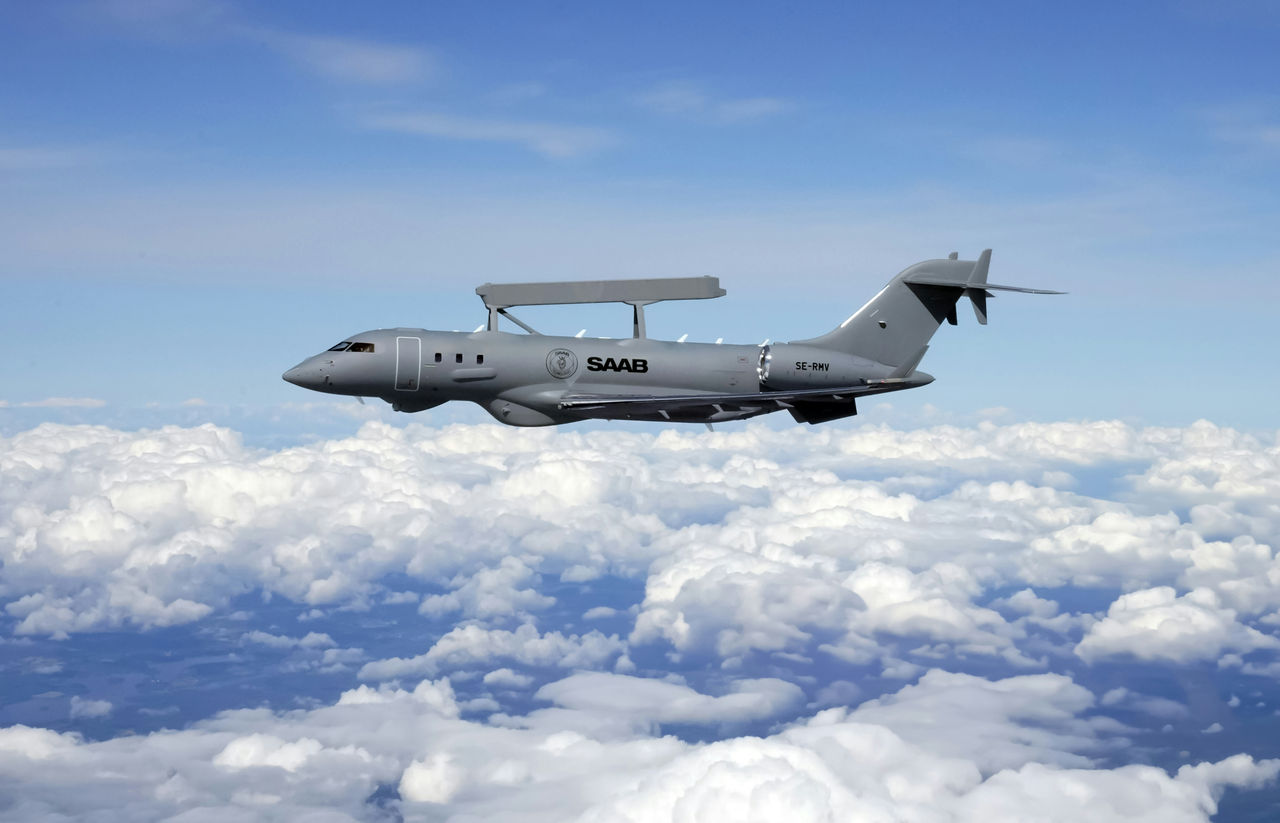
During the NATO Summit Defence Industry Forum in Ankara on Tuesday (7 July 2026), 11 Allies announced the joint procurement of Saab GlobalEye aircraft as NATO’s new Airborne Warning and Control System (AWACS). The decision marks a significant step in modernising NATO’s airborne surveillance and early warning capabilities by replacing part of the Alliance’s aging Boeing E-3 fleet.
The GlobalEye system will provide advanced, multi-domain surveillance across air, land and sea from a single platform. It will provide enhanced detection and tracking of complex threats, including drone swarms, ballistic missiles, and cruise missiles. The aircraft will strengthen NATO’s situational awareness and support operations.
The project is an example of close transatlantic industrial cooperation, with European and Canadian industry in the lead and important contributions from U.S. companies. In parallel, eight Allies also launched a new cooperative project to field airborne early warning capabilities to meet their national requirements.
NATO’s new Airborne Warning and Control System is among many capability and industrial commitments being unveiled at the Ankara Summit, demonstrating concrete progress in strengthening NATO’s deterrence and defence.
The 11 Allies of this coalition are Belgium, Canada, Denmark, Germany, Latvia, Lithuania, Luxembourg, the Netherlands, Norway, Romania, and Sweden.


NATO expands its Intelligence, Surveillance and Reconnaissance Fleet with the purchase of Triton aircraft Chief of Defence of Germany Carsten Breuer, Minister of Defence of Norway Tore O. Sandvik, NATO Secretary General Mark Rutte, Northrop Grumman Vice President International Frank Morley, Minister of Defence of Finland Antti Häkkänen and Minister of Defence of Denmark Jeppe Bruus Christensen
NATO’s new Airborne Warning and Control System is announced.
NATO’s new Airborne Warning and Control System is announced. NATO Secretary General Mark Rutte, CEO of Saab Group Micael Johansson and Prime Minister of Sweden Ulf Kristersson
NATO’s new Airborne Warning and Control System is announced.
NATO Allies expand strategic airlift capacity - Airbus A400M and the A330 MRTT
NATO Allies expand strategic airlift capacity - Airbus A400M and the A330 MRTT
NATO expands its Intelligence, Surveillance and Reconnaissance Fleet with the purchase of Triton aircraft
NATO Secretary General Mark Rutte reveials major capability announcements at the NATO Summit Defence Industry Forum. NATO Secretary General Mark Rutte and Minister of Defence of Türkiye Yaşar Güler
NATO Secretary General Mark Rutte reveials major capability announcements at the NATO Summit Defence Industry Forum. NATO Secretary General Mark Rutte with Executive Vice President Global Business at Airbus Defence and Space Ben Bridge, Northrop Grumman Vice President International Frank Morley and CEO of Saab Group Micael Johansson
NATO Allies expand strategic airlift capacity - Airbus A400M and the A330 MRTT
NATO Secretary General Mark Rutte reveials major capability announcements at the NATO Summit Defence Industry Forum
NATO’s new Airborne Warning and Control System is announced.
NATO’s new Airborne Warning and Control System is announced.
NATO expands its Intelligence, Surveillance and Reconnaissance Fleet with the purchase of Triton aircraft
NATO Secretary General Mark Rutte reveials major capability announcements at the NATO Summit Defence Industry Forum
NATO Secretary General Mark Rutte reveials major capability announcements at the NATO Summit Defence Industry Forum
“Big Reveal” Announcement