
Close
Back


From now on you can download videos from our website
If you would also like to subscribe to the newsletter and receive our latest updates, click on the button below.
Enter the email address you registered with and we will send you a code to reset your password.
The password must be at least 12 characters long, no spaces, include upper/lowercase letters, numbers and symbols.
Click the button to return to the page you were on and log in with your new password.
Straddling two continents, with a foot both in Europe and Asia, Türkiye is a multi-faceted country with a rich cultural heritage. A land of trade, agriculture and tourism, this vast country sits at a crossroads of civilisations, between countries of the Middle East, Eastern Europe, the Caucasus and Central Asia.
As the Cold War developed in the post-war era, dividing Europe into Eastern and Western blocs, Türkiye chose to side with Western Powers. This policy led to its membership in the North Atlantic Treaty Organization on 18 February 1952. Since then, NATO has been the cornerstone of Türkiye’s defence and security policy.
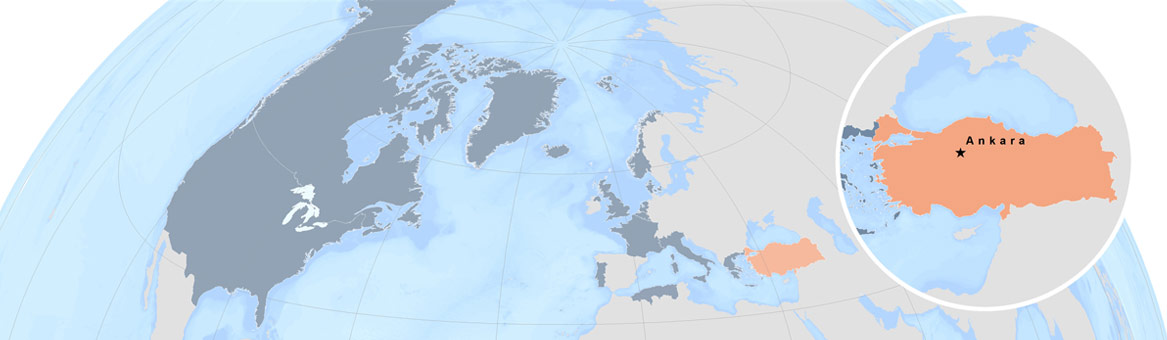
Türkiye and its NATO Allies in 1952, the year it joined the Alliance.
"You will find in us an ally animated by a spirit of whole-hearted collaboration and ready to take a full share in all the efforts directed towards the realisation of the aims of the treaty to which we are now acceding."
Minister of Foreign Affairs of Türkiye speaking at the meeting of NATO Foreign Ministers in Lisbon 20 February 1952
Mustafa Kemal Atatürk founded the Turkish Republic in 1923 and introduced vast reforms that led to the democratisation and modernisation of society – for example, as early as 1934, women were granted the right to vote. Foreign policy was founded on the principle of "Peace at home, peace abroad" and sought to reinforce cooperation and regional security. For instance, Türkiye initiated the Balkan Entente with Greece, Romania and Yugoslavia in 1934 and the Saadabad Pact of 1937 with Iran, Iraq and Afghanistan.
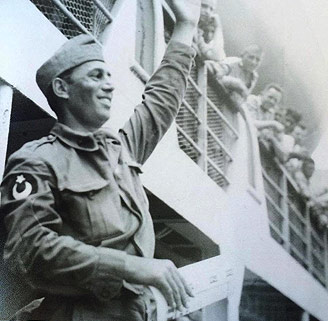 Turkish troops leaving for Korea
Threatened on two fronts by forces of the Axis and the Soviet Union, Türkiye was non-belligerent during most of the Second World War. After the war, it joined Western democracies in standing up against Soviet expansion as the Cold War started to develop. Türkiye later benefited from the support of the Truman Doctrine (1947) and the Marshall Plan (1948) offered by the United States to deter communist influence and help with the economic reconstruction of post-war Europe. In 1950, Türkiye sent troops in support of the United Nations to defend South Korea from the North Korean invasion across the 38th parallel. As a result of growing threats to security in Europe, it joined NATO in 1952.
As the Cold War gradually polarised international relations, putting the United States and the Soviet Union at loggerheads, Türkiye saw its NATO membership both as a security guarantee and a way of reinforcing its Western identity. Seeking NATO membership was as much a political move as it was a military one. For NATO, Türkiye's capacity to provide land and sea bases, its strong military forces and its strategic importance on the southeastern flank of the Alliance meant that the country would be a solid ally in the region. The Montreux Convention, signed on 20 July 1936, set the rules governing the passage of vessels of war through the Straits. Türkiye has implemented the Convention in full transparency and impartiality since then.
It was in Lisbon, Portugal, at the ninth meeting of the North Atlantic Council on 20 February 1952 that Türkiye was formally welcomed as one of NATO's two new members in the Alliance's first round of enlargement, alongside Greece; two days prior, Türkiye had signed its Instrument of Accession.
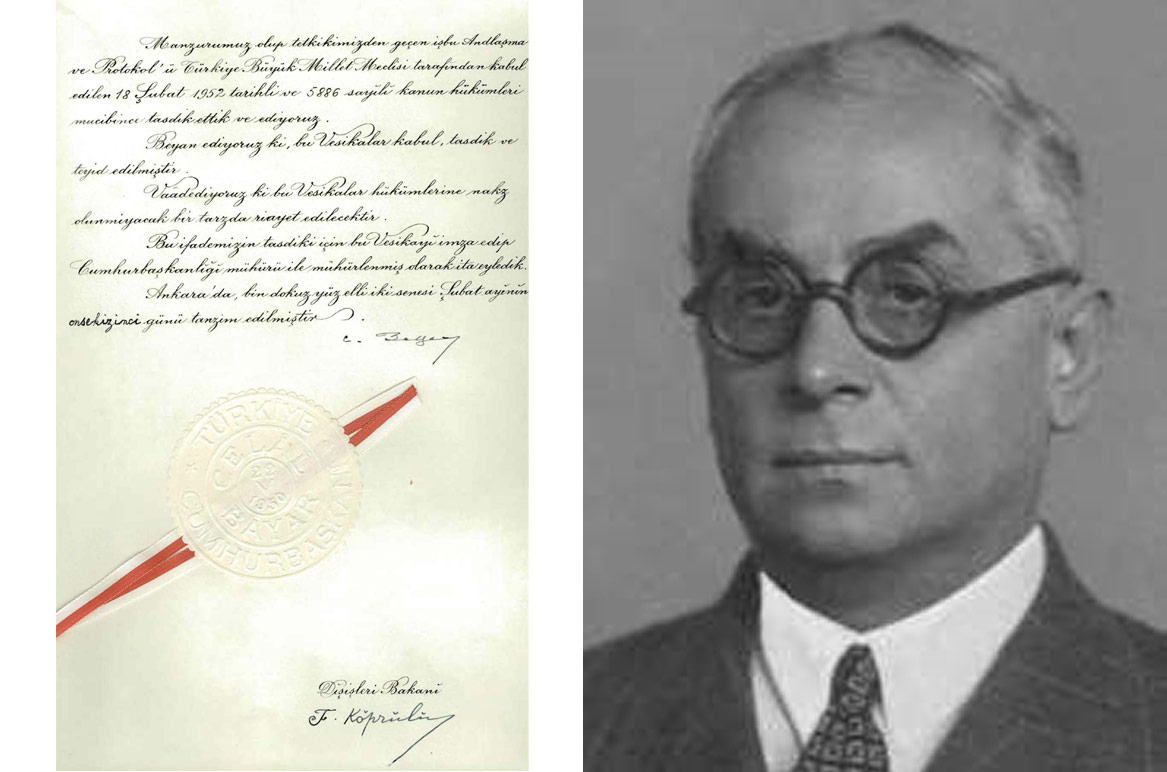 H.E. Mr Celâl Bayar, President of the Republic of Türkiye, signed the Instrument of Accession for Türkiye in Ankara on 18 February 1952.
A NATO film produced in the 1950s, as part of a series on NATO member countries, captures the atmosphere of this era and the country’s main characteristics: its strategic advantages, its political and historical heritage, and its profound post-war economic transformation, as well as its industrial and military assets.
Support for the West was practically unanimous across the country and went beyond military and security considerations. Türkiye identified itself with the West and its values, which helped the successive İnönü and Menderes governments introduce political and economic reform over two decades.
This film, together with other initiatives, was created by NATO to help the citizens of its member countries get to know each other. In the same spirit, the photo collection below depicts the daily life of Turkish citizens from different walks of life in the 1950s.
Some initiatives took on a more educational aspect. For instance, in 1962 NATO created posters showing the military uniforms (including badges and other insignia) of each member country. One such poster was produced featuring the uniforms of the Turkish Armed Forces.
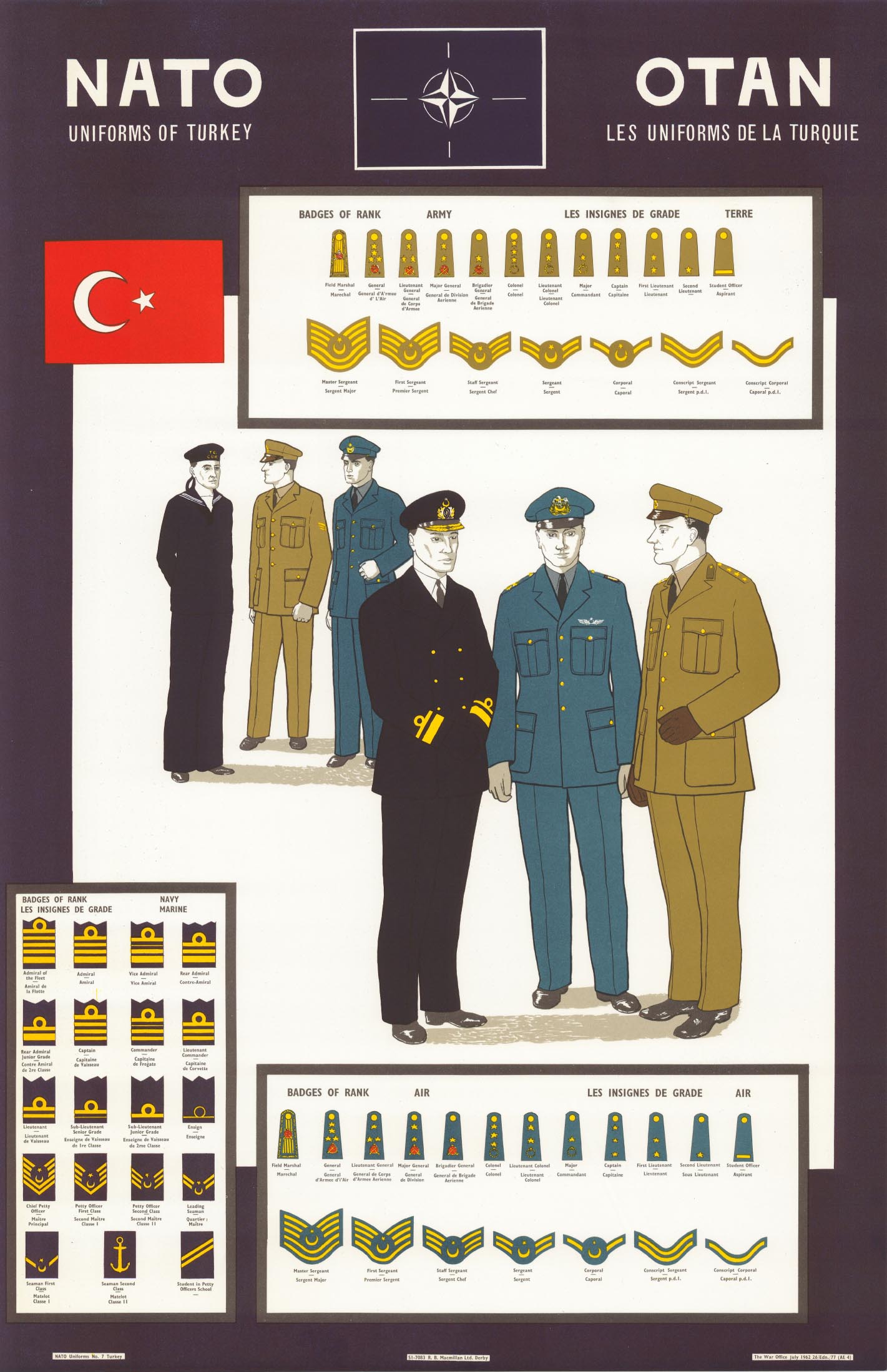
From NATO’s point of view, Türkiye was a cornerstone of Western security on its southern flank, so communicating with its citizens to explain NATO’s role was vital.
To introduce the new Alliance to its member countries’ citizens, NATO sent out mobile information units that showed films, distributed publications and answered questions directly from the public. The NATO bus, initially known as the “caravan of peace”, toured a wide range of NATO member countries, including Türkiye.
Türkiye embraced NATO membership and used it as an opportunity, for instance, to reorganise its army. The United States was particularly active in offering support in many areas, including military, economic and even educational spheres; it provided military assistance for many years. In parallel, Türkiye sought to maintain strong links with its other European Allies, some of whom had begun the process of constructing a “European Economic Community” of states. Türkiye’s first institutional tie with Europe after the Second World War was with the Council of Europe: it joined in August 1949 as one of the earliest members. Later, in July 1959, Türkiye applied to be associated with the European Economic Community (EEC) – the forerunner of the European Union. The negotiations resulted in the “Ankara Agreement”, signed on 12 September 1963, which created an association between Türkiye and the EEC.
Türkiye also cultivated relations with its neighbours in the region. In 1953, it signed the Balkan Pact with Greece and Yugoslavia to protect the latter from the perceived threat of the Soviet Union at the time. In 1955, it played a key role in the formation of the Baghdad Pact, which later became the Central Treaty Organization (CENTO). This pact brought together Iran, Iraq, Pakistan, Türkiye and the United Kingdom in a defensive military alliance until 1979, when it was dissolved.
More than a gift – a symbol
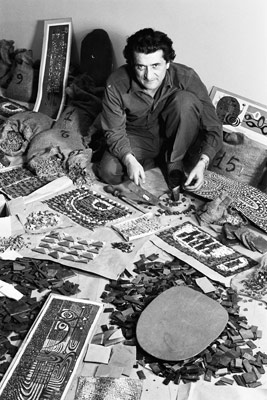
In 1960, Türkiye offered NATO a gift: a monumental mosaic that has since adorned three generations of NATO Headquarters – at Porte Dauphine in Paris, France (1960-1967), at the first headquarters in Brussels, Belgium (1967-2017) and now at the current headquarters in Brussels (2017-present). The mosaic weighs 10 tons and measures over 14 by 3.5 metres.
One of the most prolific figures in the history of contemporary Turkish art, Bedri Rahmi Eyüboğlu created the artwork over a period of six months. It combines the Anatolian tradition of making mosaics with classic folk symbols. A former Ambassador to NATO, Mehmet Fatih Ceylan, describes the design as a symbol of Türkiye’s integration into the Alliance and, more broadly, into the Western world.
Türkiye’s strategic location on the southeastern flank of the Alliance increased NATO’s presence and area of responsibility to the entire Mediterranean and the Black Sea. With this in mind, and just as the ink was drying on the Instrument of Accession signed by President Bayar, NATO Allies established a military headquarters in the port city of İzmir.
Allied Land Forces Southeastern Europe (LANDSOUTHEAST) was opened on 11 June 1952. Its area of responsibility stretched from the Caucasus to the western shores of Greece. It was responsible, together with the subordinate Thessaloniki Advanced Command Post, for the operational control of Greek and Turkish land forces, should a crisis or a conflict involving NATO break out. LANDSOUTHEAST was initially commanded by an American, with the support of two deputies: one from Türkiye and one from Greece. In 1974, Greece temporarily withdrew from NATO’s military command structure (returning in 1980) and in 1978, it was agreed that LANDSOUTHEAST would come under the command of a Turkish General, with an American Major-General to assist as deputy.
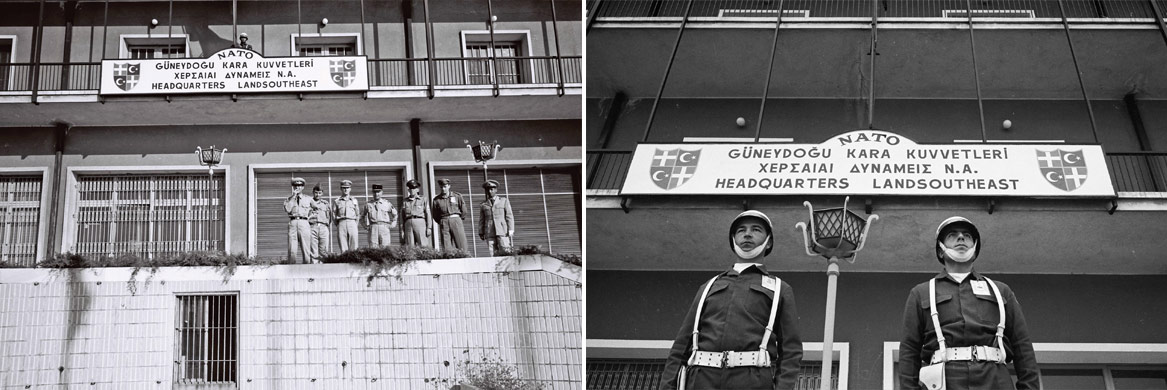
LANDSOUTHEAST was not the only NATO presence hosted by Türkiye. The Headquarters of the Sixth Allied Tactical Air Force was also based near İzmir on the grounds of the former American Collegiate Institute for Boys. Both came under the command of Allied Forces South (AFSOUTH), which had been based in Naples since 1951.
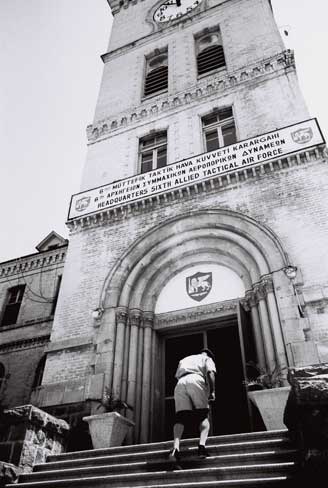
The Sixth Allied Tactical Air Force was NATO’s easternmost air headquarters. Its mission was to ensure the air defence of Greece and Türkiye, and deter any plans of aggression in this strategic corner of the world. It was supported by the Turkish 1st, 2nd and 3rd Tactical Air Forces and the Royal Hellenic 28th Tactical Air Force of Greece’s Air Force. It also utilised the services of the 39th Photo Reconnaissance Squadron of the United Kingdom's Royal Air Force unit flying out of Malta.
Preparedness was essential for aerial warfare, so crews were carefully trained to be airborne within minutes. Aircraft assigned to the Sixth Allied Tactical Air Force included jet fighters with conventional and nuclear capabilities, while others were simply reconnaissance aircraft.
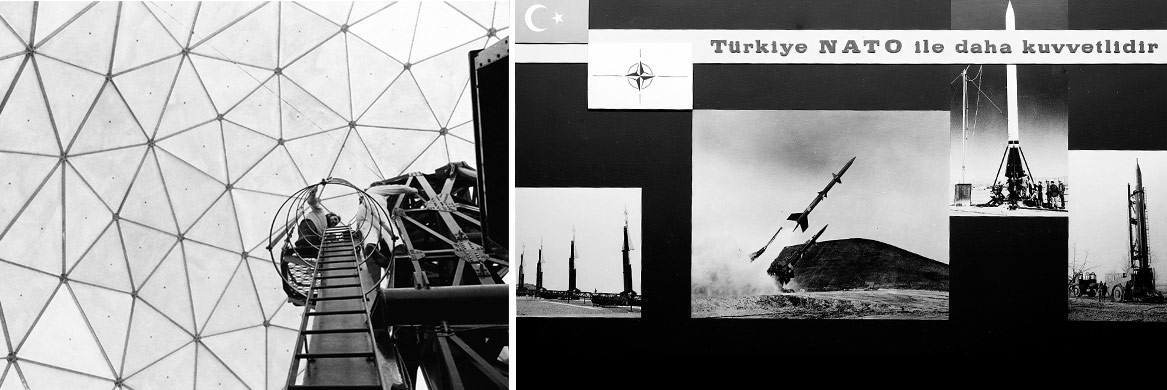
NIKE surface-to-air missiles also formed part of the air defence of Türkiye and Greece and, furthermore, in the early 1960s, NATO was authorised by Ankara to station medium-range Jupiter missiles near İzmir for a short period of time.
The NATO pipeline system, set up during the Cold War to provide fuel supplies in times of crises, also ran through the country, and the government authorised the use of some of its military bases by NATO forces.
Türkiye also participated in the NATO Air Defence Ground Environment (NADGE) programme, which provided the Alliance with a powerful barrier against the intrusion of fast-flying, or even supersonic, enemy aircraft into the NATO European airspace. An unbroken chain of stations ran through several NATO member countries to improve the Alliance’s ability to detect, identify and intercept aircraft and, if necessary, destroy enemy aircraft.
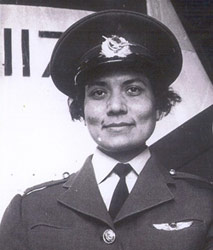 NATO's first female fighter jet pilot
The first female fighter jet pilot to operate under a NATO flag was Leman Bozkurt Altınçekiç, from the Turkish Air Force, in the late 1950s.
Türkiye, the Netherlands and Denmark were the first NATO countries to allow women to join their air forces. Türkiye was the first to train female fighter jet pilots, resulting in the historic milestone of Leman Bozkurt Altınçekiç taking to the skies.
Leman Bozkurt Altınçekiç © Turkish Air Force
Since its inception, the security of the Republic of Türkiye has been shaped by two main elements: geography and longstanding ties with neighbouring countries.
During the Cold War, Türkiye helped constrain Soviet naval access, provided one of Europe’s largest armies and hosted critical NATO facilities. It also joined Allied forces in the many exercises that were organised throughout the Cold War.
Türkiye considers the Alliance to bethe linchpin of transatlantic ties and Euro-Atlantic security. Article 5 of the North Atlantic Treaty – the Alliance's founding document – embodies the principle of collective defence and constitutes a valuable security guarantee for Türkiye, as it does for other Allies.
At the same time, Türkiye is a valuable asset for NATO and continues to contribute to the protection of the Alliance's southeastern flank. Over time, its role within the Alliance has adapted alongside the changing circumstances, risks and challenges that came with the end of the Cold War, while remaining committed to the shared effort of maintaining peace and security in the Euro-Atlantic area.
How science can change lives
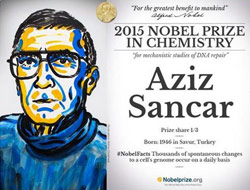
During the Cold War, Türkiye had a strong interest in NATO's science programme in more than one way. The most notable story is that of a boy from the province of Mardin in southeastern Türkiye: Aziz Sancar.
After toying with the idea of becoming a football star, Aziz decided to dedicate his life to research. Along the way, NATO supported his efforts, together with the Turkish Scientific and Technological Research Council (TÜBİTAK), with a fellowship grant that allowed him to move to the United States and take his research further. Later, he benefitted from two collaborative research grants from NATO that helped him and his colleagues focus on DNA repair; their work provided a better understanding of how our bodies fix DNA mutations that can cause serious illnesses and aging. Aziz Sancar went on to share the 2015 Nobel Prize in Chemistry with two other scientists for their work on DNA repair. He also set up a mentoring programme for young researchers, supporting young researchers in the way he had once been supported.
With the ultimate aim of encouraging mobility and fostering long-lasting ties between scientists, the NATO science programme has funded collaborative research in many ground-breaking domains. Professor Nimet Özdaş – a Turkish national – was able to pioneer a major anti-pollution project when he led NATO's science programme in the 1970s. Türkiye, together with Greece and Portugal, were the main beneficiaries of the Science for Stability programme during that period.
The following film was produced by NATO as part of the "Prospect of…" series; it built on “The Atlantic Community Series” produced in the 1950s (see above), which aimed to introduce each member of the Alliance in a modern way.
The film offers a colourful portrait of 1960s Türkiye that combines its remarkable history and impressive technical and economic development. It takes the viewer through the achievements of Mustafa Kemal Atatürk, the founding father of the Republic of Türkiye, whose reforms transformed Türkiye's industries, infrastructure and education system and helped drive modernisation and economic development. Besides bridging tradition and innovation, the film also takes stock of the Turkish military contribution to the defence of the West during the Cold War.
To discover how Türkiye contributes to the Alliance today, visit NATO on the Map.


