Close
Back


From now on you can download videos from our website
If you would also like to subscribe to the newsletter and receive our latest updates, click on the button below.
Enter the email address you registered with and we will send you a code to reset your password.
The password must be at least 12 characters long, no spaces, include upper/lowercase letters, numbers and symbols.
Click the button to return to the page you were on and log in with your new password.
Updated: 29 September 2026
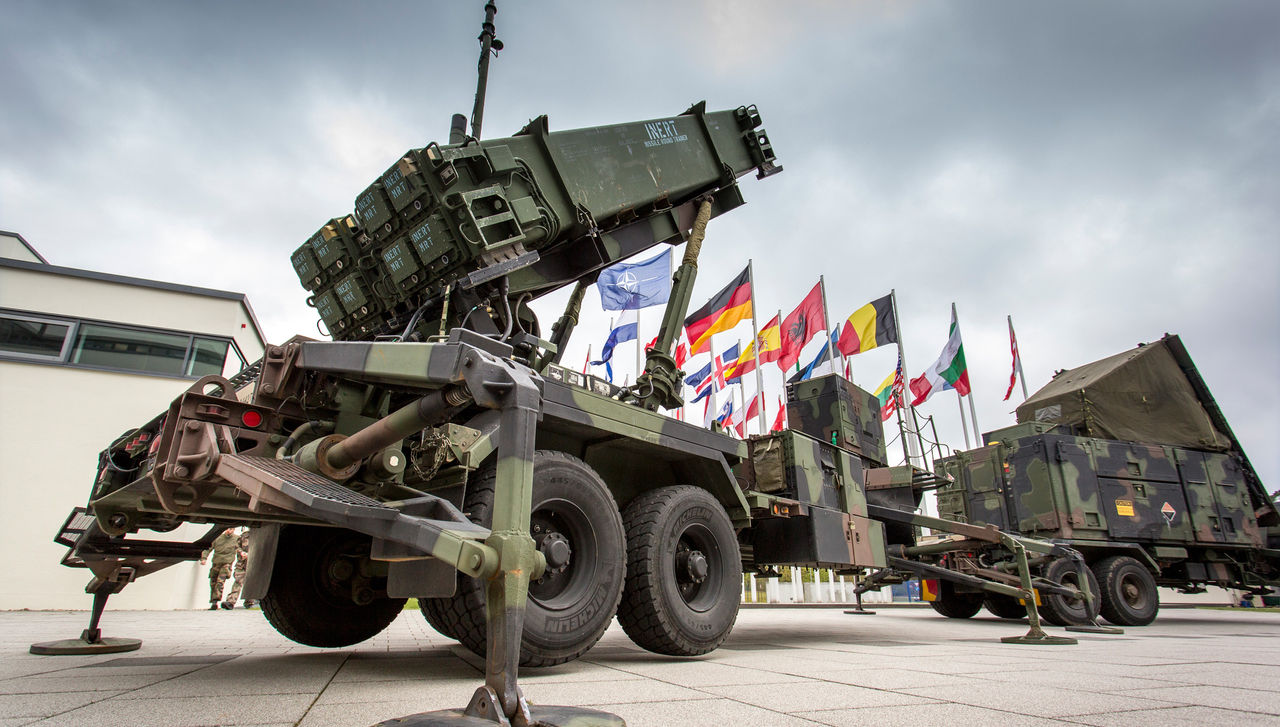
NATO Integrated Air and Missile Defence (NATO IAMD) is an essential and continuous mission in peacetime, crisis and conflict, protecting Alliance territory, populations and forces against any air or missile threat or attack. To achieve this objective, NATO IAMD takes a 360-degree approach, addressing air and missile threats from all strategic directions, whether from state or non-state actors. It incorporates all measures – such as 24/7 air defence and ballistic missile defence – to contribute to deterring any air and missile threats, or to nullify or reduce their effectiveness. NATO IAMD is a core element of NATO’s deterrence and defence posture, contributing to the Alliance’s indivisible security and freedom of action, including NATO’s ability to reinforce its deployments and to provide a strategic response.
NATO Air Defence is conducted within the framework of NATO IAMD in peacetime, crisis and conflict. The NATO Air Defence mission is a strong demonstration of cohesion and solidarity among Allies, as countries with fighter aircraft capabilities, both individually and in multinational teams, help to ensure the integrity of the airspace of countries that do not possess them. At the same time, this approach enables smaller Allies to invest in other key capabilities that boost NATO’s overall security, rather than requiring them to maintain their own costly national air forces. In response to Russia’s war against Ukraine, the Alliance has enhanced NATO Air Defence along NATO’s eastern flank, strengthening NATO’s deterrence and defence posture.
Throughout 2026, NATO has upgraded its Air Policing mission – which began in 1961, and safeguarded NATO airspace for 65 years – and integrated it with other activities, such as Eastern Sentry and the IAMD Rotational Model, into its current comprehensive Air Defence posture. While NATO Air Policing was primarily oriented to protect against threats from aircraft, NATO Air Defence provides a broader range of capabilities to protect against a full spectrum of threats across all operational domains (air, land, maritime, space and cyberspace). Using a multi-layered, 360-degree approach, NATO Air Defence provides greater flexibility and faster response to changes in the security environment.
NATO Ballistic Missile Defence (BMD) is a permanent activity to defend NATO’s European populations, territory and forces against the increasing threat posed by the proliferation of ballistic missiles. The US European Phased Adaptive Approach (EPAA) is one of the central pillars of NATO BMD. It includes ground- and sea-based radars and effectors provided by the United States. Other Allies are also providing, developing and acquiring BMD assets, which are integrated into NATO BMD.
Integration is an essential requirement for NATO IAMD, as it provides coordination of all available air and missile defence capabilities. A key prerequisite for integration is interoperability (procedural, technical and human). Training and exercises play a significant role in this regard. They also demonstrate Allied resolve and can have a deterrent effect.
A key example of integration is the NATO Air Command and Control (Air C2) systems, which allow the Alliance to manage NATO air operations in and out of the Euro-Atlantic area. The systems cover a theatre of operations spanning 81 million square kilometres (not including deployable capability) from the northernmost point of Norway to the Mediterranean Sea, and from the easternmost point of Türkiye to the North Atlantic.
The unprecedented scale of Russian air and missile attacks throughout its war against Ukraine underlines the importance of credible and robust air and missile defence.
In response, Allies have deployed additional IAMD capabilities to NATO’s eastern flank. They also continue to conduct training and exercises to test these capabilities and ensure their readiness to respond to any threat.
NATO continues to strengthen its IAMD in line with the Alliance’s Strategic Concept – which sets the baseline for NATO’s deterrence and defence posture – and a new generation of regional defence plans, both agreed by Allied Leaders at the 2022 Madrid Summit.
At the 2023 Vilnius Summit, Allies agreed to further enhance NATO’s IAMD posture, in particular through the IAMD Rotational Model, providing regular training and the rotational presence of modern air defence systems and capabilities across SACEUR’s Area of Responsibility, with an initial focus on the eastern flank.
At the 2024 Washington Summit, Allies took steps to further improve the readiness, responsiveness and integration of NATO IAMD. They welcomed updates to NATO’s IAMD Policy and the implementation of various initiatives, such as the IAMD Rotational Model and the Enhanced Operational Capability of NATO BMD. Furthermore, at the Washington Summit, Allies agreed measures to strengthen Ukraine’s air and missile defence. NATO will support and advise on the design and implementation of an integrated air and missile defence architecture for Ukraine, to enable the most efficient use of Ukraine’s air and missile defence capabilities and support its transition to full interoperability with NATO.
At the 2026 Ankara Summit, Allies updated their operational plan for the conduct of the NATO IAMD mission. As part of a package of measures to ensure a flexible, adaptable and efficient use of available resources and capabilities, Allies agreed to upgrade NATO’s Air Policing and integrate it with other activities to form a comprehensive NATO Air Defence posture.
The Integrated Air and Missile Defence Policy Committee (IAMD PC) is the senior committee responsible for all policy and political-military aspects of NATO IAMD, including NATO Air Defence and NATO Ballistic Missile Defence, as well as relevant Joint Air Power elements. It reports to the North Atlantic Council, the Alliance’s principal political decision-making body.
The Military Committee Working Group for Air and Missile Defence (MCWG AMD) is responsible for reviewing, advising and making recommendations on military aspects of air and missile defence issues to NATO’s Military Committee, the senior military authority in NATO.
The Conference of National Armaments Directors (CNAD), which promotes cooperation between countries in the armaments field, also oversees the implementation of NATO’s BMD Programme.
NATO IAMD has evolved from the original concept of NATO Integrated Air Defence. This was first implemented in 1961 through the use of the NATO Integrated Air Defence System (NATINADS) under the command and control of the Supreme Allied Commander Europe (SACEUR).
During the Cold War, NATINADS was a largely static system arrayed in belts against a unidirectional and well-defined threat of manned aircraft from the Soviet Union. Since then, NATINADS has evolved into the NATO Integrated Air and Missile Defence System (NATINAMDS), which meets the challenges of today's less predictable environment and is capable of deploying and addressing the full range of air and missile threats from all directions.
The NATO Air Command and Control System (ACCS) programme was formally established in November 1999 to provide the Alliance with a single, integrated air command and control system to manage NATO air operations in and out of the Euro-Atlantic area. Since then, NATO Air C2 systems have continued to evolve, ensuring that the Alliance is able to meet any challenge or threat.
The devastating impact of Russia’s missile attacks during its war against Ukraine has demonstrated the importance of credible and robust IAMD. In response, Allies have deployed additional IAMD capabilities to NATO’s eastern flank and agreed measures to further strengthen IAMD systems.
Russia’s war against Ukraine has also underlined the threat posed by uncrewed aerial systems (UASs) and uncrewed aerial vehicles (UAVs). With drones being relatively inexpensive and quick to mass produce and deploy on the battlefield, NATO IAMD has had to rapidly evolve to account for these emerging capabilities. Through initiatives like NATO’s Drone Edge, the Alliance is committed to developing offensive UAS capabilities as a deterrent, and counter-UAS solutions as key defensive capabilities.
NATO and Allies continue to improve IAMD capabilities – such as surveillance, interceptors and command and control – particularly through the NATO Defence Planning Process (NDPP). As a result, a number of Allies are acquiring or developing air and missile defence systems. These new assets will further enhance NATO IAMD.