Close
Back


From now on you can download videos from our website
If you would also like to subscribe to the newsletter and receive our latest updates, click on the button below.
Enter the email address you registered with and we will send you a code to reset your password.
The password must be at least 12 characters long, no spaces, include upper/lowercase letters, numbers and symbols.
Click the button to return to the page you were on and log in with your new password.
30 October 2026
1 MIN READ
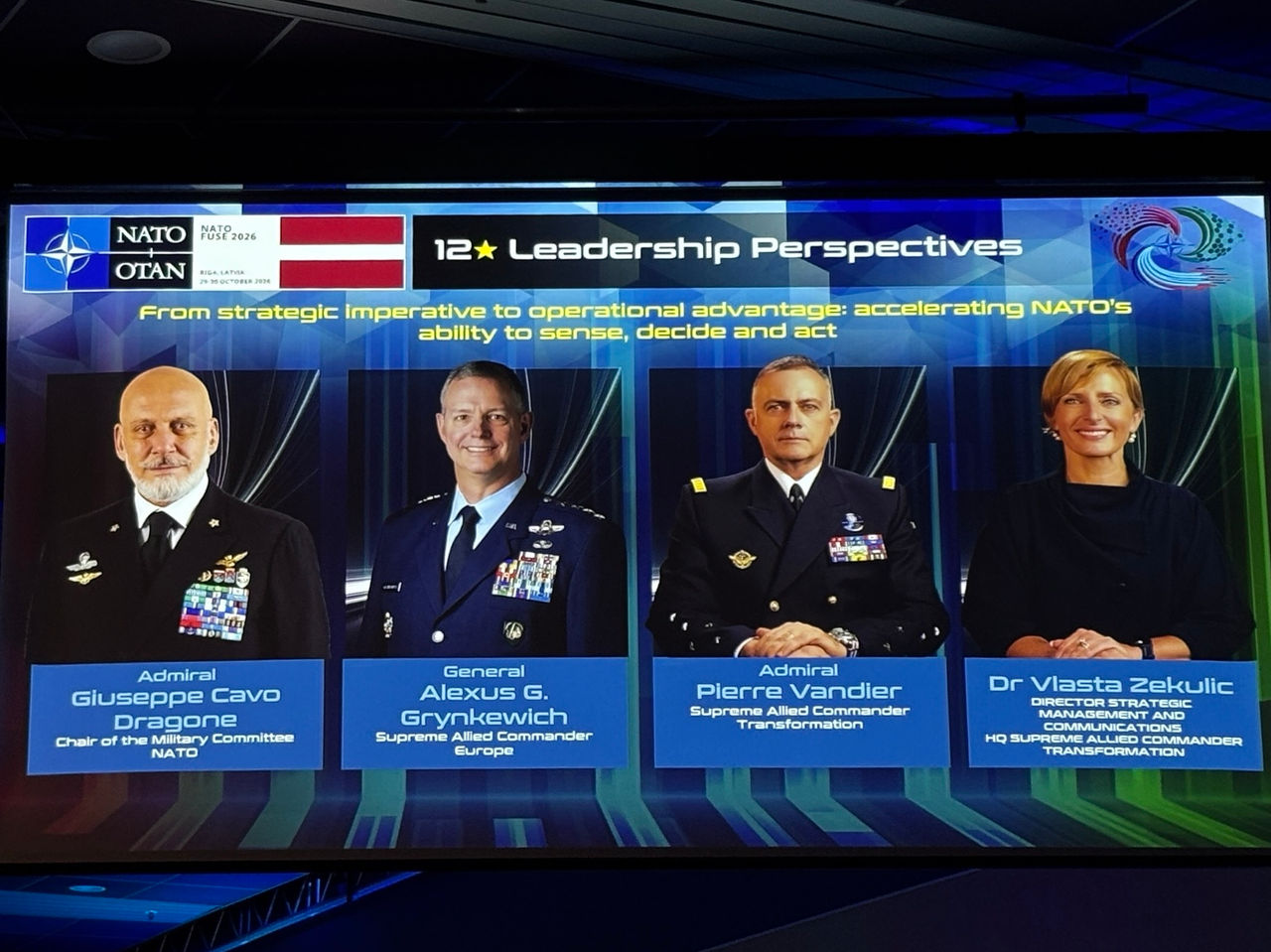
Riga, 30 October 2026 - The Chair of the NATO Military Committee (CMC) attended the NATO Federated Unified Sensing and Effects (FUSE) experimentation event in Latvia today.
At a high-level distinguished visitor day, with other senior NATO and Allied leaders, industry, capability developers, and other stakeholders, Admiral Giuseppe Cavo Dragone said that “Ukraine has taught us that adaptation cycles are now measured in weeks, not years. Next year I expect to see a sensor-to-shooter chain against swarm of drones that works across several nations' systems and is fielded with units on the eastern flank. The Military Committee's role will be to support you with clear military advice, so that political decisions and national investments move in the same direction, quickly.”
For nearly two weeks, NATO Allies, military operators, and industry conducted operational experimentation in Latvia, testing how emerging technologies and capabilities from different nations can work together to address rapidly evolving battlefield threats. Under the leadership of NATO Allied Command Transformation (ACT), the effort brought together digital connectivity, counter-drone defence, and next-generation targeting to strengthen interoperability and help accelerate the development of capabilities for Allied forces.
The next phase will involve assessing the findings, identifying remaining challenges, and determining appropriate next steps with Allied nations, operators and industry.
21 October 2026
7 October 2026
24 September 2026