Close
Back


From now on you can download videos from our website
If you would also like to subscribe to the newsletter and receive our latest updates, click on the button below.
Enter the email address you registered with and we will send you a code to reset your password.
The password must be at least 12 characters long, no spaces, include upper/lowercase letters, numbers and symbols.
Click the button to return to the page you were on and log in with your new password.
NATO Secretary General Mark Rutte
Drones have fundamentally altered, as we all know, the character of modern warfare. And they have become a decisive factor on the battlefield. This is clear from what we see in Ukraine, in the Middle East, and across the Alliance. Allies themselves have seen repeated drone incursions. In response, NATO is rapidly expanding our ability to deploy and operate drones at scale. And at the same time, we are building robust counter-drone defences to detect, identify, and neutralise drones. That’s how we protect our one billion people against the full range of drone threats. And today, we are launching the NATO Drone Edge initiative.
Through this initiative, Allies are investing over 40 billion dollars in counter-drone capabilities over the next 5 years. And because the capabilities require that we have the right people to operate them, Allies are also committing to train five times as many drone operators in their armed forces by the end of 2027.
NATO will support Allies in various ways to deliver on their commitments. We will begin by launching a counter-drone marketplace. The aim here is to help procure counter-drone capabilities at scale and speed. NSPA is also here to make sure that the contracts are there, worth hundreds of millions of euros to procure surveillance drones for Allies. And NATO is increasing its drone training capabilities, including through a project called NATO Flight Training Europe.
Today, Finland, France and Sweden join this project, bringing the total number of Allies to 20, with 16 flight training centres across eight Allies. Together, we are building a drone-ready Alliance. We are leveraging the latest innovative technologies, investing in our transatlantic defence industries, and learning real-world lessons from the battlefield in Ukraine. There is more to come this morning, so please stay tuned.
NATO Spokesperson Allison Hart
Thank you so much. There is indeed more to come. Thank you, Secretary General, and thank you all for your attention. The announcements will continue. And we will have NATO’s Deputy Secretary General Radmila Shekerinska join us in just a moment to outline even more new initiatives that NATO, Allies and industry are undertaking in the areas of space and surveillance, strike capabilities, and integrated air and missile defence. So, I would like to invite Mark Sanders, NATO’s Deputy Spokesperson, to introduce the next segment.
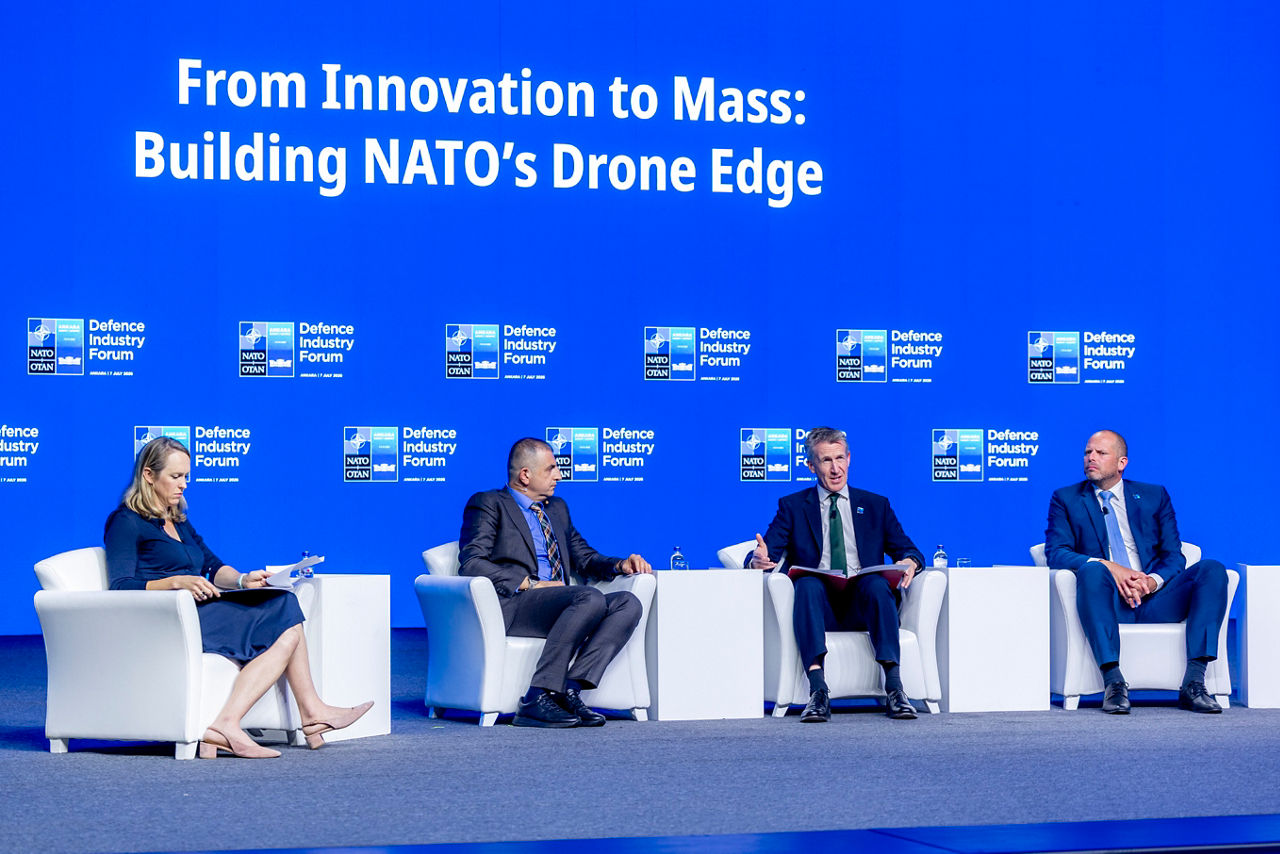
NATO’s Drone Edge
07 July 2026