Close
Back


From now on you can download videos from our website
If you would also like to subscribe to the newsletter and receive our latest updates, click on the button below.
Enter the email address you registered with and we will send you a code to reset your password.
The password must be at least 12 characters long, no spaces, include upper/lowercase letters, numbers and symbols.
Click the button to return to the page you were on and log in with your new password.
Good afternoon, and welcome to the Presidential complex here in Ankara, in Türkiye, for the 2026 NATO Summit.
First of all, let me thank President Erdogan and his team for hosting us at this fantastic venue. I am truly impressed, not least by the hospitality extended to us by our Turkish hosts.
We are meeting here in Ankara one year after NATO leaders gathered for our Summit in The Hague, where Allies made historic commitments. They agreed on the urgency of making our Alliance stronger, because of the dangerous world we face. They committed to invest 5% of GDP in defence by 2035. And now, just one year later, we already see transformational progress.
Here in Ankara, I expect nations to present clear, concrete and credible plans to reach that 5% goal. And the evidence we see so far is impressive.
Just one year into a 10-year project, we see that European Allies and Canada are already investing around 4% of their GDP in defence and security.
This includes major increases to Allies’ investment in core defence, as well as their defence- and security-related investments.
Last year, European Allies and Canada spent nearly 20% more on core defence than they had the year before. Looking at 2025 and 2026 combined, that’s 258 billion dollars in extra investment. And the trend continues.
We will need more forces, more resources and a much stronger industrial base. After years of under investment, we are producing real capabilities. European Allies and Canada are now on a trajectory to equalise their defence spending with the United States. And not just that.
They are taking on more leadership within NATO’s command and control structure. Stepping up on conventional defence – on efforts to bolster our deterrence and defence including along the entire eastern flank, in the Baltic region and the Arctic. And spearheading support to Ukraine.
All of this is evidence of a real shift in mindset. A stronger Europe in a stronger NATO.
The investment is there. And now we need to ensure that we’re translating our economic might into military capabilities. Putting the cash to work. From defence plans to drones, from money to missiles and interceptors.
This means ensuring innovation is front and centre, overcoming fragmented national defence industries and cutting red tape.
The NATO Summit Defence Industry Forum, which we’ll host tomorrow, will be the platform where we showcase how we’re working with industry to deliver the capabilities that credible deterrence and defence demand.
We will announce tens of billions in new contracts that will provide the crucial kit we need to deter and defend.
And when our industries, from Arkansas to Ankara, combine their strengths and step up supply, the result is not only improved security.
This will help grow our economies, spread innovation and support hundreds of thousands of jobs, on both sides of the Atlantic.
So we are investing in our own security. Ensuring we have what we need to safeguard our societies today and tomorrow. Because the threats we face are real – including from Russia, which continues to wage war on Ukraine.
Right now, Ukraine is changing the dynamics on the battlefield, thanks to the bravery, the dedication, and ingenuity of their armed forces. But they need our continued support, especially when it comes to air defence. Russia continues drone and missile attacks on Ukrainian cities, with another horrific attack just last night.
So as Ukraine continues to defend its sovereignty, Allies and NATO partners must continue to ensure Ukraine gets what it needs.
And let me be clear, all Allies need to pull their weight, so that our support to Ukraine continues to flow.
Because Ukraine’s security is so closely linked with our own.
So, that is the overview of our agenda for the Summit here in Ankara.
We are delivering on the commitments made in The Hague to invest in our defence.
We will ensure that we are rebalancing for the better – fairly sharing the responsibility for our shared security.
We will turn cash into capabilities, joining forces with industry.
And we will continue our robust support for Ukraine - reminding President Putin that we are firm in our commitment.
Over the next two days, the 32 Allies, along with partners from Ukraine, the European Union, the Indo-Pacific, and the Gulf will gather to ensure that NATO continues to deliver.
Together we represent nearly two-thirds of the world economy and we are coming together because we know that cooperation is key. We are stronger together, in NATO, with partners, to ensure the freedom and security we all hold dear.
Thank you.
NATO Spokesperson Allison Hart
Alright, and now we will head to questions. We will start over here, fifth row, towards the end.
NATO Secretary General Mark Rutte
Good afternoon.
Nic Robertson, CNN
Good afternoon, thank you for taking the questions. So, since The Hague Summit, President Trump has very heavily hinted that he'd like to annex Greenland. He has very heavily chastised NATO Allies for not being on the front line enough in Afghanistan and Iraq. He has been upset that NATO Allies have not stepped up and provided the support that he was hoping for around Epic Fury, the United States and Iran war. What sort of tone is this Summit going to have, and how hard is it in the light of that to project this consistent tone of unity and strength? The message that you just said is core.
NATO Secretary General Mark Rutte
Well, let me say that I had a good visit last week with President Trump, and we discussed the staggering increase in defence spending by Europeans and Canadians. And, of course, this is because of Putin and Russia and Ukraine, but also because he, President Trump, has been extremely forceful, encouraging us to do this. You could argue that he is the first President of the US since Eisenhower who was able to come to this situation where the Europeans and the Canadians will spend the same as the Americans. This equalisation was a wish for 50, 60 years, and now it's happening, and I think a large part to his leadership. And we also discussed some of the disappointment he has, for example, that comes to the Strait of Hormuz, or Iran more generally. And we also discussed almost 5,000 sorties of planes taking off from European bases in support of Epic Fury. And only last Friday we have seen the French and the Brits coming together with the Omanis to make sure that collectively they will defend the principle of the freedom of navigation in the Strait of Hormuz, which is an extremely important development only in the last 72 hours.
NATO Spokesperson Allison Hart
Okay, staying over here, seventh row the man in the tee-shirt.
Volodymyr Runets, ICTV
My name is Volodymyr Runets. I'm from Kyiv, Ukraine, ICTV. Obviously, this Summit is happening just across the Black Sea from Putin's war against Ukraine, and we have seen clearly what happened last night was obviously a clear message to NATO. Have the leaders discussed that message, have they heard it, and what will they say in response?
NATO Secretary General Mark Rutte
Well, I think the message last night again was how desperate Putin is, because you guys, Ukrainians, are doing well on the battlefield. When you look at, of course, this is terrible news for all the Russian families involved, Putin is willing to accept that up to 35,000 of his own, primarily men in uniform, are getting killed on the battlefield, which is terrible news for the families, but, of course, from a military point of perspective, important for Ukraine. You are successful there. You are hitting the Russian economy. You are hitting deep into Russia when it comes to energy infrastructure, when it comes to crucial defence industrial capacity of Russia. And you are able on the front line to prevent the Russians from making big advances like a couple of months ago, where at least they made some progress on the front line. They are not doing that anymore, it is now more or less of a stalemate. So what happened last night is an indiscriminate attack on innocent civilians, on infrastructure, cities in Ukraine, people getting killed, but this is not the way Russia can ever win this war. Of course, it is terrible for the people involved, and my thoughts and prayers are with them, and the people in Kyiv and other cities who have to go through this, but the fact is that you guys are doing so much better over the last couple of months than only three or four months ago.
NATO Spokesperson Allison Hart
Okay, let's come to this side of the room. The fifth row, woman in the brown tee-shirt.
Deborah Haynes, Sky News
The UK Ministry of Defence today has revealed that a Russian spy plane has been sort of flying over the aircraft carrier, that's the NATO flagship at the moment in the High North, dropping large numbers of these sonar devices. That it's believed was more to harass the warship. What's your response to this act by Russia? And do you think that the fact that Russia feels confident enough to harass a NATO warship on the eve, just ahead, a few days before the NATO Summit, we've had these drone sightings across sites across Europe, lots of other sort of sub-threshold activities. Are you worried that it means that NATO is failing to deter Russia under the threshold of conventional war, despite all of this strong language about increasing defences?
NATO Secretary General Mark Rutte
To the contrary, and your country, the United Kingdom, did exactly what needed to be done. Let me commend the British military for the actions they took, and that's part one of my reaction to your question. Part two is that it also shows the unprofessionalism of the Russians, willing to do this so close to this ship. Of course, that's reckless, it's unprofessional, and again the UK armed forces did exactly what they needed to do, and this is evidence that we will defend ourselves.
NATO Spokesperson Allison Hart
Alright, and then just behind her in the sixth row.
Latika Bourke, The Nightly
Overnight, China has confirmed that it has tested a missile in the South Pacific. The IP4 plan to raise this here at NATO. How will you discuss this? And given the seriousness of this, is it a concern to you that for the second year in a row you are struggling to get IP4 leaders attend this Summit?
NATO Secretary General Mark Rutte
On the second part of your question, no, because we have a very close cooperation with the IP4, including with Anthony [Albanese], your Prime Minister, and the Prime Ministers and Presidents of New Zealand, the Republic of Korea, and Japan. I was just texting this afternoon with the Japanese Defence Minister about this latest development. And I think it is evidence of the fact that we cannot be naive about China, you know this. And this is why we have this close cooperation, because these theatres are getting more and more intertwined, connected. What happens in the Indo-Pacific is relevant to what is happening in the transatlantic. And we see it also in the war with Ukraine, where China, North Korea, and Iran are key enablers of Russia's unprovoked war of aggression against Ukraine. So this again is evidence that we cannot be naive, and I can assure you that we are on it.
NATO Spokesperson Allison Hart
Okay, coming over here, fourth row AP.
Lorne Cook, AP
You mentioned in your opening remarks clear, credible, concise plans that the Allies have to come up with. What if they don't, is the obvious question. The US envoy has spoken of something in store if that's not the case. And then more generally, if we look at this stronger Europe in NATO, how does NATO actually accommodate that? How do you give them more planning responsibilities, more command? How do you simplify the political decision-making that is really difficult to do?
NATO Secretary General Mark Rutte
I don't think so. And to your second part of your question, that's already happening. You see Europeans taking over commands in NATO when it comes to the real war fighting. And the Americans will then make sure that when it comes to land, air, and sea commands, they will take care of those. So, there is already a clear distinction of labour where the Europeans are stepping up. We see the same when it comes to Ukraine, the US still providing crucial kit into Ukraine, the defence industrial output, like interceptors were paid for by the Europeans and Canada. And we see it on so many other fronts. When you look at the mass of people in the forward land forces, when it comes to Baltic Sentry, Eastern Sentry, Arctic Sentry, it is the Europeans and the Canadians providing the mass of the men and women in uniform there. So that's Europe and Canada stepping up, so that's already happening, and the present structures accommodate for that.
And when it comes to your first part of your question, the good news is, with the 250 billion extra spent in 2025 and 2026, can you imagine 250 billion dollars by the Canadians and the Europeans? That means that we have reached the max in terms of absorption capacity. Why? Because there is a limit to what you can spend extra in one or two years in terms of recruiting the men and women in uniform, making sure that the defence industrial base, which is rapidly developing and turning out more output. But still, of course, there is a limit to what they can do in pumping up the output in one or two years. So I think we are in really good shape, and massively Europeans are stepping up. Look at countries like Germany and so many others. And of course, if one or two still have to be convinced, we have ways to do that.
NATO Spokesperson Allison Hart
Alright, we're going to come here in the third row, and I'll ask the mic to first come to the man in the black tee-shirt, and then the woman next to him. So, if you could just wait there. Thank you.
Niels Goedegebuur, ANP
You extensively praised the host nation, but we have seen in the past few days, weeks, a crackdown again on dissidents, on journalists, a comedian. Is Ankara still the best place to have a summit of liberal democracies, and do you think it's a good occasion for leaders to address these issues with President Erdogan?
NATO Secretary General Mark Rutte
Let me say this, when it comes to democracy, democracy is more than elections. Elections, of course, are crucial in democracy, but democracy is also the free media, you in this room, that you can ask all the questions you want, and write the pieces you want, and do your research, etcetera. And, of course, democracy is also for people to be able to organise demonstrations if they so choose. So it's much more than only free elections, and when it comes to the media, it is very important for NATO that media can attend major events in person.
NATO Spokesperson Allison Hart
Okay, and then the woman here.
Piril Cennet, Milliyet
Secretary General, how important is Türkiye to NATO's future security strategy?
NATO Secretary General Mark Rutte
Very important, of course. You are there almost since the beginning, since 1952, so a couple of years after the start, Türkiye joined NATO. You have one of the biggest armed forces in NATO, well trained, and particularly the last 5 to 10 years, you have rapidly developed your defence industrial base. You have now about 3,000 companies every day churning out the kit, the defence industrial output our men and women in uniform need to defend ourselves. So, for all these reasons, Ankara, Istanbul, Türkiye as a whole is really important, and your place on the map is important. Your leadership in NATO is important, and the fact that you organised this Summit, now, this NATO Summit here in Ankara is evidence of that.
NATO Spokesperson Allison Hart
Okay, we're going to come back to this side of the room. We're going to start in the second row. The man in the suit with the glasses, maybe come to the front row. I think that'll be easier if you get it from there.
Robert Lupitu, Calea Europeana
Mr Secretary General, this Summit is taking place amid renewed calls from the US side for European Allies to assume greater responsibility for NATO's defence, while the US reviews its military posture in Europe. How confident are you that this burden-shifting model will strengthen, not weaken, the US commitment to European security? And what message does this send to both Ukraine as a partner and Russia as a threat? And also, if I may, because colleagues mentioned threats from Russia, drones have been and continue to be a threat. We've seen this in the eastern flank, from the Baltics to the Black Sea. Will this be addressed in the Summit, and also at the NATO industry forum, and how it will be addressed? Thank you.
NATO Secretary General Mark Rutte
Absolutely, you will see tomorrow that we will talk about drones. No doubt leaders will bring this issue up on Wednesday when we have the leaders meeting, but also tomorrow in the industry event you will see drones front and centre in many discussions, it is crucial. When it comes to your first part of your question, let me first of all say the changes to the NATO force model, and again this is a planning tool, so it means that nations declare what they will provide to the collective if SACEUR, the Supreme Allied Commander, needs it. And what the US has done, and I think this was important, is assessed again what they can provide to NATO in case of a two-theatre conflict, let's say a conflict in the Indo-Pacific and in the Euro-Atlantic. And as General Grynkewich, the Supreme Allied Commander, has already stated, it makes us stronger that we know what we can count on. It's not a massive drawdown in terms of what they will provide, but we now know much more exactly what the Americans can provide, and already the Europeans are backfilling.
But there is more to this question than only this discussion about the NATO force model. What you are seeing is a NATO which indeed is changing in a transformational sense. I would argue that the NATO, as we have only 3, 4, 5 years ago, was not sustainable. It is not sustainable that we ask a country with 350 million people, living 8 hours flying from here, to defend against the Russians, with 600 million people living in this part of NATO territory, the richest part of the world, being so overly dependent on the United States. So rebalancing that, United States still providing a nuclear umbrella, the United States still providing a crucial conventional support to NATO as a whole, and therefore to the transatlantic security, and therefore, of course, also to their own security. For example, preventing nuclear submarines from Russia ending up on US shores. But generally speaking, rebalancing that is crucial. And therefore a stronger European role, Canada also stepping up is important because otherwise the Alliance, to be honest, would long-term probably not have been sustainable. We are now creating an Alliance which is sustainable where the US knows it is a fair deal. We are spending the same as they are, taking more responsibility for the conventional defence of Europe. Stronger Europe, stronger NATO, yes.
NATO Spokesperson Allison Hart
Right, we're going to take two more on this side, and then come back to this side. So, here in the third row, towards the centre.
Steve Sedgwick, CNBC
So, I admire your optimism, which has followed through since the groundbreaking achievements in The Hague, but if we were in such a good place, why would Pete Hegseth be accusing Allies of freeloading, of free-riding, having a review which is holding the sword of Damocles over you and NATO about which parties will pass, which will fail. You talked about the European money, which is being spent, and yet he's dividing nations, saying you get support, you won't get support if you don't spend enough, as well. The US is splitting NATO, isn't it, rather than bringing it together?
NATO Secretary General Mark Rutte
It is not. It is, I think, bringing NATO closer together. And having a review regularly, I think, is only wise. And the way it will be organised with the Supreme Allied Commander being centre stage in the review, the fact that the Americans have declared very clearly that they will do this in close coordination with all Allies, I think is absolutely important. And as we have seen previously with the NATO force model, of course, these adjustments are different from the review, these are different tracks and different processes, but also there they have done this in close coordination and consultation, so no worries there.
NATO Spokesperson Allison Hart
Okay, the row behind him, the woman towards the centre.
Charlie Hancock, Moscow Times
Lithuania and Finland just lifted their prohibitions on hosting nuclear weapons on their territories. Does that make us safer, and what can you tell us about the future for nuclear weapons within NATO?
NATO Secretary General Mark Rutte
Well, these, of course, are decisions by countries to lift these restrictions they had in the past. What we know is, when it comes to the nuclear umbrella, crucial here is, of course, the United States. The US nuclear umbrella is the ultimate guarantor of our freedom and security in the whole of NATO, of course, particularly also when it comes to the European part of NATO territory. But you also have the British and the French nuclear capabilities, where the French are a little bit outside the NATO structures, but of course very much there, and the Brits coordinating within the NATO structures. And this is because of political decisions made many years ago. But as you know, the French have recently announced how they want to make sure that their nuclear deterrence will have even a bigger impact when it comes to the overall deterrence of the Alliance in close coordination and consultation with the Americans. So I think when it comes to nuclear, we are really in a good place. And you saw this in a Nuclear Planning Group meeting we had with the defence ministers now 4 weeks ago, which was very successful and led to clear outcomes, so individual decisions by Finland and Lithuania. Generally speaking, we are in a good place.
NATO Spokesperson Allison Hart
Coming over to this side. We are going to the seventh row. I see Bloomberg about six or seven seats in.
Andrea Palasciano, Bloomberg
You mentioned the attacks on Ukraine yesterday night. What they have shown is that there is a very severe lack of interceptors. Does it mean that the PURL programme is not delivering? What can we expect from the Summit? Can we expect Ukraine to go home with promises for more interceptors, deliveries, maybe some licensing agreements? Thank you.
NATO Secretary General Mark Rutte
When it comes to the political, I can assure you that the United States is doing everything they can to deliver on the PURL commitment and they are doing so. As we speak, PURL deliveries, including interceptors, are being sent to Ukraine and being used by Ukraine. From a practical perspective as already enclosed in your question, there is a limit to the amount of interceptors there are in NATO territory, and that's why we need to make sure that we produce more. That's one of the reasons why Ukraine itself has been working, of course, this is not something which will lead to results immediately, but to see what they can do with help of NATO partners and Allies to produce more when it comes to interceptors. So, we are working from every angle, everybody is involved in this, but when it comes to PURL and the United States, I can only commend them for what they are doing in terms of making sure that flow continues.
NATO Spokesperson Allison Hart
Alright, we’re going to come here to the third row now, third one in, wait for the mic please. She’ll come.
Gökhan Çeliker, Anadolu Agency
I want to ask that we know that NATO supports both defence spending and production, considering Türkiye’s achievements in the defence industry, what kind of role can Ankara play in enhancing the Alliance's overall defence capacity? And you visited also ASELSAN. What are your thoughts? What advice would you give to the NATO Allies, particularly regarding how NATO can benefit from Turkish defence industry? Thank you so much.
NATO Secretary General Mark Rutte
Well, let me start by saying that we already, NATO is already very much profiting from what Türkiye is doing in terms of the defence industrial output, and ASELSAN is one example, but only one of maybe 3,000 companies in total, big ones like ASELSAN, but also medium-sized smaller companies. And the second part of my reaction will be, my reply, would be that Türkiye is already, through its defence industry, supporting so many other countries. You are working across the Alliance. You had successful visits of a Belgian trade mission here. You had the Polish President visiting only last week, and I know that you are working closely with so many other countries in NATO, within the EU and outside EU, Europe, but also with the US. There are investments by Turkish industrial companies in the industrial base in the United States. So, this is really important, and this is why we need an Alliance where we have the least amount of barriers possible in terms of working together across the Alliance, from, as I said, from Arkansas to Ankara, so from the United States up to and including this beautiful city.
NATO Spokesperson Allison Hart
Alright, here in the fourth row, fifth seat in.
Emre Karaca, Haberturk TV
Maybe you mentioned that all part of my question, but I like to underline specifically actually, what is NATO's position regarding unity and solidarity among all Allies? Actually, in different times Turkish authorities have acknowledged complaints that some NATO members imposed sanctions on Türkiye. And do you agree that hidden sanctions have been implemented by some NATO members to other NATO members, actually specifically, of course, Türkiye? And do you agree with that, the argument that actually European Union countries, a discrepancy, between European Union countries of members and others would you like to say your position, your perspective? Thank you.
NATO Secretary General Mark Rutte
Thank you for that question and obviously from my position and role, it is important that all 32 Allies work together, again as boundaryless as possible, without any barriers when it comes to, for example, sharing defense industrial output, and making sure that we work across the Alliance and across the Atlantic. Of course, in an Alliance, like NATO, you will always have your political discussions, and sometimes disagreements. People are always getting overly excited when that happens. I don't, I think it is only incumbent upon democratic Alliances that you sometimes have those discussions. And then it is my role to discreetly, behind the scenes, see what I can do to solve, to help to solve it, so not to speak about it in public, so that I can be of maximum help behind. Some of these issues are there for many years, sometimes decennia, tens of years already, that is also unavoidable in a big Alliance like NATO. But I can assure you, when you ask me what I think, I really believe that when it comes to EU, non-EU European countries, Canada, the United States, let's make sure that we, that we work together to the max. Because in the end we have only one goal, which is to protect the whole of NATO territory against Russia, against terrorism, against any other threat we face. And that means that internally we can have these discussions again, no problem, but then solve them and come together.
NATO Spokesperson Allison Hart
Alright, we're coming back to this side of the room now. Let's start in the second row, the woman in white, and then the man next to her.
Anastasia Mikhailova, The Insider
I want to ask you about peace negotiation, how we all know the Putin stay on his conduction and never change how he wants to be, so will be. But my question is, what could make his change his mind, and what do you think about news from today about when he told to Ukraine, not attack, only defend yourself? How it’s all could be. Thank you.
NATO Secretary General Mark Rutte
Very good question. When it comes to the to the peace process, obviously you need two to tango. Volodymyr Zelenskyy, the President of Ukraine, is willing to sit down with Putin in whatever format to solve this terrible war, and obviously so far Putin has declined to sit down. And I really want again to thank the Americans for breaking the deadlock with Putin, particularly the American President, from almost day one when he comes into office, opening up channels to Putin, they think that's extremely important, because he was the only one who could do that, and particularly at that stage of the process. The Ukrainians are doing better and better on the battlefield, but in the end, I cannot predict what needs to happen for Putin to come to the negotiating table. I think nobody in this room can predict. It is difficult to look into this guy's, into this guy's mind and head. But what we are seeing is an economy in difficulty. Ukrainians striking deep inside Russia, vital energy infrastructure and defence industrial infrastructure. And, of course, Ukraine doing better and better on the battlefield. And as I said, Putin is willing to sacrifice up to 35,000 of his own men, which is crazy, on the battlefield. Can you imagine what an impact that has on all those families? So, if you're a young guy living in Russia and you contemplate joining the war effort, well, think again, because probably you will be one of the 35,000 this month, next month, the month after. But hey, I don't know what we need to do more to get Putin to the table.
NATO Spokesperson Allison Hart
Okay, and the man just next to her.
Alexey Minshionok, Zerkalo Belarus
Two weeks ago, President Zelenskyy said that Belarus is building and upgrading its military infrastructure, which Russia could use again to attack Ukraine from the north. Ukraine demanded that Belarus turn off the signal repeaters near the border that helps Russian drones attack the Ukrainian cities. Zelenskyy says that Belarus did it, but there are reports that Ukraine might have destroyed them with drone strikes. Does NATO have any information on whether Ukraine attacked Belarus to disable these repeaters? And does NATO share Ukraine's concern about the military build-up in Belarus?
NATO Secretary General Mark Rutte
Well, obviously, I cannot not tell you everything we, well yes or not know, but because some of that is, of course classified, but let me say that let's not be naive about the role Belarus is playing. I mean, they are under huge influence from Russia, from Moscow. So, I think what happens in Minsk is very much inspired, to use that word, by Putin. And that is, I think, clearly coming from the statements of Zelenskyy.
NATO Spokesperson Allison Hart
Alright, we're just about out of time. We'll try and take a couple more questions. Let's come here, in the second row.
Olga Koshelenko, 1+1 TV Ukraine
I have a quick follow-up on Russia's escalation in Ukraine. President Zelenskyy offered co-production of PAC-3 missiles for patriots. From your senses, is this goal achievable? And are you going to discuss this question?
NATO Secretary General Mark Rutte
Well, obviously, these are bilateral decisions by Allies and partners to work together. My sense is that these discussions are ongoing, so nothing new to report here. But, more generally speaking, of course, it is always good if Allies and partners work together in a trustworthy way to see whatever you can do to collectively ramp up the production. And we know that also the United States has a problem with the defence industrial output. It is not only a problem in Europe, it is also a problem in the US. The American President is really beating the American defence industrial companies to produce more, and they committed to do so. The famous quadruple sessions he had in the White House. So, if this can help, maybe it could, but in the end, these are bilateral decisions.
NATO Spokesperson Allison Hart
Alright, we're going to go over here on the aisle towards the back. See Le Monde.
Nicolas Bourcier, Le Monde
Very short question, will you find a solution for the S400 bought in 2017 here by Türkiye here in Ankara?
NATO Secretary General Mark Rutte
Again, that is really a bilateral decision by, between Allies.
NATO Spokesperson Allison Hart
Alright, I think we're in the seventh row here. The man in the white shirt. Yes.
Joe Barnes, The Telegraph
You spoke about, and I can't remember your exact words, about ensuring that NATO Allies can meet their spending goals and targets. Matthew Whittaker, the US ambassador to NATO, has been speaking about giving Allies benefits for hitting the targets. Given how much you enjoy your trips to the Oval Office, do you believe it is in the right spirit that President Trump restricts those who don't hit NATO's defence spending goals to similar meetings? But more crucially, do you think the US should be restricting and maybe not prioritising countries for procurement of American weapons systems if they are not hitting that 5% goal? Thank you.
NATO Secretary General Mark Rutte
Hey, listen, in the end it is up to every Ally, including United States, to decide how they build that relationship with the other 31. So, let me ask you a question more generally, I think the US, and I use the word encouraging, and probably that is a bit of a weak word, strongly encouraging Allies indeed to move to the 5% to make sure that the events industrial output is ramping up. I think it is only good. And then, when it comes to the specific measures, in the end, that's up to each Ally to decide how they will develop their bilateral relations with other Allies. But generally speaking, it helps a lot that the American President is on this. As I said, it was because of Russia, it was because of Ukraine, but when you look at last year, countries like Spain and Italy and Belgium and Canada, so bigger economies already reaching the 2%. Of course, it was because of Russia and Ukraine, but maybe there was also, to a small part, the Trump factor. And I commend him for it, because he's the first one since Eisenhower, who can, who is delivering on this and making sure that, where the US has always been committed to NATO, that this expectation the US had since Eisenhower, which is that we spent the same as they do, as the US is doing, we are getting there now.
NATO Spokesperson Allison Hart
Alright. Thank you all so much. That's all we have time for this afternoon, but we will see you again, and we look forward to it. Enjoy your time here. Thanks so much.


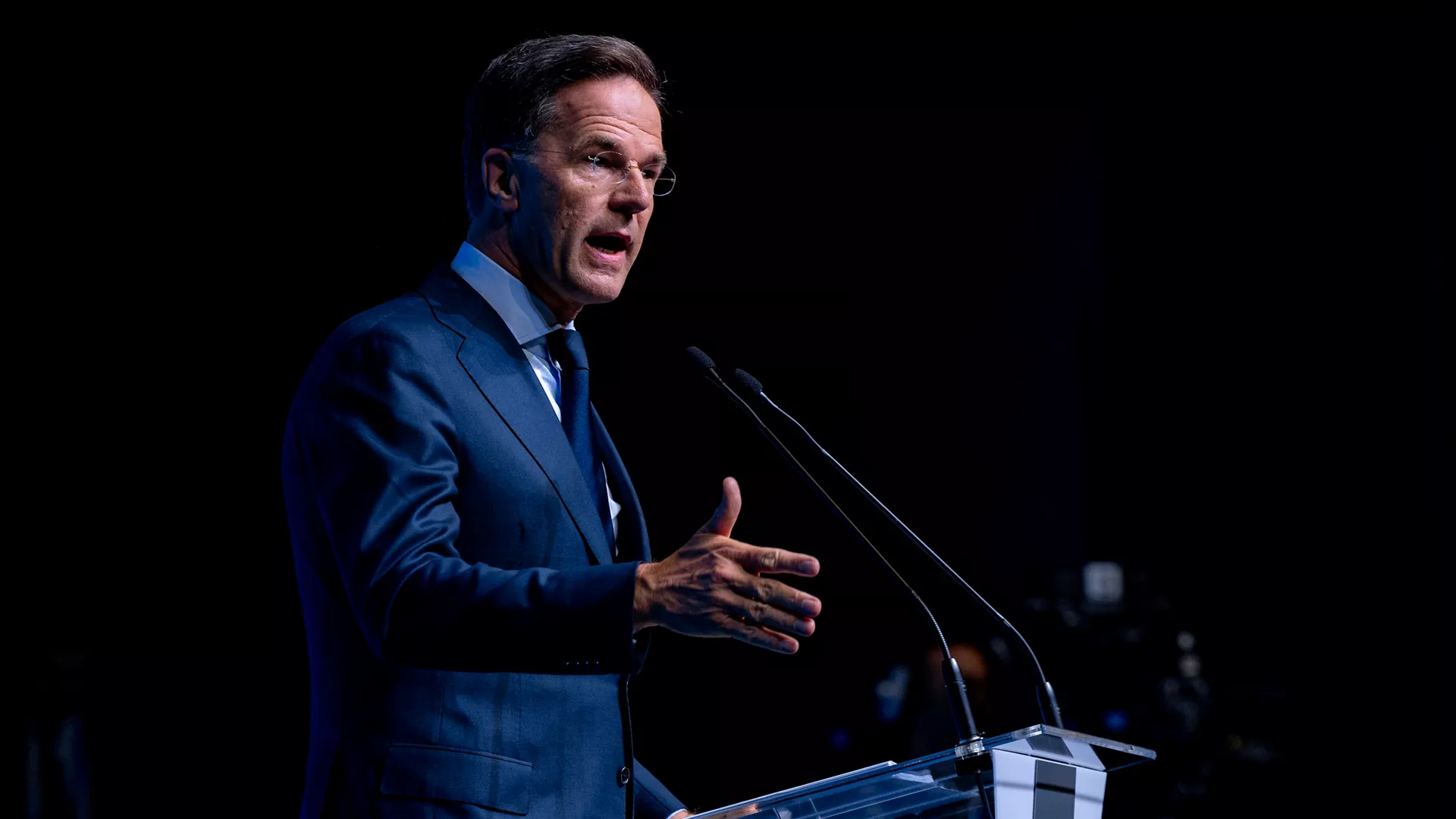

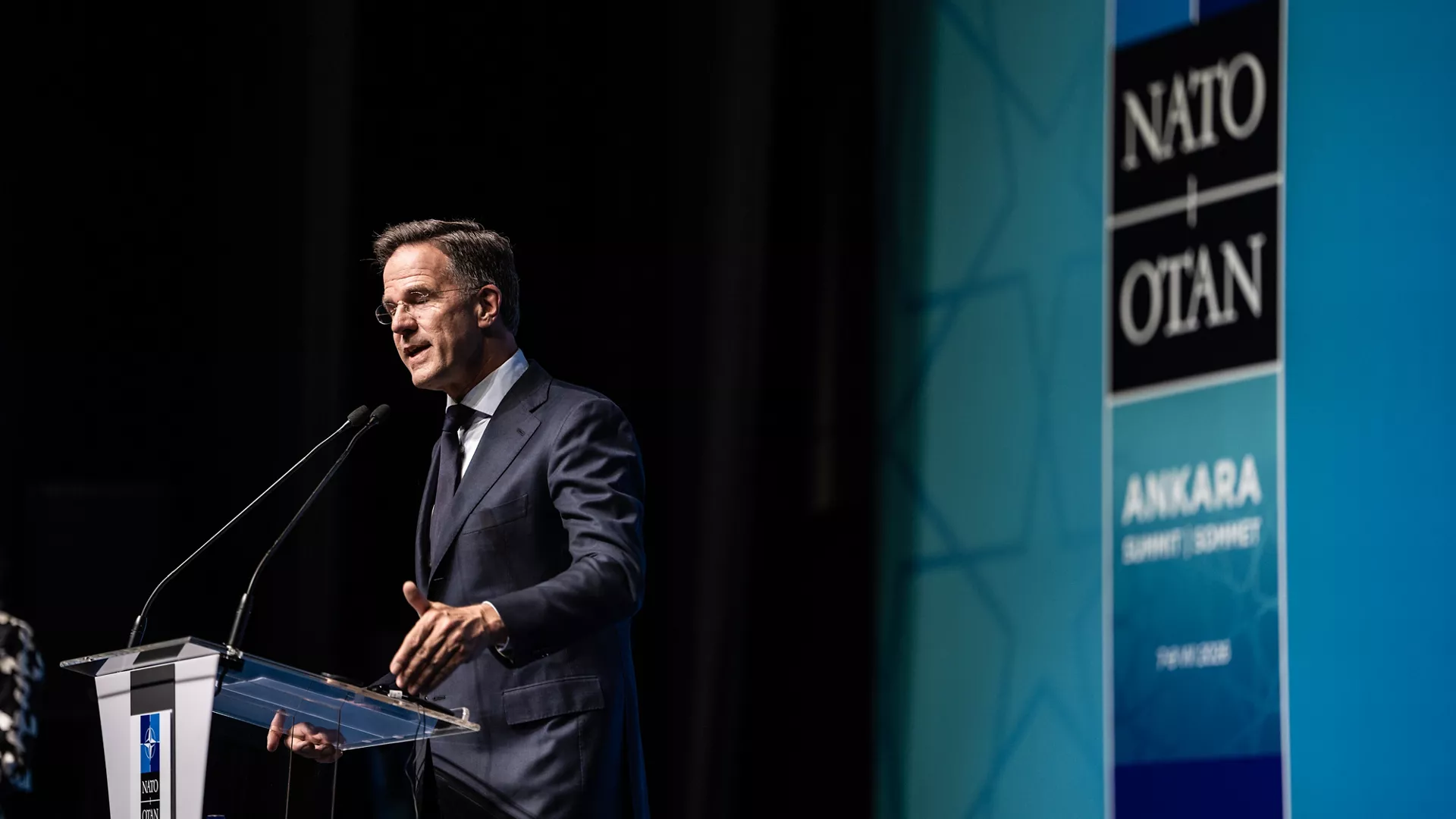


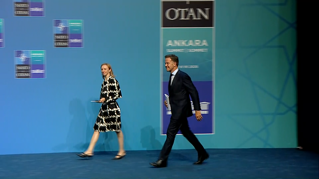
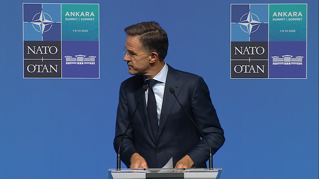
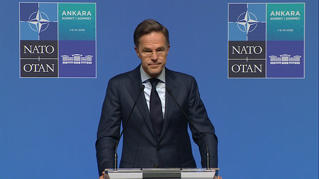
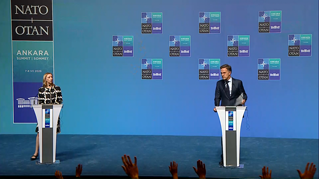
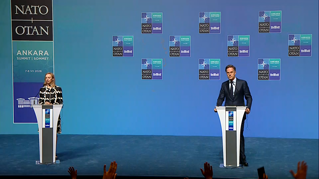
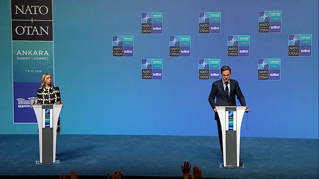
Pre-summit press conference by NATO Secretary General Mark Rutte ahead of the 2026 NATO Summit in Ankara
Pre-summit press conference by NATO Secretary General Mark Rutte ahead of the 2026 NATO Summit in Ankara
Pre-summit press conference by NATO Secretary General Mark Rutte ahead of the 2026 NATO Summit in Ankara
Pre-summit press conference by NATO Secretary General Mark Rutte ahead of the 2026 NATO Summit in Ankara
Pre-summit press conference by NATO Secretary General Mark Rutte ahead of the 2026 NATO Summit in Ankara
Pre-summit press conference by NATO Secretary General Mark Rutte ahead of the 2026 NATO Summit in Ankara
Pre-summit press conference by NATO Secretary General Mark Rutte ahead of the 2026 NATO Summit in Ankara
Pre-summit press conference by NATO Secretary General Mark Rutte ahead of the 2026 NATO Summit in Ankara
Pre-summit press conference by NATO Secretary General Mark Rutte ahead of the 2026 NATO Summit in Ankara
Pre-Summit Press Conference by the NATO Secretary General