
Close
Back


From now on you can download videos from our website
If you would also like to subscribe to the newsletter and receive our latest updates, click on the button below.
Enter the email address you registered with and we will send you a code to reset your password.
The password must be at least 12 characters long, no spaces, include upper/lowercase letters, numbers and symbols.
Click the button to return to the page you were on and log in with your new password.
02 September 2020
1 MIN READ
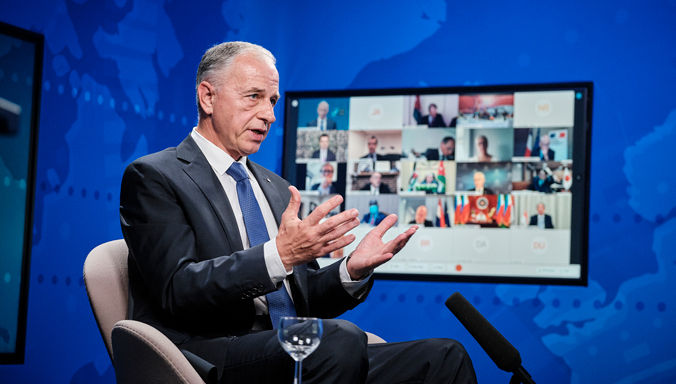
NATO Deputy Secretary General Mircea Geoană took part in a virtual meeting of the Aqaba Process on Wednesday (2 September 2020). The Aqaba Process is an initiative by His Majesty King Abdullah II of Jordan to enhance global coordination and cooperation to counter terrorism.
The Deputy Secretary General spoke to the meeting of world leaders and representatives from international organisations about the security challenges of COVID-19 and NATO’s response to the pandemic. Mr. Geoană praised Jordan as a leader in countering violent extremism and for being a valuable partner of NATO.
The Alliance and Jordan are united in their work to counter international terrorism. NATO and Jordanian forces have a long track record of practical cooperation and have worked together from the Balkans to Afghanistan. NATO has also helped strengthen Jordan’s capabilities, including cyber defence, border security and countering improvised explosive devices.