NATO MULTIMEDIA ACCOUNT

Access NATO’s broadcast-quality video content free of charge

Register

Create an account

Create an account

Check your inbox and enter verification code

We have sent a verification code to your email address. . Enter the code to verify your account. This code will expire in 30 minutes.
Verification code

Didn't receive a code? Send new Code

You have successfully created your account

From now on you can download videos from our website

Subscribe to our newsletter

If you would also like to subscribe to the newsletter and receive our latest updates, click on the button below.

Reset password

Enter the email address you registered with and we will send you a code to reset your password.

Reset password
Check your inbox and enter verification code
We have sent a verification code to your email address. Enter the code to verify your account. This code will expire in 30 minutes.
Verification code

Didn't receive a code? Send new Code

Create a new password

The password must be at least 12 characters long, no spaces, include upper/lowercase letters, numbers and symbols.

Your password has been updated

Click the button to return to the page you were on and log in with your new password.

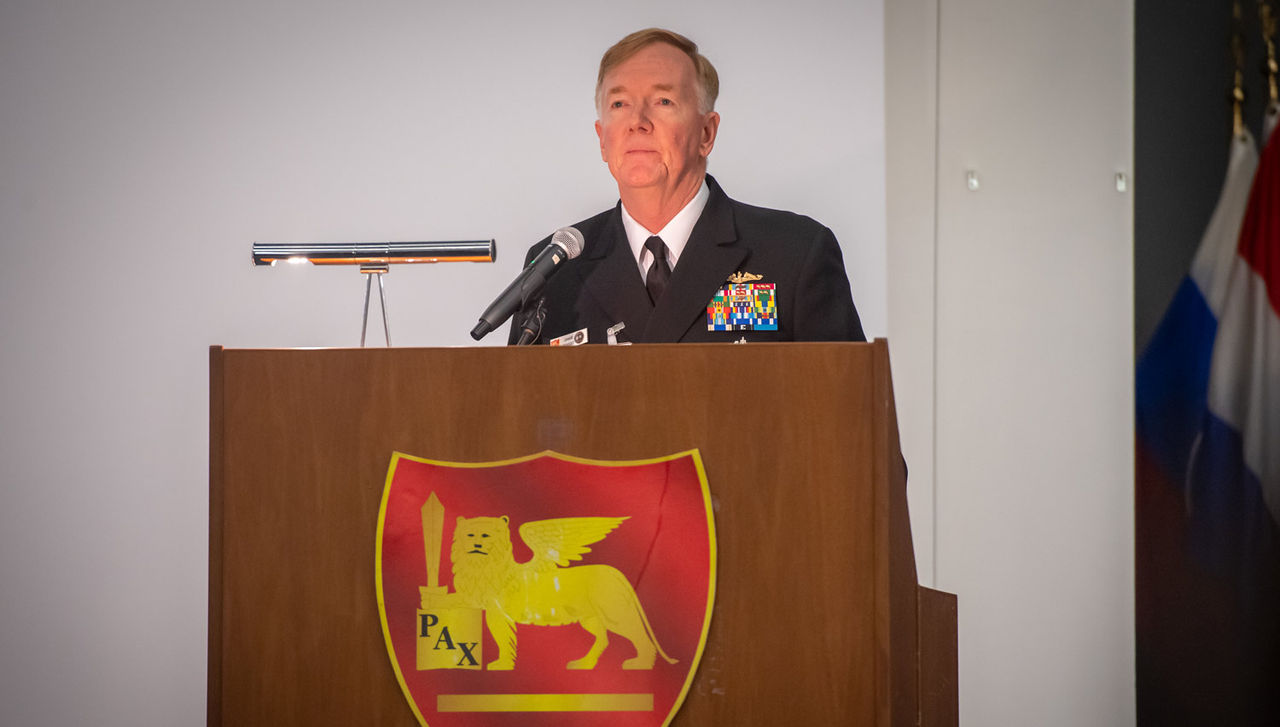
On 20 and 21 February 2020, Joint Forces Command (JFC) Naples conducted a workshop focused on NATO’s commitment to the Prevention of and Response to Conflict-Related Sexual Violence (CRSV). There were 48 workshop attendees from all levels of the NATO Command Structure and NATO HQ.

The two-day workshop consisted of keynote speeches by JFC Commander Admiral Foggo and Clare Hutchinson, NATO Special Representative on Women, Peace and Security, presentations from international partner organizations and civil society; Nadia’s Initiative, the United Nations Department of Peace Operations and “Medica” Zenica; and briefings from NATO subject matter experts. Discussions focused on what role NATO can play to help prevent and respond to CRSV. In particular, the following recommendations were made:

  1. Terminology: NATO should be clear on terminology as currently it uses the term Conflict Related Sexual and Gender-Based Violence (CRSGBV), whereas the United Nations and others use the term CRSV. In addition, NATO should ensure that all personnel have a clear understanding of the difference between Sexual Exploitation and Abuse (SEA), in line with NATO’s new policy, and CRSV in order to be able to recognize both situations and respond effectively.
     
  2. Understanding of mandate development: Personnel with subject matter expertise should be able to contribute to developing mandates for NATO missions and operations, so that preventing and responding to CRSV can be specifically considered.
     
  3. Reporting: NATO should develop clear operational guidance on how to report CRSV and share information with relevant organizations.
     
  4. NATO responsibility: NATO should have a clear understanding of what is and what is not NATO’s responsibility in relation to CRSV.

The workshop highlighted that there are gaps in the guidance for NATO forces when it comes to CRSV, particularly in terms of a clear remit and actions that NATO should and should not take in relation to CRSV. The primary recommendation from the workshop is that NATO should develop a policy on CRSV to provide clear guidance on how to implement the strategic level military guidelines on the ground to ensure a consistent and effective approach.


Did you know?

There are three primary documents that provide guidance to NATO’s Military Authorities in relation to CRSV.

  • NATO Military Guidelines on the prevention of and response to CRSV state that “all Commanders must recognize the responsibility to act within their mandate in order to prevent and respond to CRSV”.
  • The 2017 Bi-Strategic Command Directive 40-1 directs that Commanders must “undertake, either within their organization, or in close coordination with international or local actors to prevent and respond CRSV”.
  • The Allied Command Operations Gender Functional Planning Guide provides suggestions on prevention measures.

However, NATO would benefit from concrete operational guidance for Commanders, particularly on preventative measures and responses to CRSV, as well as reporting events after CRSV is recognized.

This story is part of the Spring 2020 WPS Bulletin. Download the full edition here (ENG / FRE)