
Close
Back


From now on you can download videos from our website
If you would also like to subscribe to the newsletter and receive our latest updates, click on the button below.
Enter the email address you registered with and we will send you a code to reset your password.
The password must be at least 12 characters long, no spaces, include upper/lowercase letters, numbers and symbols.
Click the button to return to the page you were on and log in with your new password.
27 February 2007
1 MIN READ
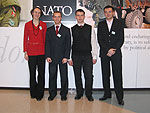
NATO-Russia relations, the NATO-led ISAF operation in Afghanistan and cooperation between NATO and the EU were on the agenda during a visit of young Slovak professionals to NATO HQ and SHAPE, 26-27 February.
Among the university students and NGO representatives were the winners of the “Quo Vadis NATO?” essay-writing competition.
During briefings at NATO HQ, the visitors had an opportunity to discuss the Alliance’s current agenda with NATO staff and members of the Slovak Delegation to NATO. They also observed first-hand NATO`s day-to-day agenda. On the second day of their stay, the students visited SHAPE and took part in a panel discussion on NATO`s military transformation.
Amongthe students and NGO representatives were the winners of the “Quo Vadis NATO?” essay-writing competition.
“The aim of the project was to allow students to get an insight into how NATO works and to inspire and encourage them to think more intensively about security policy issues, in particular about present and future missions of NATO and the security policy of Slovakia as one of NATO member countries”, said Milan Solar, the project co-ordinator.
The competition was organized by the Euro-Atlantic Center and co-sponsored by NATO’s Public Diplomacy Division.
It took place in fall last year and a two-day visit to Brussels accompanied by briefings at NATO HQ and SHAPE was awarded to the winners.