Close
Back


From now on you can download videos from our website
If you would also like to subscribe to the newsletter and receive our latest updates, click on the button below.
Enter the email address you registered with and we will send you a code to reset your password.
The password must be at least 12 characters long, no spaces, include upper/lowercase letters, numbers and symbols.
Click the button to return to the page you were on and log in with your new password.
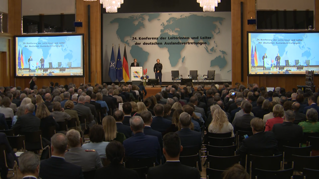
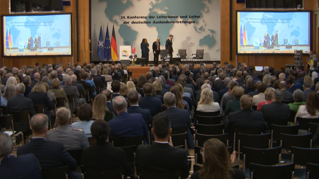
Good afternoon everyone. It is good to be back in Berlin and to join you today at this conference of Germany's Heads of Missions. Botschafter, Botschafterinnen - that's your title in German. Literally it means messenger, and that's very fitting because you deliver Germany's messages, policies, and positions to the world. But of course, you do much more than simply deliver them. You explain them, you defend them, you build support for them, and aim to turn them into action.
So, you are Germany's messengers to the world, and that is a big responsibility, because Germany is a big player in the international community. What Germany decides, and what you ultimately help deliver, matters. What Germany does, and what you help to achieve, matters. It matters for Germans, it also matters for Europeans, and it matters certainly for NATO. Nowhere do we see that more clearly than in defence. When the German government powers ahead on defence spending and decides to invest 3.5% of GDP in core defence by 2029, it lifts the total defence spending of NATO considerably. When German industry expands factories and ramps up production of artillery shells, armoured vehicles, and air defence systems, it projects NATO power and strength. When the Bundeswehr stations troops in Lithuania and Poland, sends ships to the Baltic Sea, and aircraft to the Baltic region, it demonstrates Allied solidarity. And when Germany delivers Patriot interceptors and heavy battle tanks to Ukraine, it helps protect our collective freedom and security.
Germany is doing all of that and more, and that is exactly what needs to happen. The security situation demands it. Russia's brutal attacks against Ukraine are unrelenting. Russia is suffering enormous losses, now estimated at more than 40,000 killed or seriously wounded every month. Think about it for a moment: over 40,000 every month. Despite those heavy losses, Putin shows no willingness to bring the war to an end. Instead, Russia repeatedly strikes Kyiv and other parts of Ukraine, often targeting civilians and civilian infrastructure. And at the same time, the list of Russia's malign hybrid activities across Europe grows longer than longer: cyber attacks, sabotage, arson, airspace violations, drone incidents - and you see it here in Germany too, with the incident in Leipzig.
NATO stands in full solidarity with Germany. You have 31 friends and Allies by your side. The latest hostile actions by Russia are reckless, dangerous, and a threat to life. But we are not intimidated. We know these are the tactics of a desperate regime that is failing to meet its objectives in Ukraine. Putin thinks he can divide us, destabilise us, and weaken our support for Ukraine, but he will fail. These malicious actions are having the opposite effect. Our response is more support for Ukraine.
And if Putin or anyone else still doubts how serious we are about our defence, just look at the NATO Summit in Ankara in July. It was a tremendous success. Just over a year ago, we agreed to invest 5% of GDP in core defence and defence and security-related spending, and that was in The Hague at the Summit. And now we are moving in that direction, with Germany in the driving seat. You have shifted defence into sixth gear, and you are not alone. Other European Allies and Canada are stepping up too. In 2025 and 2026 combined, Europe and Canada will have invested more than 250 billion dollars extra in defence. 2025, 2026 combined, 250 billion dollars extra, and that will continue. And there is more. Allies are accelerating production and innovation. Billions are going into expanding industrial capacity, upgrading factories, and opening new production lines. This is a defence industrial revolution. More steel and new technologies are coming out of our industries and startups. This means tens of thousands of new jobs for Germany alone, and many more across NATO.
Then, when it comes to Ukraine, it is also Europe, together with Canada, that is leading the support, providing major financial and humanitarian contributions, paying for essential U.S. military equipment, including interceptors, to save Ukrainian lives, helping Ukraine stay strong in the fight today and able to deter any future aggression.
So, in the wake of the Ankara summit, one thing is clear. Allies are determined to build a stronger Europe in a stronger NATO - what we call NATO 3.0. Now, to be clear, we are not just waking up today to the need for Europe to take greater responsibility for its own security. Elements of this transformation have been percolating for some time, with the initial wake-up call that prompted NATO to deploy forces to our eastern flank in 2016. But I think we can agree that Allies were slow at first to increase defence investment. There was hesitation about rearming. There was a belief that we could continue doing more with less, and that the United States would keep doing the heavy lifting for us. But we have turned a page. Today, defence across Europe and the defence efforts across Europe are accelerating.
But something even more fundamental is changing too. I see a real mindset shift. Europeans increasingly understand that taking greater responsibility for our own security is not optional. That rebuilding our armed forces is indeed essential. That revitalising our defence industrial base is not only good for our security; it is good for our economies too. And that security is not something the US should do for us, but with us.
Germany is a driving force behind that change. Germany is Europe's biggest economy, it is Europe's biggest defence spender, and it is an engine of European defence production. That is leadership. And here, I also look to you, Johann, and I want to salute you for your principled and determined leadership at the helm of the Federal Foreign Service. Thank you.
And we are going to need more as we continue making NATO more and more European-led. So let me finish where I started: Botschafter, Botschafterinnen - messengers. I count on every one of you in this room to carry that message with you, that a stronger Germany makes Europe stronger. That a stronger Europe makes NATO stronger. And that strength is a prerequisite for security. But also, that there is no room for complacency. We are in for a long journey. We have to spend more, produce more, protect ourselves better, and keep Ukraine strong so peace can prevail. And as Germany's representatives around the world, you have a crucial role to play. Explain why this matters, build support for what we are doing, and help turn our decisions into action. Diplomacy indeed is part of our arsenal, so “bitte weitersagen!”, because in these dangerous times, the messages we send, the messages you all carry, are decisive. And what matters even more is the result: lasting security.
Vielen Dank.
Moderator – Bronwen Maddox, Director and Chief Executive, Chatham House
Fantastically uplifting speeches with which to begin this all too serious discussion. I want to start with what you have both put central in this, which is the nature and the extent of the threat that Russia poses to Europe at the moment, and Minister, as you said, you are just back from Ukraine – Kharkiv, I think you said. What is it you would like to say to Allies based on that about the nature of this threat?
And Mark Rutte, how would you describe this in the wider picture? This threat from Russia, not just to Ukraine but to Europe itself.
NATO Secretary General Mark Rutte
It's there. It's long term. The threat is long term. What we are seeing at the moment is that Russia is investing more than 10% of its national income in defence. They are spending almost 50% of their state budget in defence. They have basically put the whole of the industrial base - not just the defence industrial base, but the industrial base - is now basically working for the war effort. Whilst fighting, they are refilling their stockpiles. So, there's all evidence that that threat is there, and that it is long term. And if we would not have made the changes we have made over the last couple of years, we would longer term not be able to defend ourselves. We can defend ourselves today, tomorrow, but if we would not have made those changes, there was a risk when we reach 29, 2030, 2031. So, it is crucial that we continue on this path. We cannot be naive about this. Please, I know you will always have people telling you, « Oh, if you would only sit down with Putin and this and that ». This is long term. It is a threat. We cannot be naive.
Moderator – Bronwen Maddox, Director and Chief Executive, Chatham House
I would clap, but it's hard holding a microphone. Minister, thank you for raising very directly this point, which also hangs over this whole discussion. Secretary General, I wonder whether, how much it concerns you, the rise-in support in Europe, as we saw in the state election, but are seeing it particularly in the polls in France, for parties which, among many other appeals to the electorate, are also saying « We are somewhat more sympathetic to Russia. We are not necessarily going to recommend defence of Ukraine ».
NATO Secretary General Mark Rutte
Is it okay if I say a few words about the hybrid situation in Leipzig? Because I am not sure we will come back to that. Because I really want to applaud Germany's reaction, it was self-confident. It was measured. You have been reaching out to Allies to make sure that everybody was singing from the same hymn sheet. Let me say this about hybrid attacks. Don't forget, Russia is losing over 40,000 killed or seriously wounded people a month now in Ukraine. NATO has all the response options we need. You will not always see them. Some are public, some are not public, and our reaction as NATO will not always, when this happens, be tit for tat. But you have seen over a year ago, now 17/18 months ago, when the undersea sea cable was cut between Finland and Estonia, that we started Baltic Sentry, which is imposing costs on Russia. They hate it. We have seen from Baltic Sentry that more and more Allies, and Ally after Ally are working on the shadow fleet, imposing costs and strategic dilemmas on the Russians. So, we are there. We have the response options again, not always public, but you can be assured of that. But the best reaction to any hybrid threat to NATO territory, and what might happen in the future, is not less support for Ukraine, but more support for Ukraine, because this is exactly what they want us to do-to lessen the support for Ukraine. Now we will have more support for Ukraine. I see Boris Ruge sitting there, the ambassador, German ambassador now, my former colleague in NATO, and he will-he is nodding yes. So, you agree with me that you did this in your former role, but you still do. That's great. But I mean, this is so serious. So, more support for Ukraine and not less support for Ukraine when this happens. Now, to your question, of course, it's not up to me to comment on national politics. I should stay out of this because we have an Alliance of 32 countries, and whoever is elected is then the elected leadership of that country. We will work with that leadership, and I have no doubt that the Alliance will stay very strong. What I do know from my experience as a former prime minister for 14 years in the Netherlands is, politics is rough. It's not easy. It's a contact sport, and it really is. And stay the course is always the best. And I think from a NATO perspective, and you made that point also, Johann, on so many occasions, a strong economy is part of your defence, and a strong economy means that always you have to think about necessary reforms. And maybe if you're from the Green Party, you will think about different reforms than when you are from the Christian Democrats and the Social Democrats and liberals - they always have their views. That's politics. That's not a problem. But as long as you do agree that you constantly have to think about the best way to organise society, make sure that you spend it on the right thing, so that there is also money to spend on, for example, defence. Indeed, that is absolutely crucial. And I've seen over the years that countries where, with self-confidence, governments sometimes being beaten in elections, consistently stay the course when it comes to these necessary reforms, then ultimately will end up in the best place for the next election.
Moderator – Bronwen Maddox, Director and Chief Executive, Chatham House
Secretary General, no one could disagree with your description of politics, and you have experience of that, so I'm –
German Federal Minister for Foreign Affairs, Johann Wadephul
I like the contact sport, that’s what I really love.
Moderator – Bronwen Maddox, Director and Chief Executive, Chatham House
That will stay with us, but nonetheless, I just want to press you one more time on this question: that if Germany and France, who have been so absolutely central to Europe's and to NATO's position on Ukraine begin, particularly France, begin to change their, may change their view on that. Then, that could amount to a very significant change in NATO's own stance on Ukraine.
NATO Secretary General Mark Rutte
Let's see what happens, and let's see what is the outcome of the election. It is now September. The elections in France will be in May next year, and again, whatever the outcome, NATO is there. We’ll stay together. We’ll stay strong. I have every confidence that whoever is elected in whichever election will stay the course when it comes to the key elements of investing in defence, making sure Ukraine will not lose this war, is in the best possible position to bring this war to an outcome in whenever Putin is ready to sit down for negotiations. And we had these discussions also in the past when we saw government changes in other countries. And in the end, what we have seen over the last 5 to 10 years is NATO getting stronger, staying together, and dialoguing. And again, a debate is not a problem. Opposition is not a problem - yeah, sometimes when I was in my previous role, you would think a little bit less, would be great. But still, it's part of democracy, and that's why I call, politics is a contact sport.
Moderator – Bronwen Maddox, Director and Chief Executive, Chatham House
Thank you very much indeed for that. Minister, I am going to ask some broader questions in a moment about this and about procurement and so on. But I just want to ask you one point about this contact sport, which is how you think politicians at the moment should make a case to voters that it is necessary to put money into defence, and perhaps take it out of some other things that countries have been used to spending it on. And I come from the UK, where the government of Andy Burnham is wrestling with exactly this at the moment: how to make that case to voters ?
NATO Secretary General Mark Rutte
And if you allow me just to amplify, I mean, when you think back of 1980, so I was - I'm from 1967, so I remember this so vividly as a young student. The incredible statesmanship of Bush and Gorbachev, but also der Kanzler der Einheit, und der Aussenminister der Einheit, Kohl und Genscher, and how they were able to basically, in that situation, come to an agreement and build 3rd of October 1990, create this new unified Germany, which is an integral part of the EU and of NATO. But maybe there's always this debate in societies that it is basically making savings to spend for defence. Sometimes you have to make savings because not all government spending is really necessary. So, if you can make savings, perfect. But I think when you look with a little bit of a wider angle to the post-war European history, what you will see is a sort of national consensus where you have different emphasis, different elements to be stressed. But in the end, there is sort of unity of thinking that you need to do two things at the same time to keep society together. One is to make sure that not only you divide the cake, but that you also make the cake bigger. The Kuchen, I think, in German, that the Kuchen ist groesser and not smaller. Because if you only are dividing the existing cake, yeah, in the end you will spend everything on defence, and that's impossible. So, you have to make sure that you grow the cake, you grow the economy. And then the other side of the coin is how do you divide the profits? And I think also in Germany, when you look at the post-war history in my country and in many countries in Europe, there was this national consensus: the economy has to be strong, but you have to make sure that the wealth ends up with all the people and not just with a few people. And I think that's exactly how also the big people's parties in this country, in my country, in Belgium, in France, Italy - how we how we governed in the post-war era.
Moderator – Bronwen Maddox, Director and Chief Executive, Chatham House
And we're talking about some points of consensus in the post-war era. But I have to touch on the inescapable question of the United States, which we have barely mentioned, other than in fleeting reference. Let me put it directly: Do you think the US is still prepared to defend Europe?
NATO Secretary General Mark Rutte
Absolutely, I have no doubt. And the US is totally committed to NATO, is totally committed to Article 5. There is also one consistent and big irritant in the history of the United States within NATO since Eisenhower, and that’s the fact that they were spending so much more than we were spending. And we were spending that money on other stuff, which they would also love to have it spent on. So now, finally, balancing that and making sure that we spend the same here as the US is spending, and not because we want to spend the same as the United States, but because from the defence spending process in NATO, it emerged that not only to equalise with the U.S. but to be able to defend ourselves, we needed to move to this 3.4, 3.5, 3.6 defence spending, ballpark 3.5 percent, because otherwise we are not ready for this Russia, which is rapidly rebuilding its defence industry base, etc. etc. So, we kill two birds with one stone. We make ourselves much stronger given the Russian threat, and we equalise with the U.S. which means that the U.S. is much more committed to NATO than it was. Because, and this is why I always say that Trump is right, and I know not everybody in Europe loves me saying this, but I really believe it is true that he is right that it is not sustainable for Europeans to spend so much less than they are spending, and we are now equalising that.
Moderator – Bronwen Maddox, Director and Chief Executive, Chatham House
So, I think what you said would have a lot of resonance with a lot of people right across Europe, but it does need - the argument has been made and won that it needs to spend more on defence. But Secretary General, I do want to ask you, because also what many voters in Europe have noticed is some of the remarks made by the U.S President that he'd like Canada to be the 51st state, that Greenland, which he said again just before the NATO Summit, like Greenland to be part of the U.S, and also for many Europeans, these were the moments when they thought « maybe we are more on our own than we thought ». This is from one NATO member to another, not a point of consensus.
NATO Secretary General Mark Rutte
This is the strategic and tactical discussion taking place in the United States. Maybe also from what I'm hearing, and just to share it also here with you as ambassadors, it's the following: the United States is deeply convinced that it is spreading its resources too thinly if we, in Europe, are not stepping up - which is a rightful discussion, because they also have to take care of the Western Hemisphere, and also our interests and have to take care of the Indo-Pacific. There is also the realisation, increasingly, both in Europe and in the United States, that if China would move against Taiwan or anything in the first island chain, that Xi Jinping will first call his junior partner in all of this, which is one Vladimir Vladimirovich Putin in Moscow to keep us busy here, and that means that if that would happen, you would have a situation where you would have a serious problem in both theatres. In other words, the Indo-Pacific and Europe are more and more interconnected. That's one. And that is why the U.S. is pushing us not only because they have this irritant of being not spending what they are spending, but also we have to be strong enough to be able to take more responsibility for the conventional defence. And here, Germany is clearly leading. Secondly, the U.S. is deeply convinced that for their own security of the U.S. mainland, a secure Europe and a secure Atlantic and a secure Arctic are crucial. As Jonas Støre the Prime Minister of Norway, said in the White House, these nuclear submarines in Russia are not there to attack Norway; they are there to attack the mainland United States, and it is NATO, the Alliance, which prevents that from happening. The U.S. realises this at all the levels, from the President, and to the White House, the Pentagon, the State Department, the National Security Council. This is this. So, that membership of NATO being embedded in that Alliance for all these reasons is not only there for historical reasons. It is there because it serves also a direct interest of the Netherlands, of Germany, but also a direct interest of the United States. And of course, the United States, being the most powerful nation on earth, the most powerful military, also to prevent them from spreading their resources too thinly.
Moderator – Bronwen Maddox, Director and Chief Executive, Chatham House
So, let's come on - we're racing through the time. Let me ask you about these resources. In your view, what is the single most important reform Europe could make on procurement to accelerate that production?
NATO Secretary General Mark Rutte
Well, let me applaud the close cooperation with the European Union here, between NATO and the EU. This is one of the areas we are working together, by the way, the EU this week opening up the 3.5 billion dollars, 3.2 billion euros, for Ukraine as part of the PURL system, so to be able to buy from the American [defence] base stuff which we do not produce in Europe. But the EU and NATO are closely working together to make sure that - and I was sitting this week with the boss of Deutsche Bank, he personally is very much invested in this whole process - to make sure that the financial sector is involved, the smaller companies, the bigger companies, and there are a lot of reforms we have to make. One is the way we procure at the national level, because there is still, at the national levels in the U.S., in Europe, a lot of bureaucracy which we have to fight. We have to do more together. Sometimes we have too many requirements and details of what a particular defence industrial machine or output needs to do. So all of this we have, so there is a lot of reforms we have to do. But the good news is, it's happening as we speak, and also here again, Germany being extremely important, and this is from Rheinmetall down to the smaller startups. Look at Isar, the launch now in Norway that was last weekend, so that was great news, and so you see that Europe is really stepping up also when it comes to this defence industrial cooperation.
Moderator – Bronwen Maddox, Director and Chief Executive, Chatham House
That is also a very long conversation in itself. Now I'm looking at the bad news, which is that we have two minutes left. May I ask you both briefly what European countries can do to influence the situation over Hormuz, and indeed what you think Heads of Mission can do generally on these questions we've been talking about?
NATO Secretary General Mark Rutte
Obviously, this is outside NATO territory, but we are of course absolutely following what's happening, and NATO countries are closely coordinating. So, we have this French-British initiative, which is very important, but we are also seeing increasingly countries, sometimes very openly, like Latvia this week announced and Lithuania some time ago, some others, being active - not putting their people in harm's way, but helping with, for example, demining down the Strait of Hormuz. I think this is important in close cooperation with the United States. This is not a NATO mission or whatever, but clearly it means that also NATO is always closely following and helping wherever we can.
Moderator – Bronwen Maddox, Director and Chief Executive, Chatham House
We have not only ended exactly on time, but with a note of slight optimism, which I did not expect. Two things: first, can you join me in thanking the Secretary General and Minister, and then I have an important technical announcement.


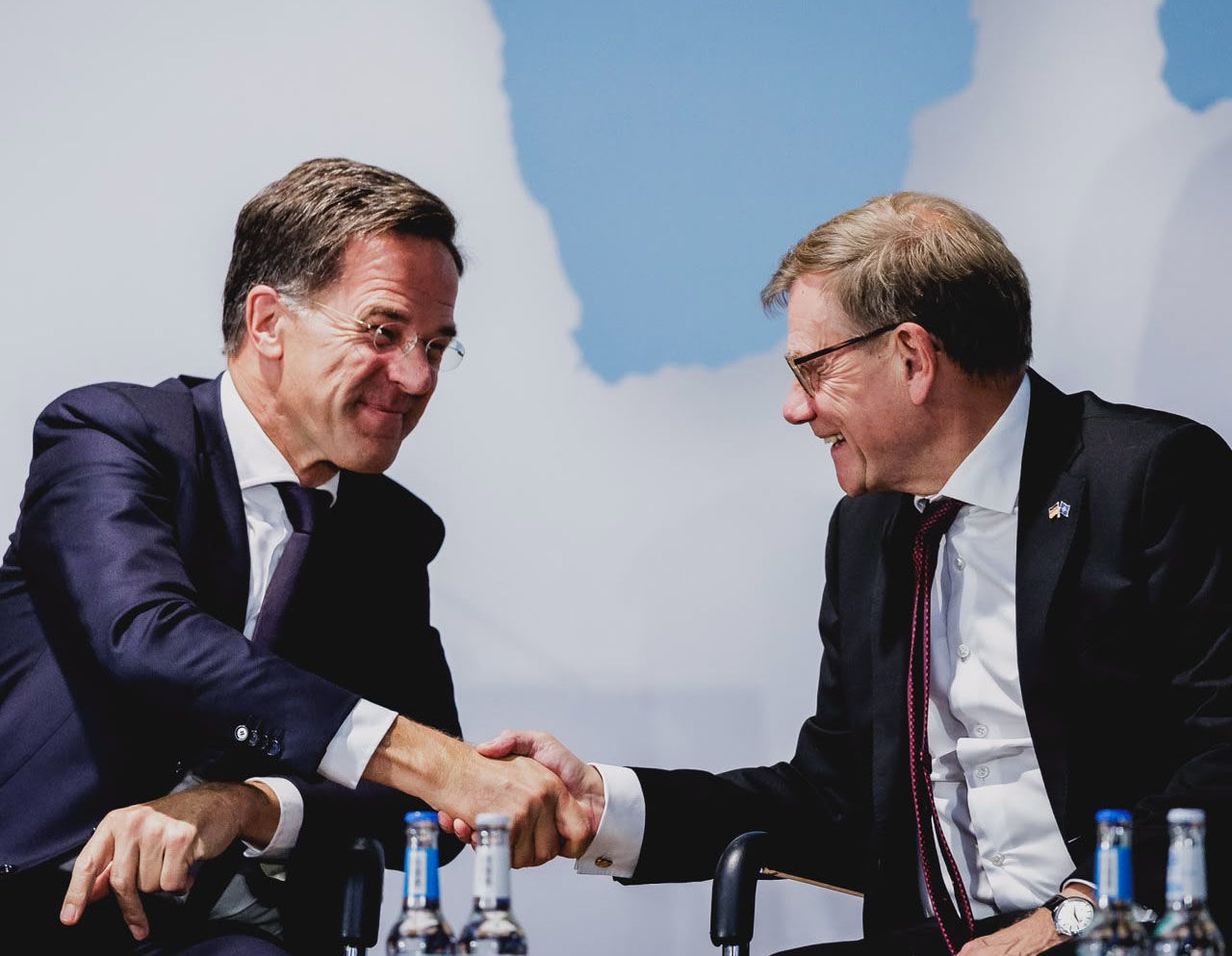
NATO Secretary General visits Germany
NATO Secretary General visits Germany
NATO Secretary General visits Germany
NATO Secretary General visits Germany
NATO Secretary General visits Germany
NATO Secretary General visits Germany
NATO Secretary General visits Germany
NATO Secretary General visits Germany
NATO Secretary General visits Germany
NATO Secretary General visits Germany
NATO Secretary General visits Germany
NATO Secretary General visits Germany