
Close
Back


From now on you can download videos from our website
If you would also like to subscribe to the newsletter and receive our latest updates, click on the button below.
Enter the email address you registered with and we will send you a code to reset your password.
The password must be at least 12 characters long, no spaces, include upper/lowercase letters, numbers and symbols.
Click the button to return to the page you were on and log in with your new password.
08 October 2026
1 MIN READ
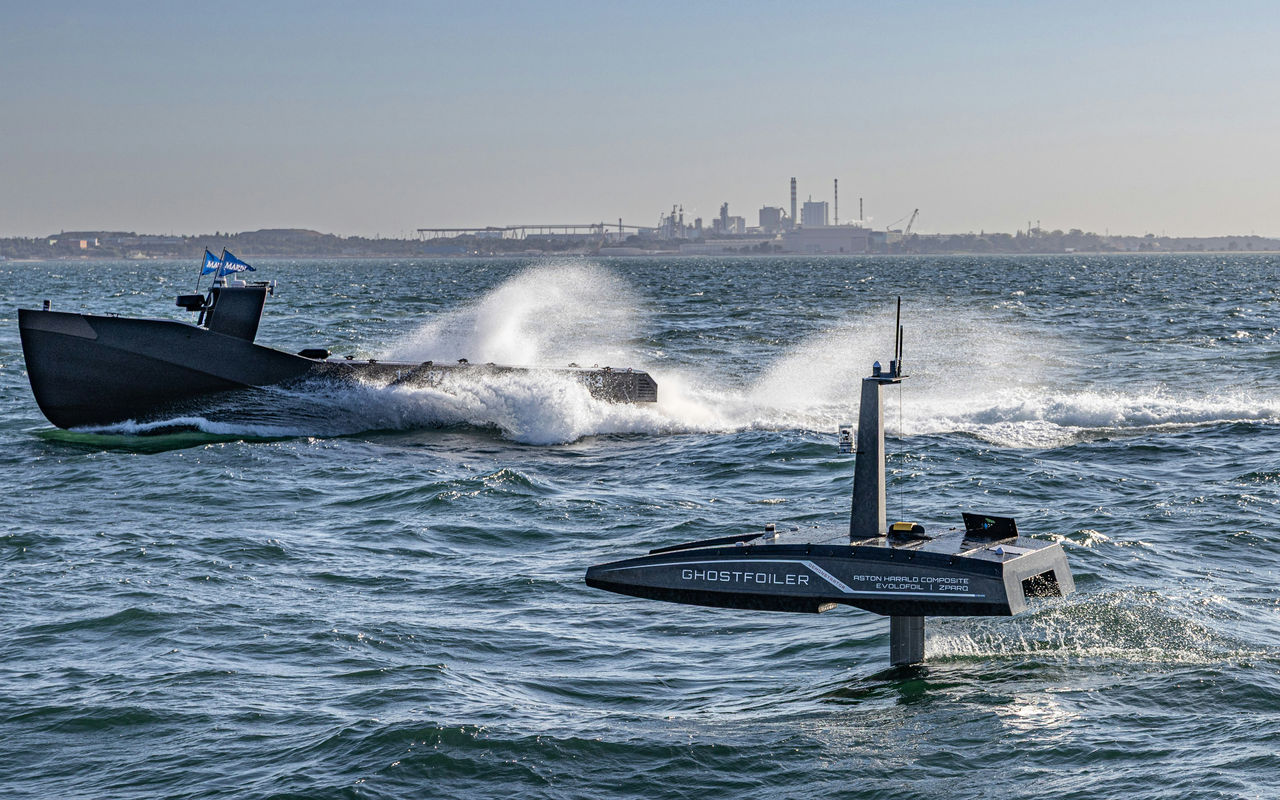
From 31 August to 25 September (2026), Portugal hosted REPMUS 2026, a large-scale exercise which included integrating and assessing uncrewed maritime systems. It involved more than 3700 participants, 300 unmanned systems, 60 research and development companies, and representatives of 36 navies. Uncrewed systems offer new ways for NATO to maintain a credible and persistent presence, even in remote locations, helping enhance deterrence and defence.
REPMUS 2026 was led by the Portuguese Navy in coordination with the Faculty of Engineering of the University of Porto, the NATO Science and Technology Organization (STO) Centre for Maritime Research and Experimentation (CMRE), NATO Joint Capability Group Maritime Unmanned Systems, and the European Defence Agency. Defence innovators from the United Kingdom, Finland, Sweden and other NATO Allies also took part in the exercise in Troia to test their technologies.
Task Force X-Arctic – led by NATO’s Allied Command Transformation and the CMRE - was one of the activities under review. Task Force X-Arctic is about how networked uncrewed systems can deliver situational awareness across the North Atlantic, the Arctic and the High North. REPMUS 2026 helped assess TFX-Arctic’s mission-engineering layer as well as its ‘connectivity backbone’ to integrate systems at scale. This is ahead of a trial taking place in Norway at the end of this year.