
Close
Back


From now on you can download videos from our website
If you would also like to subscribe to the newsletter and receive our latest updates, click on the button below.
Enter the email address you registered with and we will send you a code to reset your password.
The password must be at least 12 characters long, no spaces, include upper/lowercase letters, numbers and symbols.
Click the button to return to the page you were on and log in with your new password.
04 August 2026
1 MIN READ
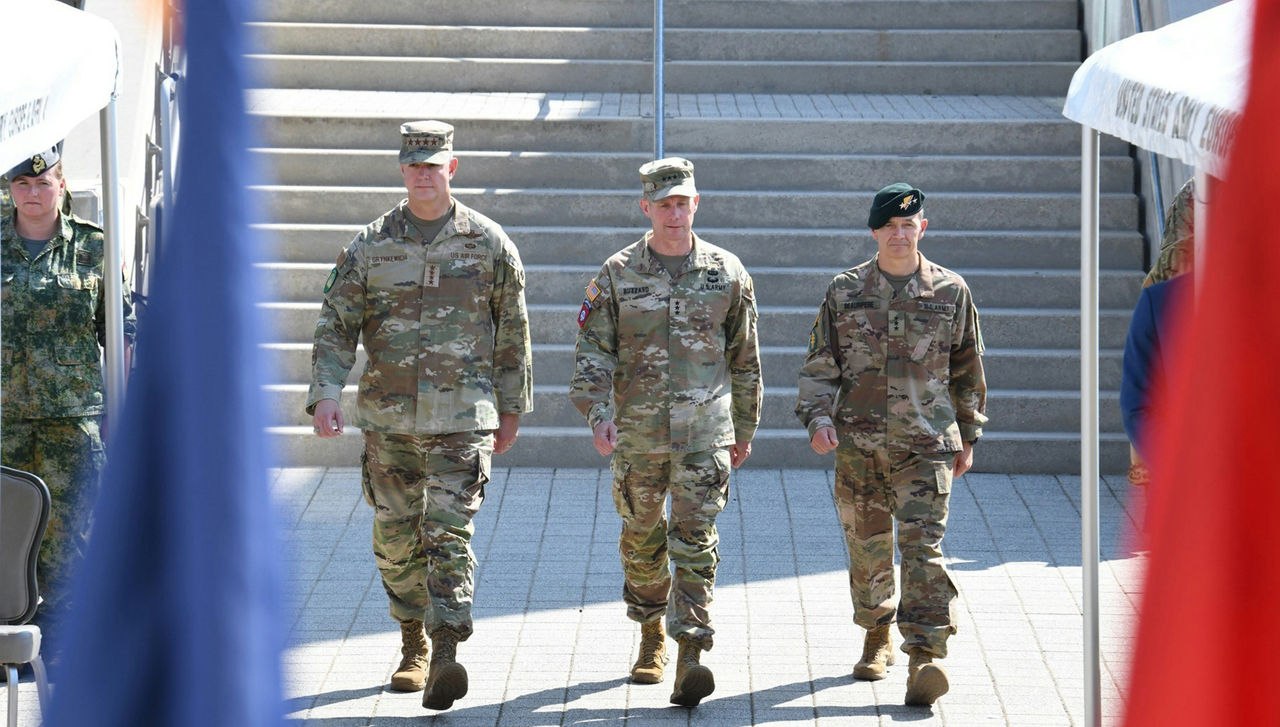
In Wiesbaden on Monday (3 August 2026), NATO Supreme Allied Commander Europe (SACEUR), General Alexus G. Grynkewich, welcomed a new commander of NATO Security Assistance and Training for Ukraine (NSATU). Lieutenant General Guillaume N. Beaurpere took over from Lieutenant General Curtis A. Buzzard, who had served as commander since 2024. NSATU is the command that coordinates the provision of military equipment and training to Ukraine by NATO Allies and partner countries.
General Grynkewich explained that NSATU will continue to evolve, with a European or Canadian officer eventually taking command in about a year. Also, elements of the work carried out by the Security Assistance Group – Ukraine (SAG-U) will transfer to NSATU. This transition will contribute to greater effectiveness and have no impact on support to Ukraine, which remains a top priority. The move will also be another demonstration of Allies taking on greater responsibility within NATO and delivering on NATO 3.0 – a stronger, fairer Alliance. SACEUR said the transition would mean “more effective, efficient and sustainable support, with increased European leadership delivering it”.