
Close
Back


From now on you can download videos from our website
If you would also like to subscribe to the newsletter and receive our latest updates, click on the button below.
Enter the email address you registered with and we will send you a code to reset your password.
The password must be at least 12 characters long, no spaces, include upper/lowercase letters, numbers and symbols.
Click the button to return to the page you were on and log in with your new password.
05 June 2026
1 MIN READ
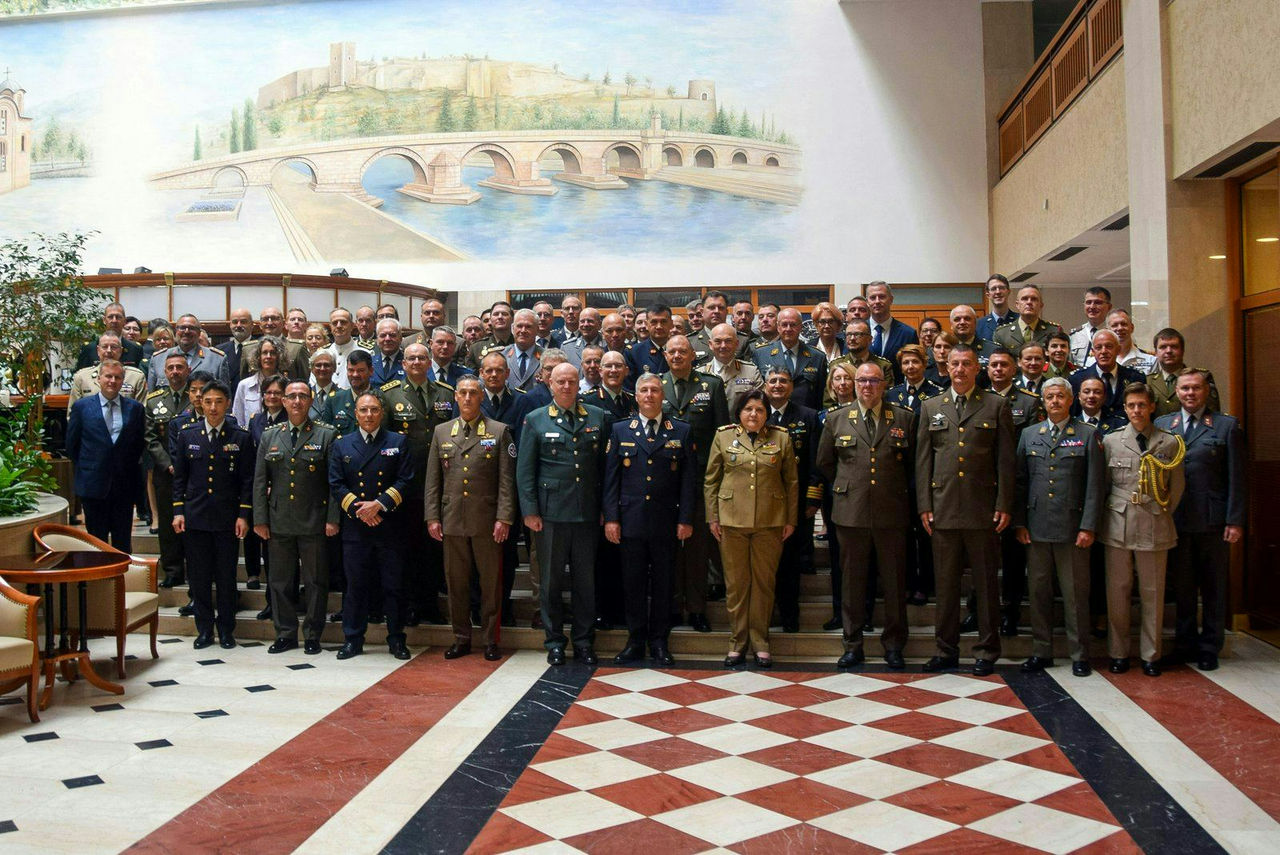
From 1 to 4 June 2026, the Committee of the Chiefs of Military Medical Services in NATO (COMEDS) convened its 65th Plenary in Skopje, North Macedonia. The Plenary brought together Allies, Partners, and Observers to strengthen cooperation and address key priorities within military medicine.
The Plenary took place in a pivotal period for the Alliance, as the Director of the Logistics and Resources Division in the NATO International Military Staff, Major General Luc Vanbockryck, noted in his opening remarks: “As we look across the Euro-Atlantic area, the era of static medical support, predictable supply chains and peer enemies respecting international law of armed conflict is behind us,” he said.
MG Vanbockryck also underscored the importance of medical support: “Medical support is not a secondary requirement, but a critical capability on par with any weapon system. It is a fundamental component of the Alliance's combat power and a primary generator of the resilience we need to prevail.”
Chair of COMEDS, Brigadier General Petter Iversen, supported MG Vanbockryck and added: “Our mission is to maintain combat effectiveness by keeping our military forces in action. When necessary, we must also expedite the return of our soldiers to the front. That is of strategic importance.”
A central focus of the Plenary was the continued implementation of NATO’s Medical Action Plan (MAP). The Chair of COMEDS emphasised that one of COMEDS’ key priorities is to translate the plan into concrete action across nations. “Medical capability is a strategic enabler of collective defence. It is a decisive element of combat power, resilience and deterrence,” said BG Iversen.
The Action Plan to enhance Medical Support for Collective Defence represents a transformative shift toward a whole-of-society approach, integrating civilian and military medical systems to ensure readiness, responsiveness, and resilience. MAP focuses on strengthening medical support across regulatory frameworks and legislation, workforce, mass casualty planning, patient evacuation and medical logistics.
Additionally, with Ukraine present at the Plenary, BG Iversen emphasised, “it was also important to have Ukraine update COMEDS on their latest lessons identified and learned. I’m impressed by their ability to sustain and develop medical support during a full-scale war. We are bound to support them.
The Plenary also addressed broader topics such as interoperability between national medical systems, the integration of medical requirements into NATO operational planning, coherence and the need to adapt to lessons identified from ongoing operations and exercises.