
Close
Back


From now on you can download videos from our website
If you would also like to subscribe to the newsletter and receive our latest updates, click on the button below.
Enter the email address you registered with and we will send you a code to reset your password.
The password must be at least 12 characters long, no spaces, include upper/lowercase letters, numbers and symbols.
Click the button to return to the page you were on and log in with your new password.
26 July 2023
2 MIN READ
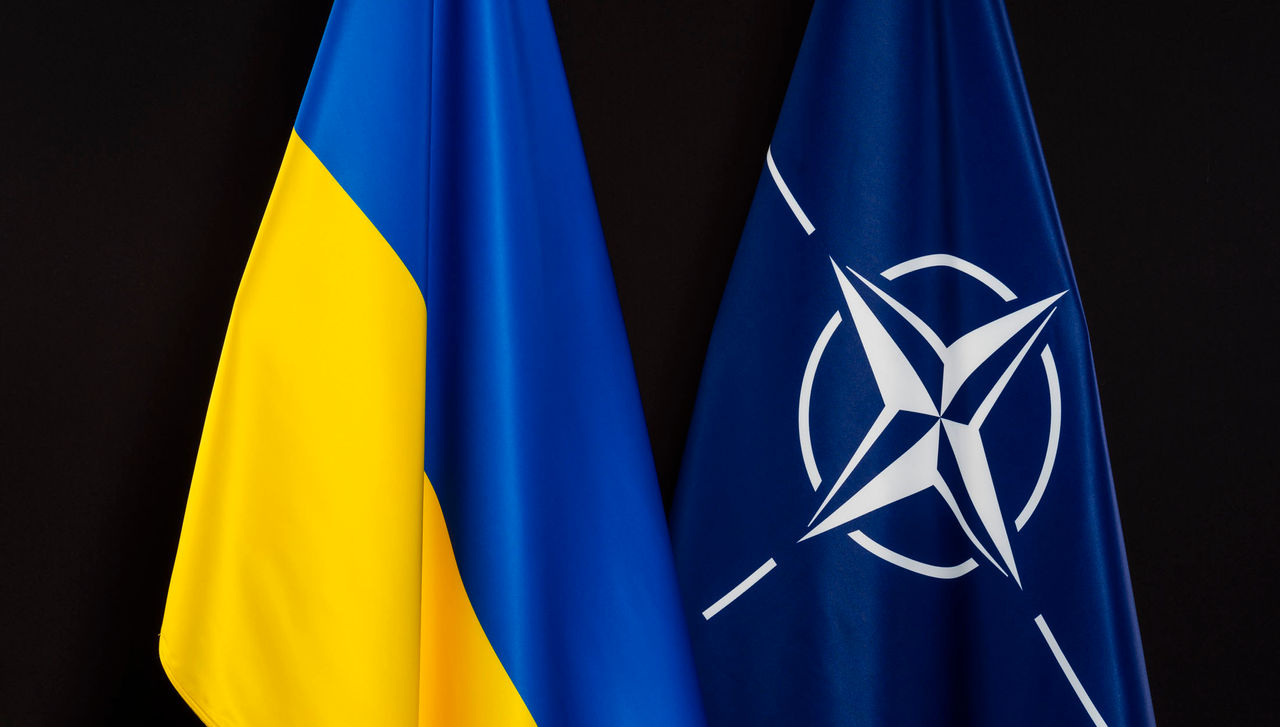
The NATO-Ukraine Council met on Wednesday (26 July 2023) to address the serious security situation in the Black Sea region following Russia’s unilateral termination of the Black Sea Grain Initiative brokered by the United Nations and Türkiye. NATO Secretary General Jens Stoltenberg convened the meeting following a request for crisis consultation from President Volodymyr Zelenskyy. Deputy Secretary General Mircea Geoană chaired the Council.
Allies and Ukraine strongly condemned Russia’s decision to withdraw from the Black Sea grain deal and its deliberate attempts to stop Ukraine’s agricultural exports on which hundreds of millions of people worldwide depend. They also condemned Russia’s recent missile attacks on Odesa, Mykolaiv, and other port cities, including Moscow’s cynical drone attack on the Ukrainian grain storage facility in the Danube port city of Reni, very close to the Romanian border. Allies noted that Russia’s new warning area in the Black Sea, within Bulgaria’s exclusive economic zone, has created new risks for miscalculation and escalation, as well as serious impediments to freedom of navigation.
Deputy Secretary General Mircea Geoană said: “Russia continues to show utter disrespect for international law and for the people worldwide who depend on Ukrainian grain. Russia is threatening civilian ships, terrorising peaceful cities, and destroying parts of the world’s cultural heritage with its brutal strikes. NATO is united. We stand in solidarity with our Black Sea Allies, we will continue to protect one another, and we will continue to support Ukraine for as long as it takes.”
Secretary General Jens Stoltenberg said: “Russia bears full responsibility for its dangerous and escalatory actions in the Black Sea region. Russia must stop weaponising hunger, and threatening the world’s most vulnerable people with food instability. Russia’s actions also pose substantial risks to the stability of the Black Sea region, which is of strategic importance to NATO. Allies are stepping up support to Ukraine and increasing our vigilance. We remain ready to defend every inch of Allied territory from any aggression.”
Allies welcomed the continued efforts of Türkiye to revitalise the grain deal, and the efforts of other Allies – including Bulgaria and Romania – as well as the European Union and the United Nations to enable the continued export of Ukrainian grain by land and sea. Allies also made clear that they would continue to provide Ukraine with major military, economic, and humanitarian assistance.
NATO and Allies are stepping up surveillance and reconnaissance in the Black Sea region, including with maritime patrol aircraft and drones. Since last year, in response to Russia’s war of aggression against Ukraine, NATO has significantly increased its presence in the region, including with two new multinational battlegroups in Bulgaria and Romania.
Today marked the second meeting of the NATO-Ukraine Council, following its inaugural meeting at the Vilnius Summit earlier in July. NATO ambassadors and invitee Sweden were joined by videoconference by Oleksandr Kubrakov, Ukrainian Deputy Prime Minister and Minister for Communities, Territories, and Infrastructure; and Brigadier General Oleksii Hromov, Deputy Chief of Main Operational Directorate (J3) of General Staff of the Armed Forces.