
Close
Back


From now on you can download videos from our website
If you would also like to subscribe to the newsletter and receive our latest updates, click on the button below.
Enter the email address you registered with and we will send you a code to reset your password.
The password must be at least 12 characters long, no spaces, include upper/lowercase letters, numbers and symbols.
Click the button to return to the page you were on and log in with your new password.
24 August 2022
1 MIN READ
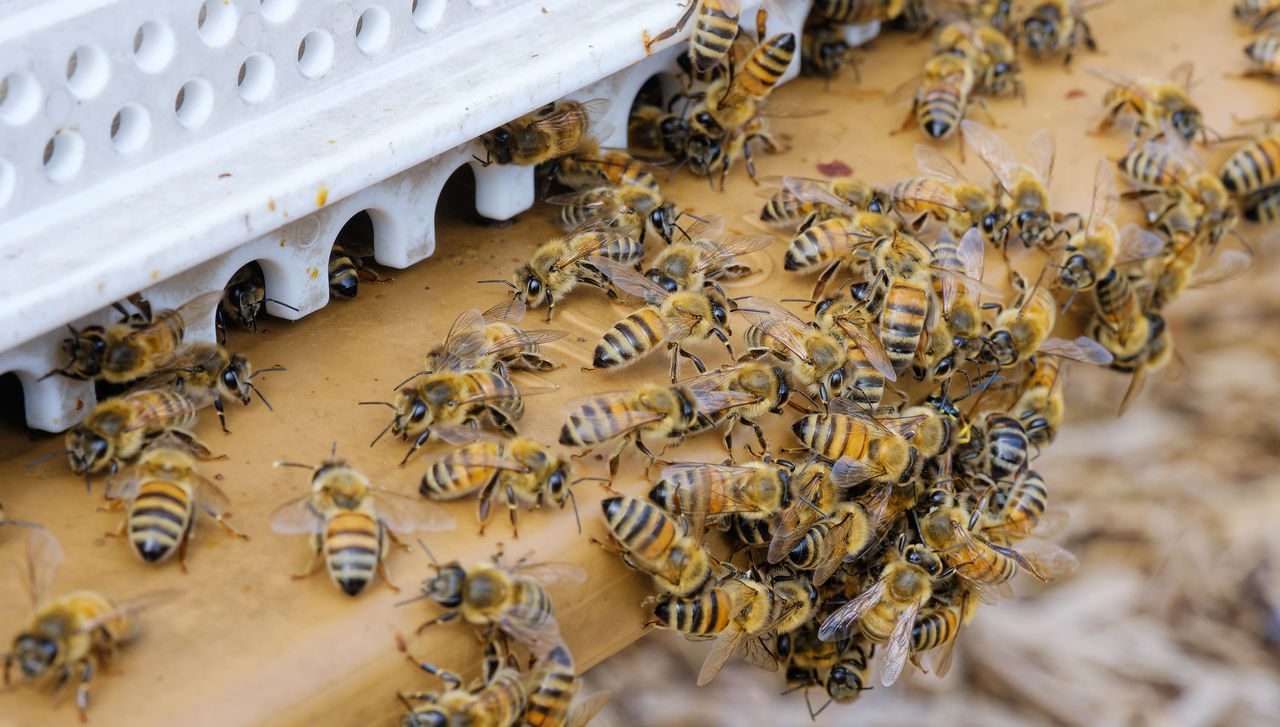
Since April 2020 NATO Headquarters has been home to a number of beehives as part of a wider ‘greening’ initiative. Beginning with two hives, this has now doubled to four due to the success of the honey production.
The bee population varies throughout the year, increasing steadily from around 10,000 in January to hold an average of 50,000 bees per hive at the height of summer when the potential for nectar harvesting is greatest. One teaspoon of honey is equivalent to the lifetime production of five bees, which typically live for 30-40 days during the warmer months.
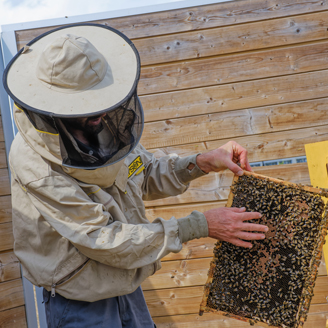
Each beehive can produce around 80 to 100 kg of honey in a season, most of which is left for the bees to fuel their production and sustain their hibernation throughout the long winter months. An average of 25kg of honey per year is then harvested by the NATO beekeeper. To date, the bulk of the honey production has been sold at the NATO Charity Bazaar to benefit selected local and international projects.
The installation of the beehives was part of a wider project to make NATO headquarters ‘greener’. In April 2022 a wildflower meadow was seeded, consisting of a mix of indigenous plants and flowers including poppies and corn flowers to encourage butterflies and birds. The honey bees play a vital role in the ecosystem, pollinating flowering plants, trees and crops. With each hive covering a three kilometre radius, the bees are also actively contributing to supporting biodiversity in the communities surrounding NATO headquarters. Biodiversity is currently under threat due to rising temperatures and human activities, but preserving natural habitats can play an important role in regulating the climate by helping to absorb and store carbon.