
Close
Back


From now on you can download videos from our website
If you would also like to subscribe to the newsletter and receive our latest updates, click on the button below.
Enter the email address you registered with and we will send you a code to reset your password.
The password must be at least 12 characters long, no spaces, include upper/lowercase letters, numbers and symbols.
Click the button to return to the page you were on and log in with your new password.
18 May 2022
2 MIN READ
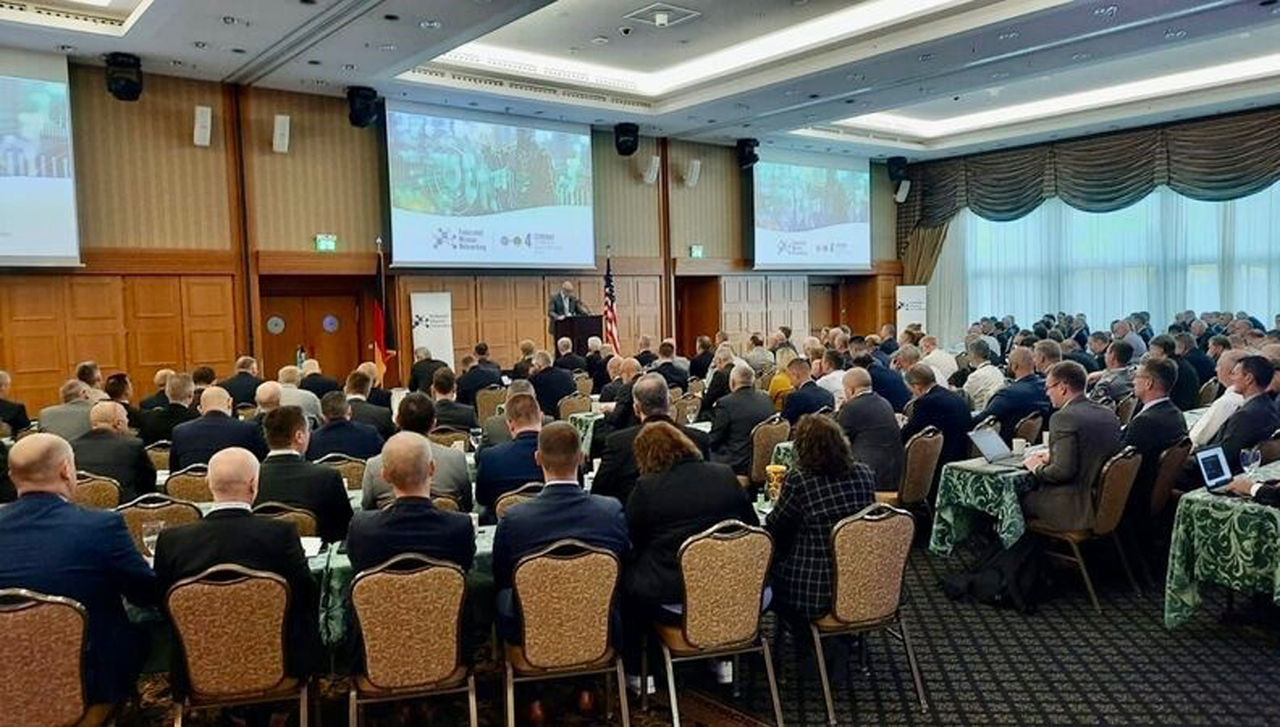
The fourth Federated Mission Networking (FMN) Seminar was held at the Edelweiss Lodge and Resort Conference Centre in Garmisch-Partenkirchen, DEU from 16-18 May 2022, entitled, “Effective Multinational Command and Control – Turning Concept into Reality”. Co-hosted by Germany and the USA, the 3-day Seminar focused on effective Multinational Consultation, Command and Control (C3), as well as, Multi-Domain Operations.
Opening the Seminar, with a video message, the Chair of the NATO Military Committee, Admiral Rob Bauer highlighted the important role played by FMN: “The FMN is an operational enhancer which allows you, the operator to exchange information with your coalition partners, securely and instantly. Participation and use of the FMN inherently leads to trust among coalition partners. It swaps the paradigm from a “need to know” to a “need to share” data”.
The seminar, co-hosted by Germany and the USA, featured five keynote speeches and four breakout sessions with senior champions. The keynote speakers included, Lieutenant General Brice Houdet, Vice-Chief of Staff at SHAPE, Lieutenant General Nicola Zanelli, Deputy Commander NATO Allied Land Command and FMN Senior Operational Champion; Lieutenant General Kai Ronald Rohrschneider, Director-General for Forces Policy at the German Federal Ministry of Defence; Brigadier General Chad Raduege, Branch Head IT and Communications (JS/J6) at the US European Command; and Mr. Marco CRISCUOLO, Deputy Director of the NATO HQ Consultation, Command and Control Staff (NHQC3S). The speeches provided a prospective on FMN from an operator’s point of view, the use of FMN in the European theatre and forwarded the FMN strategic message. The plenary also featured a guest speaker, Lieutenant Colonel Frank Gubbels from the C2 Centre of Excellence who provided an outsider’s perspective of FMN, highlighting its strengths and weaknesses.
Two hundred thirteen (213) personnel attended the seminar representing 31 nations and 3 organizations. The seminar successfully achieved it goals of promoting the benefits of FMN to the operators, increasing situational awareness of FMN and demonstrating the benefits by using FMN to gain Day Zero interoperability.
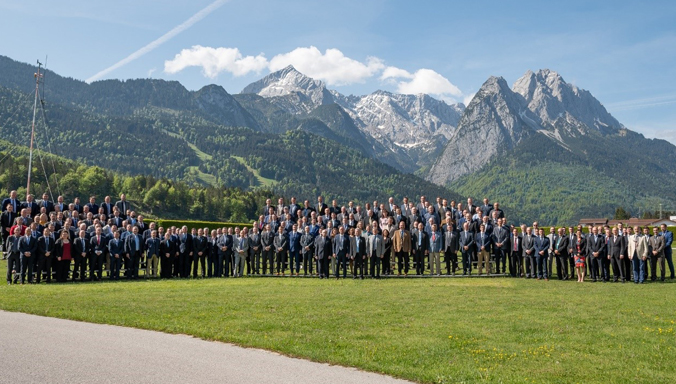
The four breakout sessions targeted senior strategic influencers, operators, capability developers and operational/communication planners and was led by Senior Champions to direct and provide guidance and experience to the discussions. The four breakout sessions provided over 30 recommendations and over 25 findings and observations.
The FMN Management Group Chairperson, Major General Frank Schloesser, closed the seminar by thanking all participants for attending and for their contributions to the various discussions. He concluded that “the FMN benefits us all. It is a way for all participating nations to connect their forces, enhancing their interoperable command capability and ultimately, increasing operational effectiveness. FMN aims to make us stronger, faster and more effective”.
The fourth FMN Seminar successfully achieved its goals. All the breakout sessions came to the same general conclusion that even though FMN is an operational enhancer and that it can answer the need for Day Zero interoperability, FMN needs to better demonstrate its benefits to the operational commanders. Furthermore, that FMN needs to better include operators into its requirements development and other FMN processes.