NATO MULTIMEDIA ACCOUNT

Access NATO’s broadcast-quality video content free of charge

Register

Create an account

Create an account

Check your inbox and enter verification code

We have sent a verification code to your email address. . Enter the code to verify your account. This code will expire in 30 minutes.
Verification code

Didn't receive a code? Send new Code

You have successfully created your account

From now on you can download videos from our website

Subscribe to our newsletter

If you would also like to subscribe to the newsletter and receive our latest updates, click on the button below.

Reset password

Enter the email address you registered with and we will send you a code to reset your password.

Reset password
Check your inbox and enter verification code
We have sent a verification code to your email address. Enter the code to verify your account. This code will expire in 30 minutes.
Verification code

Didn't receive a code? Send new Code

Create a new password

The password must be at least 12 characters long, no spaces, include upper/lowercase letters, numbers and symbols.

Your password has been updated

Click the button to return to the page you were on and log in with your new password.

Questions and Answers with scientist Vanja Mišković

Location: Brussels, Belgium

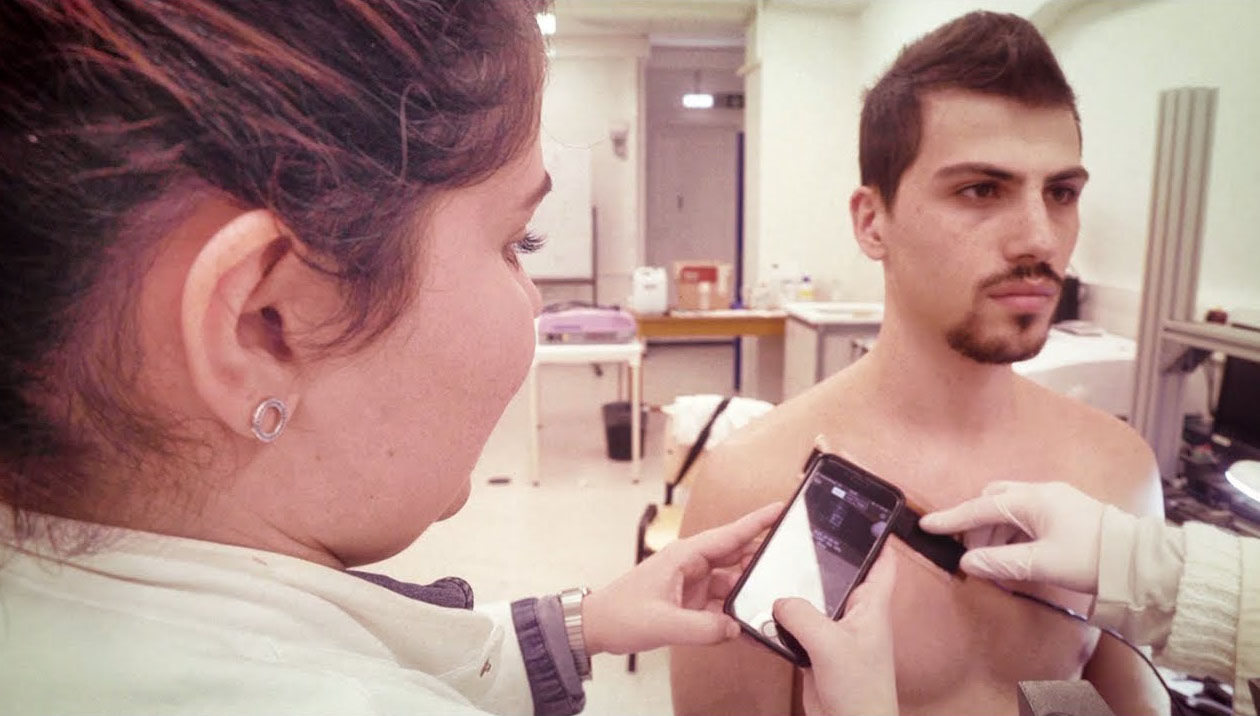
Project name: Rapid Skin Wound Healing by Integrated Tissue Engineering and Sensing (RAWINTS)

Project description: NATO scientists have developed a special technology that not only speeds up the healing of a wound, but also monitors key indicators like temperature, pH level and chemical processes on a readable display. Working with the NATO Science for Peace and Security (SPS) Programme, scientists from Belgium, Japan, Italy and Spain have developed the system, which has been picked up by the European Space Agency and NASA to test in zero gravity.


  1. What was your role in the rapid skin wound healing (RAWINTS) project?

    As a young scientist, I started my PhD thesis working on the RAWINTS project, where I was responsible for the sensing layer composed of a hydrogel matrix and liquid crystals for real-time monitoring of wound temperature.
     
  2. What was it like to work on a project with very experienced researchers and teams based in different countries?

    RAWINTS was my first international project, and I had the opportunity to meet and work with great researchers coming from Belgium, Japan, Italy and Spain. I would primarily refer to my experience with Professor Cusella and her team at the University of Pavia. During the project, we established close collaboration, and by visiting their laboratory, I was able to understand better the medical aspect of the wound healing process.
     
  3. You went on a zero-gravity test flight with the European Space Agency! What was it like? How was it useful for the project?

    This flight was my second participation in the parabolic flight campaign, and it was as exciting as the first one. It is almost impossible to describe the feeling of experiencing zero gravity. From the scientific point of view, preparing an experiment for a zero-gravity test is probably the most complex but rewarding experience.

    RAWINTS started from the NATO SPS Programme, but we understood that the results of RAWINTS were beneficial in supporting the human exploration programme in space by considering the crucial importance of astronauts' health in this extreme environment.
     
  4. What is the most challenging part of your job as a researcher?

    I'm working as an experimentalist, and as everybody knows, experiments can always go wrong up to the last minute. I would say that learning how to deal with these problems patiently is probably the most challenging part, together with handling and understanding the big data.
     
  5. What advice would you give to young people who want to develop innovative technologies like RAWINTS?

    Besides to be patient and work hard, I would advise them to look at NATO SPS projects as an opportunity to gain experience and build networks and connections.
     
  6. How do your research and the RAWINTS project contribute to the goals of NATO?

    NATO's SPS Programme is meant to support not only military personnel but also the civilian population affected by the consequences of conflicts. RAWINTS is a clear example of an application that can make the wounded soldier in the field safer while also allowing better healthcare of civilians in conflicts and remote areas.
     
  7. Based on your experience, would you work on another scientific project supported by the NATO Science for Peace and Security Programme? What would you like to research next?

    Yes, definitely. I want to use the knowledge that I acquired in RAWINTS and focus more on the implementation of machine learning, which is a crucial technology for better healthcare in a remote context, such as in developing countries.


Learn more about other innovative science projects on the NATO Science main page.