
Close
Back


From now on you can download videos from our website
If you would also like to subscribe to the newsletter and receive our latest updates, click on the button below.
Enter the email address you registered with and we will send you a code to reset your password.
The password must be at least 12 characters long, no spaces, include upper/lowercase letters, numbers and symbols.
Click the button to return to the page you were on and log in with your new password.
26 October 2020
1 MIN READ
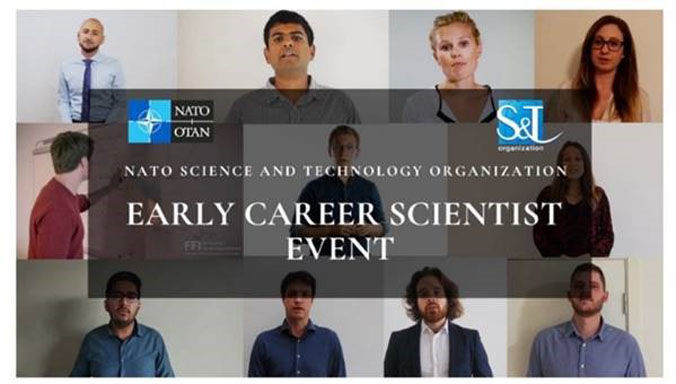
NATO’s Science and Technology Organization (STO) has launched a thread of video-posts from early career scientists to give them the opportunity to learn more about each other’s work and how they can contribute to maintaining NATO’s scientific and technological edge.
NATO Chief Scientist, Dr Bryan Wells, said “The NATO Science and Technology network includes some rising-star researchers from various academic disciplines. We are keen to integrate the next generation of scientific leaders into NATO’s work on protecting our shared security, while helping them engage in collaborations that benefits their research”.
The videos will be published on the STO’s LinkedIn and Facebook and on the Office of the Chief Scientist’s LinkedIn accounts regularly over the coming weeks.
The NATO Science and Technology Organization has a network of over 6,000 scientists, engineers and analysts drawn from Allied and Partner Nations. It is the largest international defence science and technology network in the world.