
Close
Back


From now on you can download videos from our website
If you would also like to subscribe to the newsletter and receive our latest updates, click on the button below.
Enter the email address you registered with and we will send you a code to reset your password.
The password must be at least 12 characters long, no spaces, include upper/lowercase letters, numbers and symbols.
Click the button to return to the page you were on and log in with your new password.
05 November 2019
1 MIN READ
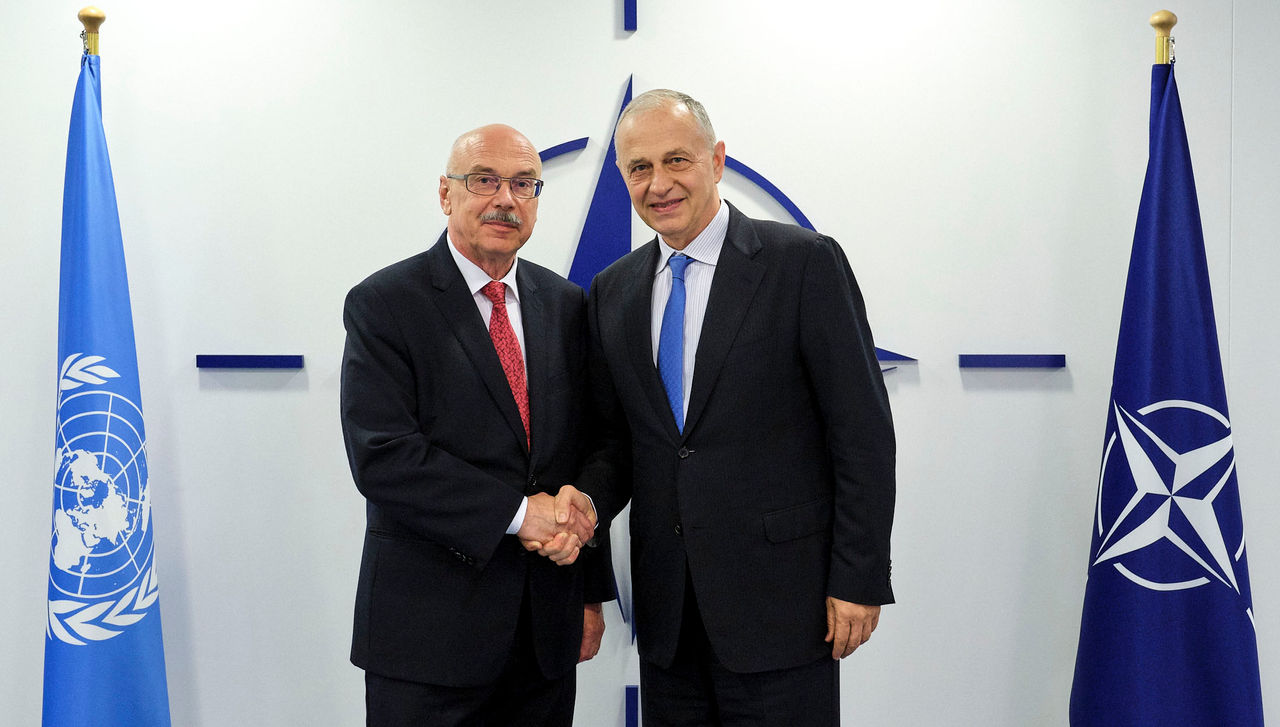
Today (05 November 2019), NATO Deputy Secretary General Mircea Geoana met with the United Nations Under Secretary General of the Counter-Terrorism Office Mr. Vladimir Voronkov. The two officials reviewed the excellent level of cooperation developed these past years between NATO and the United Nations in the counter-terrorism domain. Both officials conveyed their appreciation for the good progress made on NATO-UN cooperation to enhance the defence capacity of NATO’s partners in the Middle East and North Africa.
Mr. Geona and Mr. Voronkov also exchanged views on areas where the two organizations could further their cooperation, including on tackling terrorist misuse of technology, countering improvised explosive devices, border security, providing assistance to NATO Allies in the identification and prosecution of foreign terrorist fighters, and strengthening capabilities to deal with threats posed by terrorist attacks with the use of chemical, biological, radiological or nuclear weapons.