
Close
Back


From now on you can download videos from our website
If you would also like to subscribe to the newsletter and receive our latest updates, click on the button below.
Enter the email address you registered with and we will send you a code to reset your password.
The password must be at least 12 characters long, no spaces, include upper/lowercase letters, numbers and symbols.
Click the button to return to the page you were on and log in with your new password.
18 June 2019
1 MIN READ
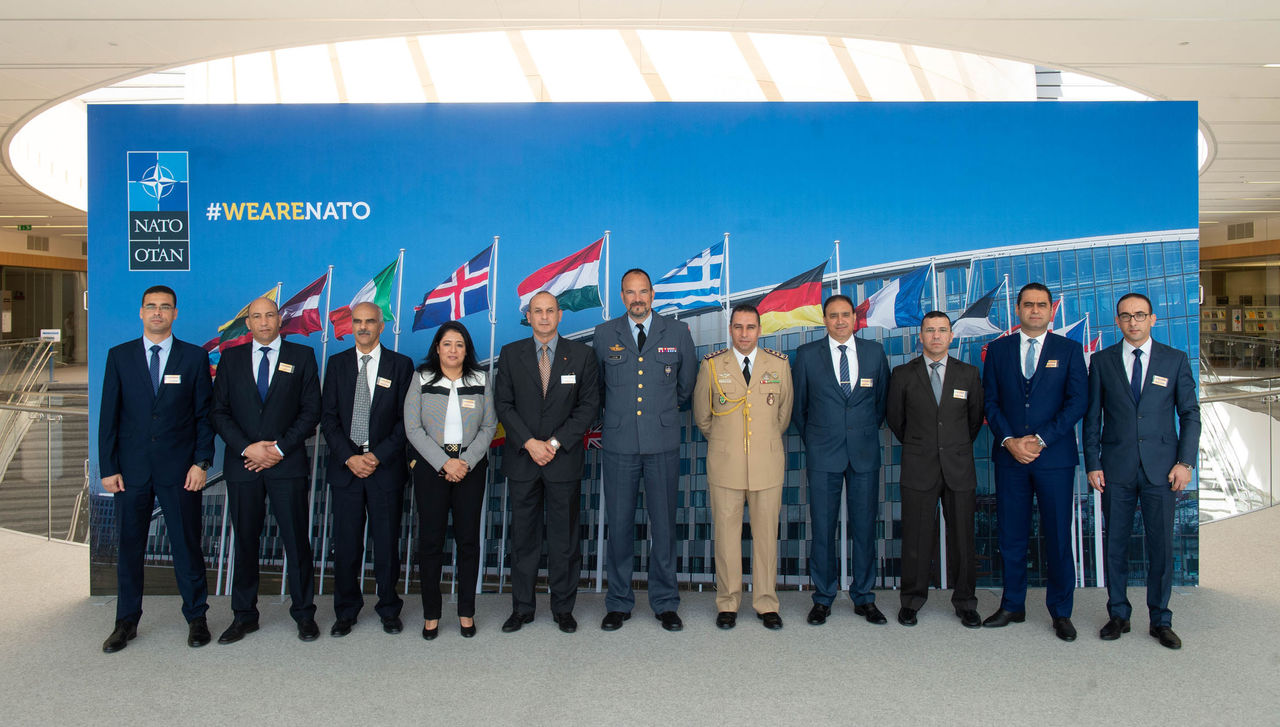
On 17 and 18 June 2019, NATO’s Political Affairs and Security Policy Division received a high-level delegation of military officers from the Moroccan Royal Armed Forces. This was the first visit of military officers from Morocco to the Headquarters of the Atlantic Alliance conducted in the framework of NATO’s public diplomacy activities with Morocco.
Mr. Nicola de Santis, Head of the Middle East and North Africa Section at NATO gave an overview of NATO’s strands of cooperation with countries in the Mediterranean Dialogue and in the Istanbul Cooperation Initiative. He highlighted Morocco’s longstanding cooperation with NATO. Major General Jan Kazimierz Toft, Director of the Cooperative Security Division of NATO’s International Military Staff briefed on NATO’s activities of military cooperation with partner countries. He pointed out how these contribute to promote international security, enhance the level of interoperability amongst different national military forces and project stability.
The programme of the visit featured also briefings and discussion sessions on specific topics. These included NATO’s relations with partners from the Mediterranean Dialogue and the Istanbul Cooperation Initiative, NATO’s current political issues, the Science for Peace and Security (SPS) programme, as well as the Alliance’s efforts on counter-terrorism, cyber defence, and arms control with a specific focus on small arms and light weapons.
The Moroccan military officers also visited the Euro-Atlantic Disaster Response Coordination Centre, which is NATO’s principal civil emergency response mechanism in the Euro-Atlantic area.