
Close
Back


From now on you can download videos from our website
If you would also like to subscribe to the newsletter and receive our latest updates, click on the button below.
Enter the email address you registered with and we will send you a code to reset your password.
The password must be at least 12 characters long, no spaces, include upper/lowercase letters, numbers and symbols.
Click the button to return to the page you were on and log in with your new password.
11 December 2017
1 MIN READ
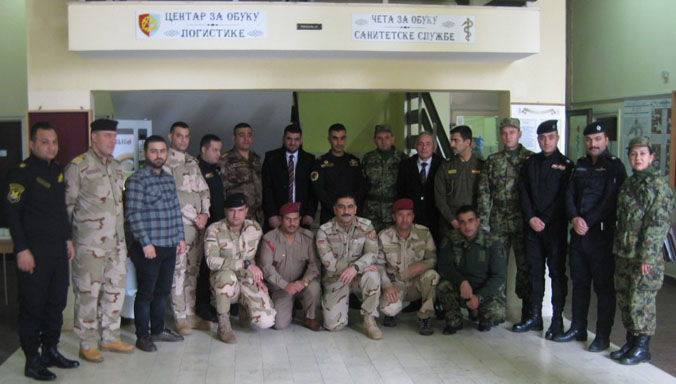
NATO continues to build Iraqi security forces capabilities. NATO partners are joining this important endeavour.
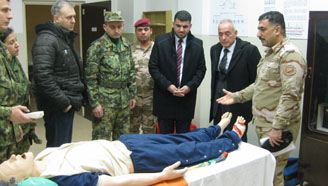
A three-week training course of medical experts from Iraq’s security forces started in early December in the Serbian Military Logistics Training Centre in Niš, Serbia. This effort is a follow-on to a previous initiative conducted in Germany in November. The course has been developed within the framework of the NATO Defence Capacity Building Initiative for Iraq. It is focused on developing a skills-set on trauma stabilization and ground-based casualty evacuation for a group of specialists from the Iraqi Ministry of Defence, Ministry of Interior, and the Counter-Terrorism Service. Serbian military medical officers are providing this training.
In addition to the military medical training, NATO is training instructors from Iraq’s security forces in the maintenance of Soviet-era armoured vehicles and in countering improvised explosive devices and the disposal of explosive ordnance. It is also providing support and advice in other areas, including civil-military cooperation, development of national security institutions, and civil emergency planning to deal with natural emergencies.