
Close
Back


From now on you can download videos from our website
If you would also like to subscribe to the newsletter and receive our latest updates, click on the button below.
Enter the email address you registered with and we will send you a code to reset your password.
The password must be at least 12 characters long, no spaces, include upper/lowercase letters, numbers and symbols.
Click the button to return to the page you were on and log in with your new password.
08 December 2017
1 MIN READ
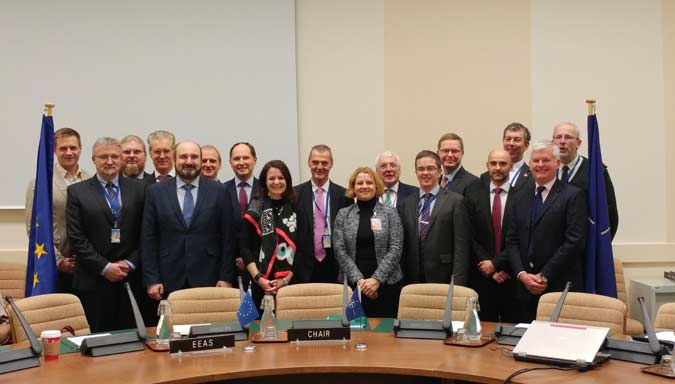
Senior officials from the European Union met their counterparts at NATO Headquarters today (8 December) to take stock of current efforts and discuss new areas for cooperation on cyber defence.
“We reviewed our progress on enhancing information exchange, training and education, and exercises, while identifying new areas where more can be done – such as the sharing of best practice on crisis management and response,” stated Dr. Jamie Shea, NATO’s Deputy Assistant Secretary General for Emerging Security Challenges.
The officials discussed recent developments related to NATO’s Cyber Defence Pledge and the implementation of NATO’s decision to recognise cyberspace as a domain of operations, in addition to the new EU cybersecurity ‘package’.
“In September 2017 cyber security gained new momentum for the EU, with the adoption of the Joint Communication "Resilience, Deterrence and Defence: Build Strong Cybersecurity for the EU. The new Communication foresees the increase of cyber defence capabilities within the EU to mitigate the growing cyber risk and adequately respond to new threats,” stressed Pawel Herczynski, Director for Security Policy from European External Action Service.
Cyber defence is one of the areas where NATO and the EU are working closer together than ever. Earlier this week, NATO and EU Ministers agreed to step up cooperation between the two organisations in a number of areas, including cyber security and defence. Analysis of cyber threats and collaboration between incident response teams is one area of further cooperation; another is the exchange of good practices concerning the cyber aspects and implications of crisis management.