
Close
Back


From now on you can download videos from our website
If you would also like to subscribe to the newsletter and receive our latest updates, click on the button below.
Enter the email address you registered with and we will send you a code to reset your password.
The password must be at least 12 characters long, no spaces, include upper/lowercase letters, numbers and symbols.
Click the button to return to the page you were on and log in with your new password.
09 November 2017
1 MIN READ
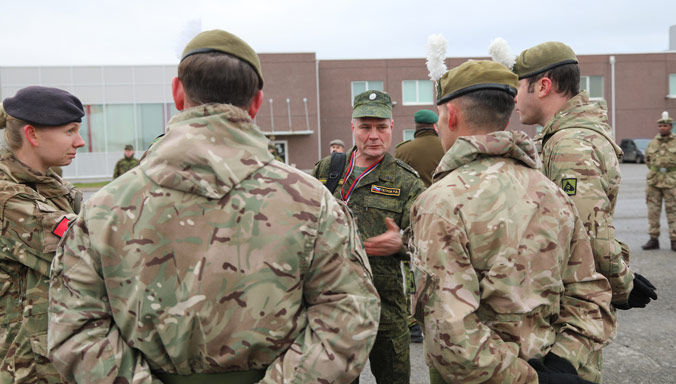
As part of NATO Allies’ ongoing commitment to transparency, Estonia, Latvia and Lithuania are hosting Russian arms control inspectors this week. The inspectors toured a number of military sites, including some used by multinational NATO battlegroups. NATO deployed defensive forces to the region – known as enhanced forward presence – following Russia’s aggressive actions against Ukraine. One battlegroup, roughly 1,000-strong, is now stationed in each of the Baltic countries and Poland to deter any possible aggression.
In Estonia, Russian inspectors visited the Defence Forces Central Training Area, headquarters of the 1st Infantry Brigade in Tapa, and met with NATO personnel stationed there. In Latvia, the Russian inspection team visited Latvian Armed Forces units and training grounds, and were briefed by the Commander of the Mechanised Infantry Brigade and the Commander of the National Guard 2nd Brigade. They also conducted an observation flight over the central part of Latvia. In Lithuania, the inspectors conducted an overflight and visited units within the Mechanised Infantry Brigade “Iron Wolf” in Rukla, where they were briefed by the Brigade Commander and met with NATO battlegroup personnel.
All of these visits are being carried out within the framework of the Vienna Document, an agreement on military transparency reached among the 57 member nations of the Organization for Security and Co-operation in Europe (OSCE) in 2011. Designed to promote mutual trust and transparency, the Vienna Document commits OSCE members to accept a number of inspection visits by other members each year, in order to verify there are no undeclared military capabilities or activities of concern.
NATO strongly supports efforts to build confidence and transparency on military activities. Allies respect the letter and spirit of the Vienna Document, and NATO regularly updates its schedule of military exercises online.