
Close
Back


From now on you can download videos from our website
If you would also like to subscribe to the newsletter and receive our latest updates, click on the button below.
Enter the email address you registered with and we will send you a code to reset your password.
The password must be at least 12 characters long, no spaces, include upper/lowercase letters, numbers and symbols.
Click the button to return to the page you were on and log in with your new password.
24 October 2017
1 MIN READ
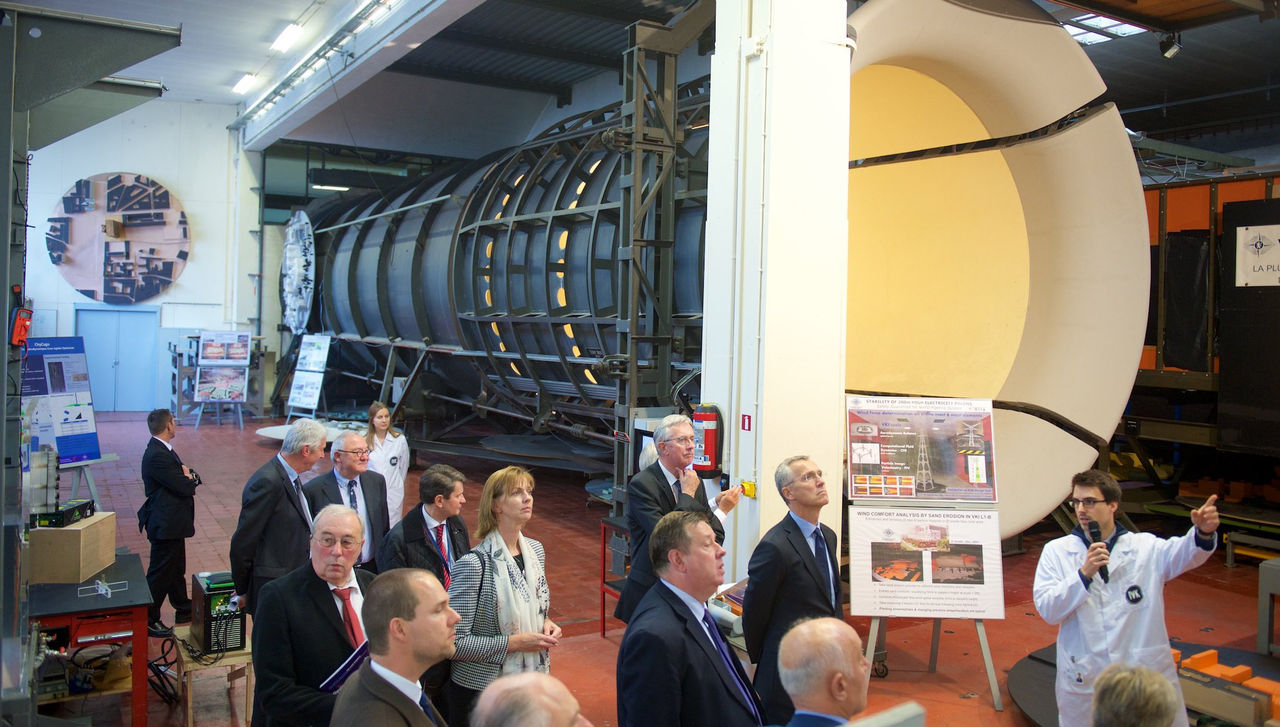
Today (24 October) the 29 ambassadors of the North Atlantic Council visited the Von Karman Institute for Fluid Dynamics (VKI) in Belgium. In opening remarks, NATO Secretary General Jens Stoltenberg thanked VKI for more than 60 years of service to NATO and Allied Nations.
The Von Karman Institute is an international scientific organisation that offers expertise on fluid dynamics and post-graduate education to students and researchers. During the visit, Ambassadors were briefed by experts in science and engineering, including NATO Chief Scientist Dr. Thomas Killion.
The Secretary General stressed the importance of this knowledge and skills base for the defence industry and our military capabilities. “VKI reminds us that – despite the pressures of the political day-to-day business – we also have a responsibility for the longer-term future,” he said.