
Close
Back


From now on you can download videos from our website
If you would also like to subscribe to the newsletter and receive our latest updates, click on the button below.
Enter the email address you registered with and we will send you a code to reset your password.
The password must be at least 12 characters long, no spaces, include upper/lowercase letters, numbers and symbols.
Click the button to return to the page you were on and log in with your new password.
29 September 2017
1 MIN READ
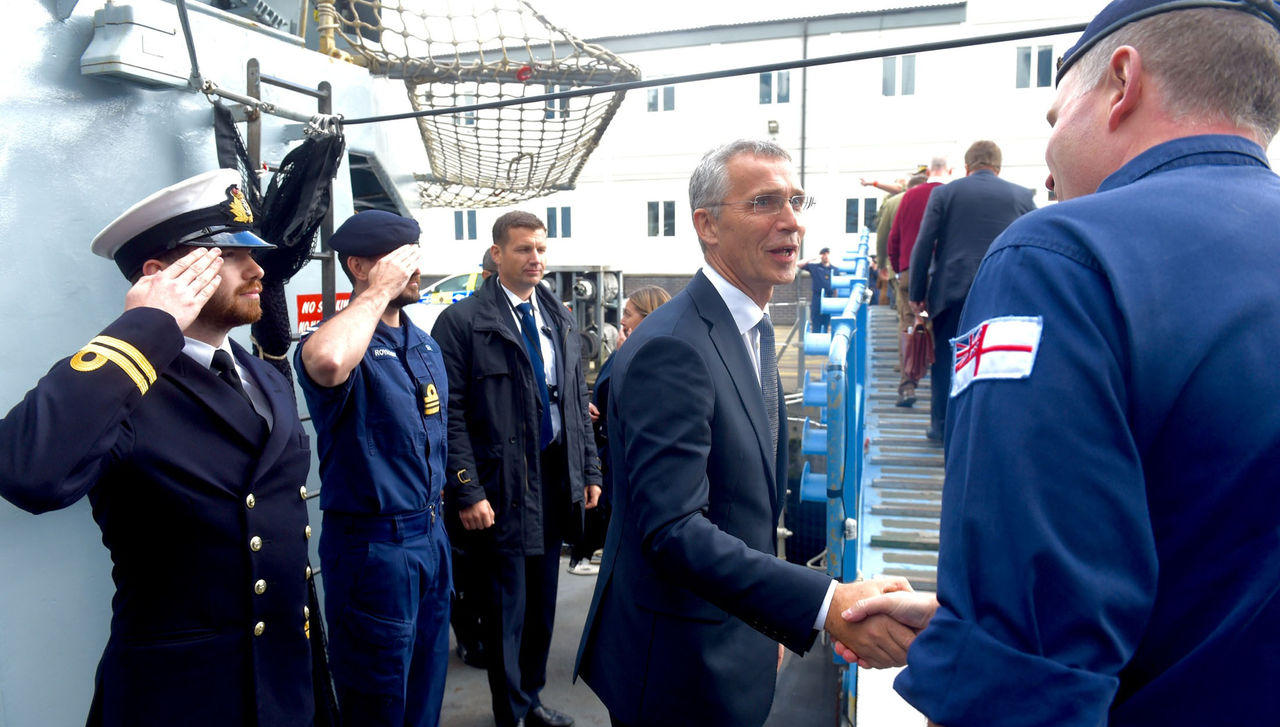
NATO Secretary General Jens Stoltenberg, together with Representatives of the North Atlantic Council and members of NATO’s Military Committee, visited Her Majesty’s Naval Base Clyde at Faslane, Scotland, on Friday (29 September 2017) to mark the United Kingdom’s 350th nuclear submarine patrol.
“I welcome the UK’s strong contribution to NATO, from its commitment to defence investment to its operational deployments.” Mr Stoltenberg said. “The nuclear forces of the Alliance, including those at Clyde Naval Base, are the supreme guarantee of the security of allied countries and populations.”
At the invitation of Sir Michael Fallon, the United Kingdom Secretary of State for Defence, the Secretary General, Allied Ambassadors and the members of the Military Committee visited a Vanguard class strategic nuclear submarine, a training facility and a Royal Navy frigate.
Addressing media alongside Secretary Fallon, Mr. Stoltenberg said that at a time of evolving security challenges the Alliance is protected by the full spectrum of defence and deterrence capabilities. “Allies will continue to ensure that NATO's nuclear deterrent remains safe, secure and effective”, the Secretary General said. He added that NATO was committed to creating the conditions for a world without nuclear weapons in line with the Allies’ commitments to the nuclear Non-Proliferation Treaty.
The Royal Navy’s four Vanguard-class submarines at Clyde naval base have provided continuous at sea deterrence for almost 50 years. After meeting with officers and enlisted personnel, Mr. Stoltenberg thanked the submariners for their service, dedication and professionalism. Mr. Stoltenberg pointed out that the number of Europe-based nuclear weapons available to NATO has been reduced dramatically since the end of the Cold War but that efforts for nuclear disarmament need to take into account the realities of the threats the Alliance faces. At the Warsaw Summit in 2016, NATO Allies made clear that the fundamental purpose of the nuclear capabilities of Allies is to preserve peace, prevent coercion, and deter aggression.