
Close
Back


From now on you can download videos from our website
If you would also like to subscribe to the newsletter and receive our latest updates, click on the button below.
Enter the email address you registered with and we will send you a code to reset your password.
The password must be at least 12 characters long, no spaces, include upper/lowercase letters, numbers and symbols.
Click the button to return to the page you were on and log in with your new password.
13 September 2017
2 MIN READ
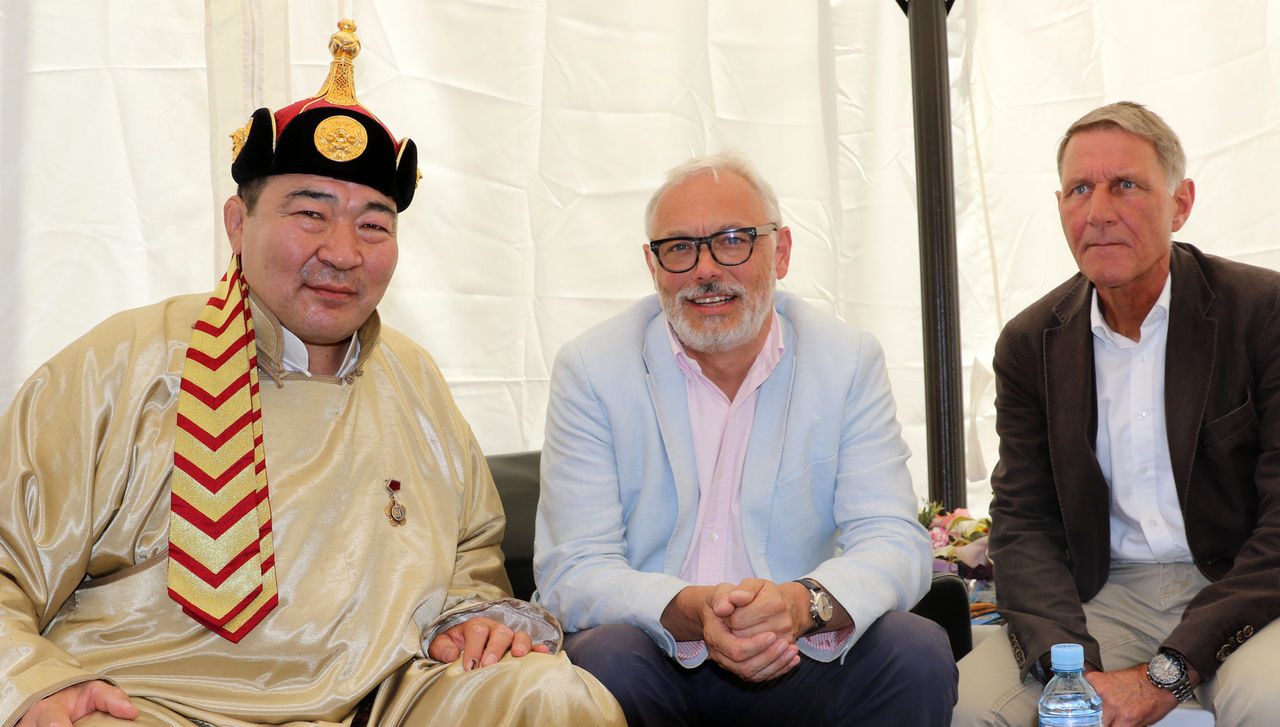
Mongolia recently marked the successful achievement of goals set under its Defence Education Enhancement Programme (DEEP) with NATO. Through DEEP, Mongolia has completed an ambitious multi-year plan for the modernisation of its professional military education system. Since 2013, the National Defence University of Mongolia (MNDU) has implemented a new core curriculum for staff officers, reviewed instructors’ teaching methods and placed greater emphasis on English and other foreign language teaching.
German Deputy Dean of the George C. Marshall European Center for Security Studies Sven Gareis visited Ulaanbaatar, Mongolia from 5 to 12 July 2017, for the review of DEEP Mongolia, made possible through NATO, the Partnership for Peace Consortium, and the Marshall Center.
With NATO’s support over the last four years, Dr Gareis, Army LtC Klaus Huettker of the German General Staff and Command College in Hamburg and many other experts from Canada, Slovakia, Ukraine and the United States, have worked with their Mongolian colleagues to develop a state-of-the-art Mongolian Staff Officer Course (MSOC) and to implement modern teaching methodologies in the University’s curricula.
“Our involvement with Mongolia’s DEEP programme isn’t over,” said Dr Gareis. “This visit marked the end of the assistance phase of the programme. The next phase is a sustainment phase to secure the achievements and further develop curricula and governance at the MNDU.”
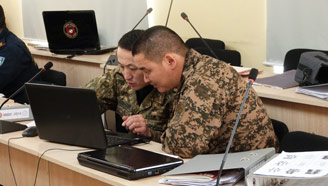
Launched in 2015, the MSOC has become a prerequisite for advancement as an officer in the Mongolian Armed Forces. The MNDU teaches the curriculum, developed with NATO, on international security, leadership skills and operational planning to a civil-military audience. The 2016 MSOC included participants from the Law Enforcement University, Police Academy, the Border Control Forces and the National Emergency Management Agency. This made the MSOC a comprehensive-approach endeavour that will continue.
MNDU President Major General Yadmaa Choijamts emphasised the programme’s success:
"This programme is providing Mongolian officers the opportunity to prepare for multinational operations' staff headquarters. DEEP changed the mind-set of the MNDU, increasing the impulse for reform," said President Choijamts. "As a result of the programme, 45 military personnel from the Mongolian Armed Forces, the General Authority for Border Protection and National Emergency Management Agency have participated in the Mongolian Staff Officer Course and gained knowledge and skills to carry out their duties in international peacekeeping operations staff," he continued.
While in Mongolia, Dr Gareis met with NATO country representatives and with Mongolian Minister of Defence Badmaanyambuugiin Bat-Erdene.
“Minister Bat-Erdene, who attended a special tailored seminar for Mongolian parliamentarians at the George C. Marshall Center in December 2014, expressed to me his appreciation of the successful work of the DEEP team,” said Dr Gareis.
Mongolia will continue to engage with NATO, in the sustainment phase of this programme and has already offered experts to contribute to new DEEP efforts in other partner countries. In addition, Mongolia is taking steps to build upon the results of this programme in the defence education system. The MNDU is now sharing its new teaching experience with civilian universities such as the University of Science and Technology in three common curricula with the MNDU Engineering School.
DEEPs are tailored programmes through which the Alliance advises partners on how to build, develop and reform educational institutions in the security, defence and military domain. Projects are currently running in 12 countries: Afghanistan, Armenia, Azerbaijan, Georgia, Kazakhstan, Kyrgyzstan, Mauritania, the Republic of Moldova, Serbia, the former Yugoslav Republic of Macedonia1, Tunisia and Ukraine. They focus in particular on faculty building and curriculum development, covering areas such as teaching methodology, leadership and operational planning.