
Close
Back


From now on you can download videos from our website
If you would also like to subscribe to the newsletter and receive our latest updates, click on the button below.
Enter the email address you registered with and we will send you a code to reset your password.
The password must be at least 12 characters long, no spaces, include upper/lowercase letters, numbers and symbols.
Click the button to return to the page you were on and log in with your new password.
08 March 2017
1 MIN READ
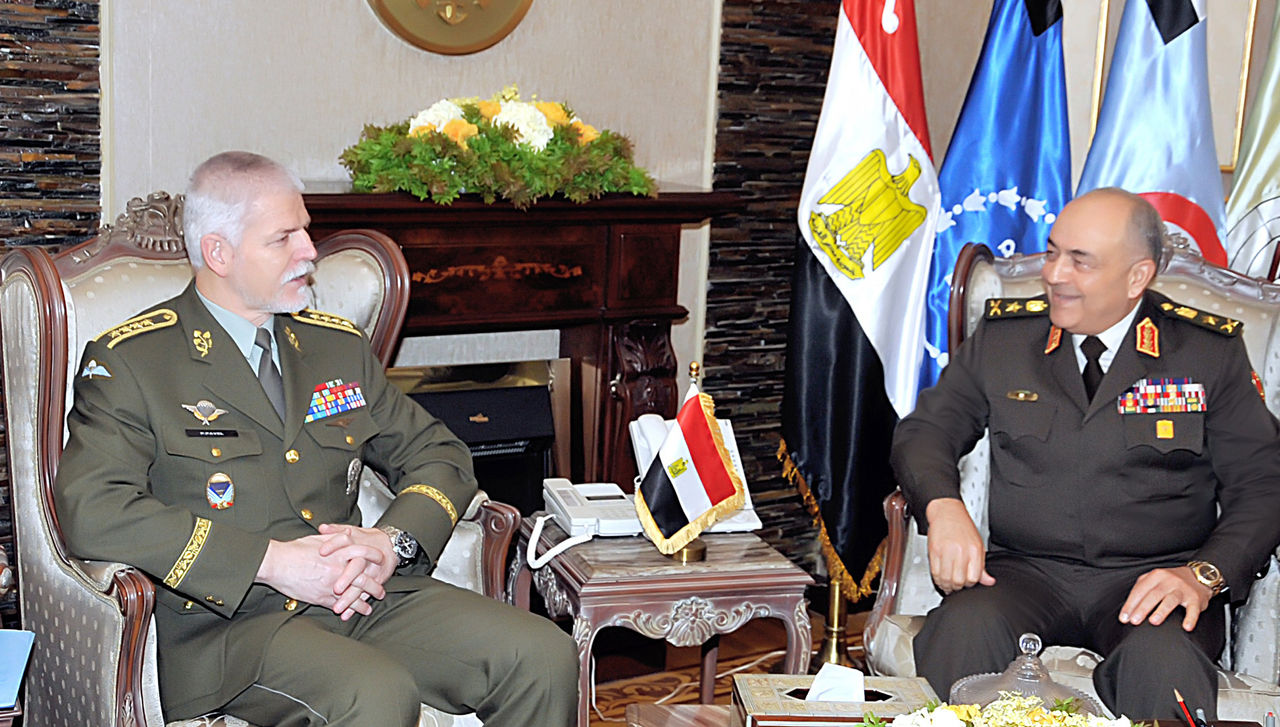
General Petr Pavel, Chairman of the NATO Military Committee visited Cairo, Egypt on 6-7 March 17. During his visit he met with the Chief of staff of the Egyptian Armed Forces, General Mahmoud Hegazy.
The Generals discussed global security and regional challenges, with a special focus on the current situation in Libya. They also exchanged views on furthering practical military-to-military cooperation and increasing coordination between NATO and Egypt. General Pavel stated “Egypt is a valuable and active Mediterranean Dialogue partner. Meetings such as these are important as they improve our situational awareness of the regional security challenges while also allowing the Alliance to explain firsthand its current policies and activities”.
Egypt joined the Mediterranean Dialogue in 1994 and signed a Security Agreement with NATO in 2009. The Dialogue reflects the Alliance’s view that security in Europe is closely linked to security and stability in the Mediterranean.