
Close
Back


From now on you can download videos from our website
If you would also like to subscribe to the newsletter and receive our latest updates, click on the button below.
Enter the email address you registered with and we will send you a code to reset your password.
The password must be at least 12 characters long, no spaces, include upper/lowercase letters, numbers and symbols.
Click the button to return to the page you were on and log in with your new password.
21 October 2016
2 MIN READ
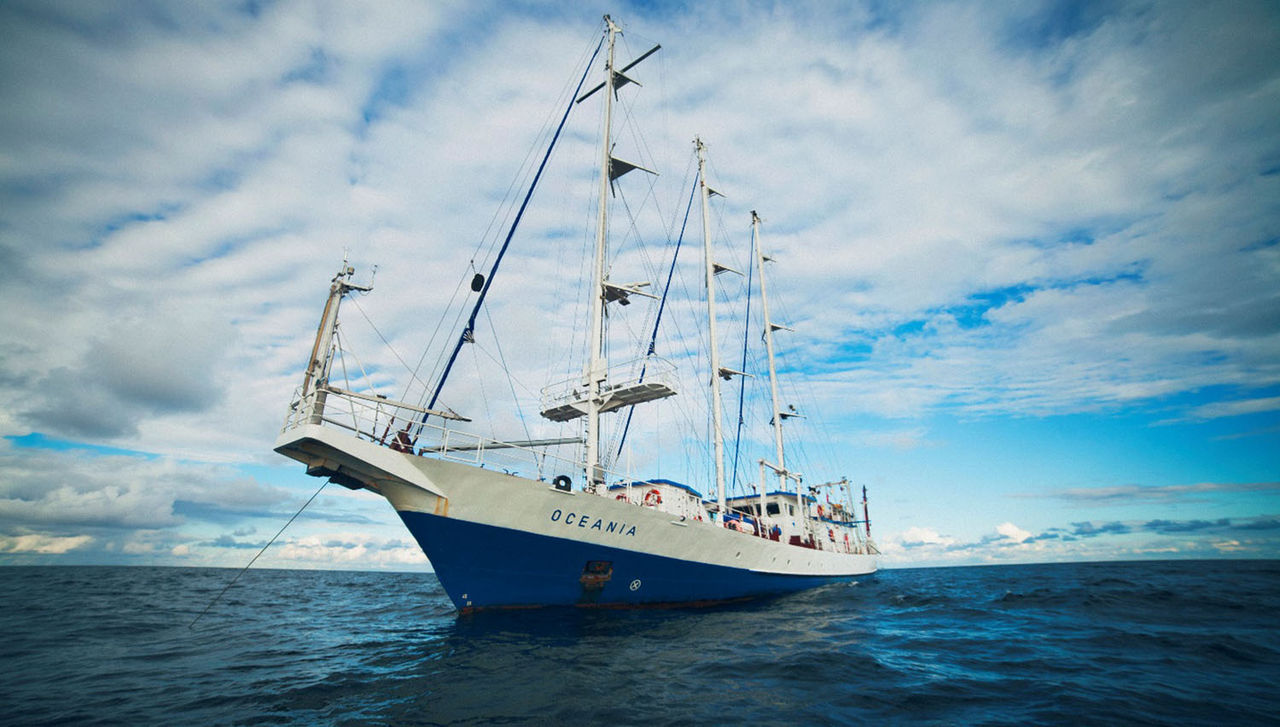
A variety of chemical weapons and explosives left over from the Second World War is posing a significant threat to marine life and the population in the Baltic Sea. An international team of scientists helped to locate and understand this threat in the Baltic Sea through a multi-year research project supported by NATO’s Science for Peace and Security (SPS) Programme.
“This project has a strong dimension of regional cooperation, engaging a total of eight Baltic countries to collectively tackle a present-day challenge the countries are faced with,” explained Dr Eyüp Kuntay Turmus, NATO Science for Peace and Security Advisor and Programme Manager.
Experts estimate that the spreading of only one sixth of the 50,000 tons of munitions can ruin the habitat in the Baltic Sea for an entire century. Since incidental or deliberate breaches of munitions cannot be excluded, dumped chemical weapons present a real threat to the environment and the population in the Baltic Sea region. The Monitoring of Dumped Munitions (MODUM) project aimed to establish a cost-effective monitoring network to observe munition dumpsites in the Baltic Sea, using Autonomous Underwater Vehicles (AUVs) and Remotely Operated Underwater Vehicles (ROVs), and utilising research vessels of partner institutions as launching platforms.
“Through this scientific cooperation, we will be able to control environmental and human security threats posed by chemical munitions dumped into the Baltic Sea,” explained Dr Jacek Beldowski, NATO-Country Project Director from the Institute of Oceanology, Polish Academy of Science.
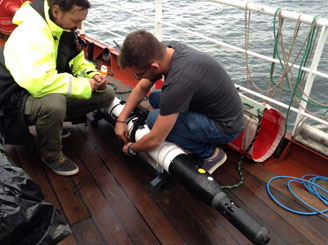
Launched in 2013, MODUM was recently successfully completed according to schedule. It was supported by the NATO Centre for Maritime Research and Experimentation (CMRE) in La Spezia, Italy. The CMRE shared its expertise with the use of unmanned systems and jointly organised a sea-trial with the MODUM project team.
The data that was acquired during the project will serve as a basis for a risk management tool for decision-makers to determine their responses in face of the dumped munition sites. Overall, the research will help the nations surrounding the Baltic Sea to form a long-term strategy to combat this threat.
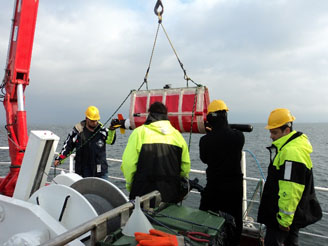
The MODUM project gave 28 young scientists the opportunity to conduct research in their field of interest. It further resulted in two claimed patents, 11 research papers that were published in scientific journals and three Master’s theses. A book on MODUM in the NATO Science Series is currently under preparation.
From June to July 2016, a summer school for young scientists on sea-dumped chemical weapons was organised in Nova Scotia, Canada, within the framework of the MODUM project. During the summer school, 19 students participated in field and lab exercises and learned about the global dumping of underwater weapons in international waters and the concepts of employing underwater vehicles for the detection and mapping of underwater weapons.