
Close
Back


From now on you can download videos from our website
If you would also like to subscribe to the newsletter and receive our latest updates, click on the button below.
Enter the email address you registered with and we will send you a code to reset your password.
The password must be at least 12 characters long, no spaces, include upper/lowercase letters, numbers and symbols.
Click the button to return to the page you were on and log in with your new password.
11 October 2016
2 MIN READ
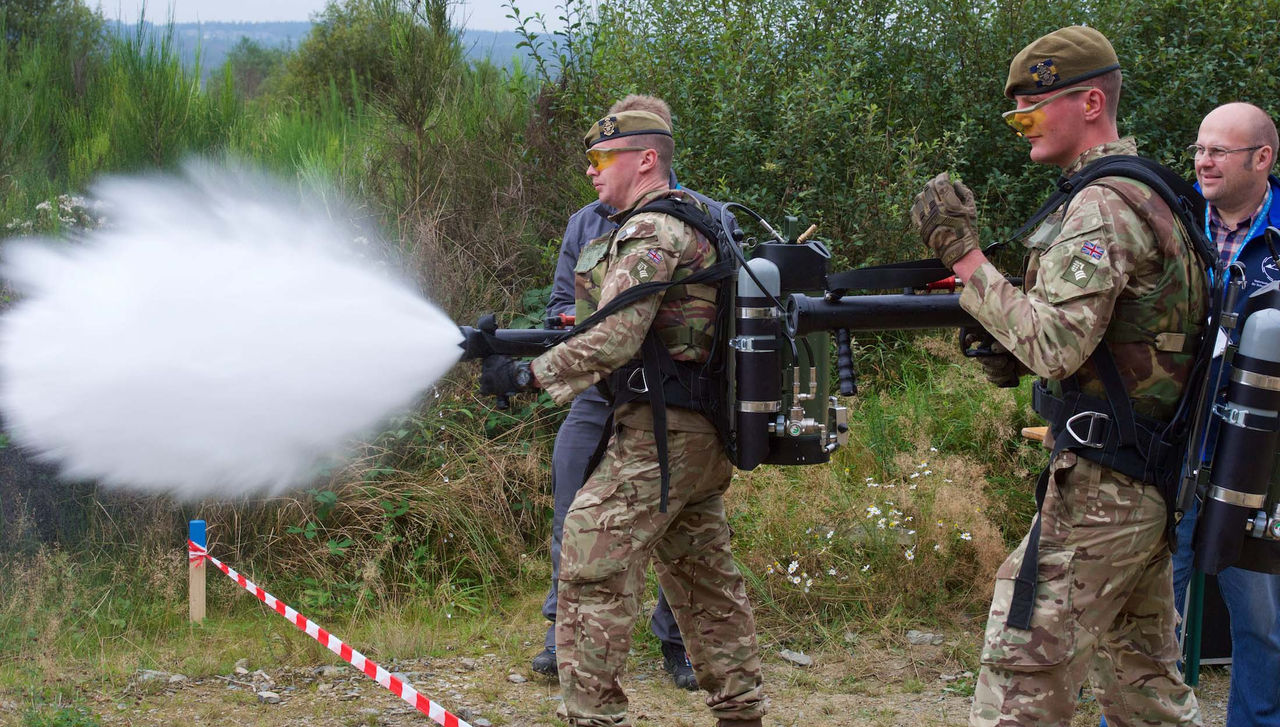
New complex situations with fighters operating among civilians are challenging conventional warfare and require new responsive technologies. NATO sponsored a Non-Lethal Technology Exercise organised by Belgium from 19 to 30 September 2016 to practise the use and assess the military utility of non-lethal weapons in land operations.
What is a non-lethal weapon?
Non-lethal weapons (NLW) are weapons, such as lasers, acoustic and kinetic devices, that can be used as a tool to minimise the loss of life while achieving mission success and ensuring protection. “Non-lethal capabilities are critical for force protection purposes and to give commanders a range of different options to bring potentially hostile situations rapidly under control, while avoiding escalation and the disproportionate use of force,” explained Dr Jamie Shea, NATO Deputy Assistant Secretary General for Emerging Security Challenges. They allow suspects to be stopped without killing them and are of strategic and tactical importance, particularly in urban environments. The Alliance is supporting various activities in the field of non-lethal weapons.
Practising non-lethal technology in land operations
Under the overall framework of NATO’s Defence Against Terrorism Programme of Work (DAT POW), Belgium organised the NATO Non-Lethal Technology Exercise-Land (NNTEX-16L) at the Elsenborn military camp. It allowed troops from four participating Allies — Belgium, the Netherlands, the United Kingdom and the United States — as well as troops from partner country Austria and additional assessment teams from Denmark, Germany and Norway to practise with and assess the military utility of non-lethal weapons in land operations.
NNTEX-16L focused on capabilities with high technological readiness levels and covered a wide variety of systems such as non-lethal directed energy capabilities, including radio-frequency vehicle stopping and counter-personnel technologies. The exercise highlighted the concrete value of non-lethal capabilities at a hasty vehicle checkpoint and in a perimeter security scenario.
“Exercises such as NNTEX-16L demonstrate that non-lethal weapons are today technically mature enough to give the warfighter more options in the escalation of force process,” said Maj Dr Alex P., Belgian representative to the DAT POW Non-Lethal Capability Working Group. “We now need more opportunities to demonstrate their use in other types of missions to convince the senior leadership to integrate them on the field.”
NATO’s Defence Against Terrorism Programme of Work (DAT POW)
The NNTEX series, including both maritime and land events, is the culmination of a number of years of activity under the DAT POW Non-Lethal Capabilities (NLC) initiative. Under the DAT POW, NATO member and partner countries develop advanced technologies and counter-measures which meet the most urgent security needs in the face of terrorism. The programme addresses Allies’ and partners’ urgent requirements by providing NATO common funding — member countries pooled resources within a NATO framework — in support of capability development.
The NLC initiative provides a platform for developing pioneering projects and focuses on the assessment of effectiveness and operator safety, contributing to the overall aim of making nations aware of the full potential of non-lethal weapons.