
Close
Back


From now on you can download videos from our website
If you would also like to subscribe to the newsletter and receive our latest updates, click on the button below.
Enter the email address you registered with and we will send you a code to reset your password.
The password must be at least 12 characters long, no spaces, include upper/lowercase letters, numbers and symbols.
Click the button to return to the page you were on and log in with your new password.
04 July 2016
2 MIN READ
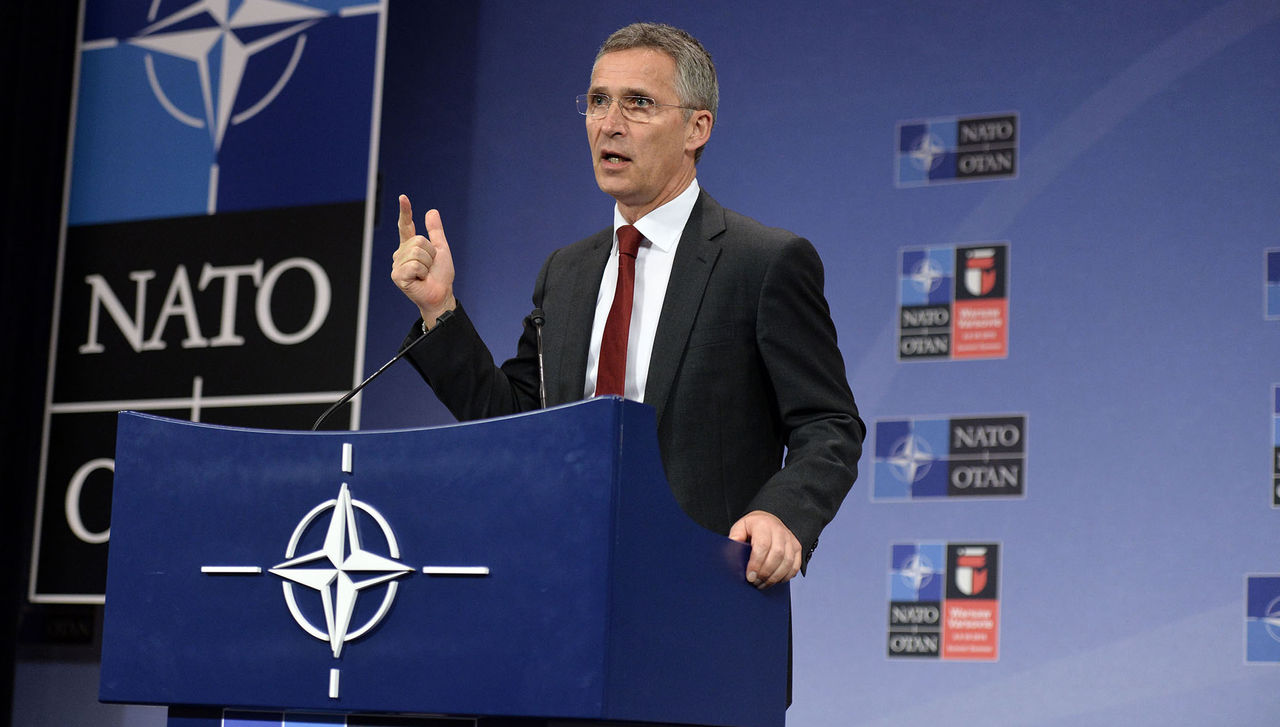
NATO Secretary General Jens Stoltenberg said Allied leaders, meeting in Warsaw on Friday and Saturday (9 July), will take key decisions to strengthen the Alliance’s defence and deterrence and project stability beyond NATO’s borders.
Since the Alliance's last summit in September 2014 in Wales, NATO has implemented the biggest reinforcement of its collective defence since the Cold War. “We delivered a faster, a stronger, and a more ready Alliance”, Mr Stoltenberg told a press conference at NATO headquarters on Monday (4 July). “We now need to take the next steps. So at our Summit in Warsaw, we will agree to further enhance our military presence in the eastern part of the Alliance.”
The Secretary General said that Allied leaders will agree to deploy four robust, multinational battalions to Estonia, Latvia, Lithuania and Poland. Further efforts to strengthen the Alliance’s deterrence and defence include a tailored presence in the south-east, based on a multinational brigade in Romania and steps to improve cyber-defence, civil preparedness and the ability to defend against ballistic missile attacks.
Mr Stoltenberg also said that after years of declining defence budgets, NATO estimates show that defence spending by European Allies and Canada is expected to rise by 3 percent – or 8 billion US Dollars – this year. The Secretary General welcomed the rise in defence spending but urged Allies to keep up the momentum.
Turning to the Middle East, the Secretary General said Alliance leaders will this week approve the deployment of NATO AWACS surveillance aircraft to support the Global Coalition to counter ISIL. He also said he expected NATO to agree on a new training and capacity building effort in Iraq and a role for NATO in the Central Mediterranean to complement the European Union’s Operation Sophia.
Mr Stoltenberg said preparations for holding another meeting of the NATO-Russia Council shortly after the Warsaw Summit are ongoing. "We remain open to dialogue with Russia. The NATO-Russia Council has an important role to play as a forum for dialogue and information exchange, to reduce tensions and increase predictability," Stoltenberg said. He stressed that transparency and risk reduction should be on the agenda.
The Secretary General further underscored NATO’s continued support for Afghanistan, including a continuation of the Resolute Support mission into 2017 and continued funding of the Afghan forces until 2020. He also outlined efforts to strengthen NATO’s close cooperation with Ukraine, Georgia and the Republic of Moldova.