
Close
Back


From now on you can download videos from our website
If you would also like to subscribe to the newsletter and receive our latest updates, click on the button below.
Enter the email address you registered with and we will send you a code to reset your password.
The password must be at least 12 characters long, no spaces, include upper/lowercase letters, numbers and symbols.
Click the button to return to the page you were on and log in with your new password.
14 June 2016
2 MIN READ
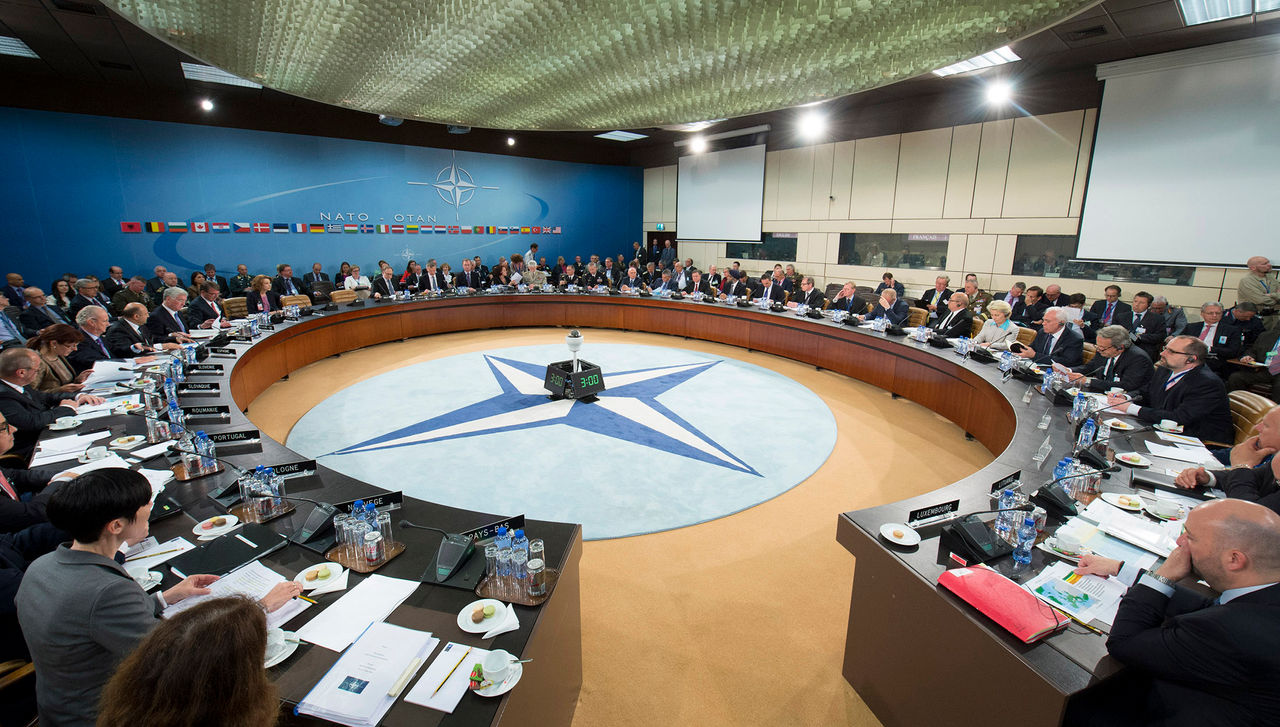
NATO Defence Ministers agreed on important measures to strengthen the Alliance’s defence and deterrence on Tuesday (14 June 2016). “NATO will deploy by rotation four robust multinational battalions to Estonia, Latvia, Lithuania and Poland. And I welcome the commitments made by many Allies today to contribute,” said the Secretary General. He stressed that this sends a clear message that if any Ally is attacked, the whole Alliance will respond as one.
Mr. Stoltenberg underlined that NATO has now fully implemented the Readiness Action Plan, adopted at the Wales Summit two years ago. Today, he added, Allies are taking the next steps. Ministers also agreed on tailored measures to enhance defence and deterrence in the Black Sea region. “There will also be more pre-positioned equipment and supplies,” he said.
The Secretary General stressed that NATO’s defence and deterrence posture is full-spectrum, from resilience and national defence, to conventional capabilities, to the nuclear dimension. Today, ministers met in the Nuclear Planning Group, to consider the safety, security and effectiveness of NATO’s nuclear deterrent. Turning to cyber defence, ministers agreed to recognise cyberspace as an operational domain at the Warsaw Summit. “Treating cyber as an operational domain would enable us to better protect our missions and operations,” said Mr. Stoltenberg.
NATO Defence Ministers also discussed the freedom of movement of NATO forces across Europe. “It is vital that our troops and equipment can move without delay. For exercises in peacetime, for reinforcements in an emerging crisis, time is of the essence,” said the Secretary General. He stressed that NATO Allies have cut red tape and updated complex procedures to improve the Alliance’s ability to deploy forces at speed.
Mr. Stoltenberg noted that NATO’s efforts to boost its deterrence and defence depend on the right capabilities and resources. He underlined that, after many years of constant cuts in defence spending, the Alliance is now back on the right track. “In 2015 we saw a small increase in defence spending across European Allies and Canada. And our estimates indicate a further increase in defence spending in 2016,” he said. The Secretary General added that Allies must sustain this momentum and review progress at the Warsaw Summit.