
Close
Back


From now on you can download videos from our website
If you would also like to subscribe to the newsletter and receive our latest updates, click on the button below.
Enter the email address you registered with and we will send you a code to reset your password.
The password must be at least 12 characters long, no spaces, include upper/lowercase letters, numbers and symbols.
Click the button to return to the page you were on and log in with your new password.
06 May 2016
1 MIN READ
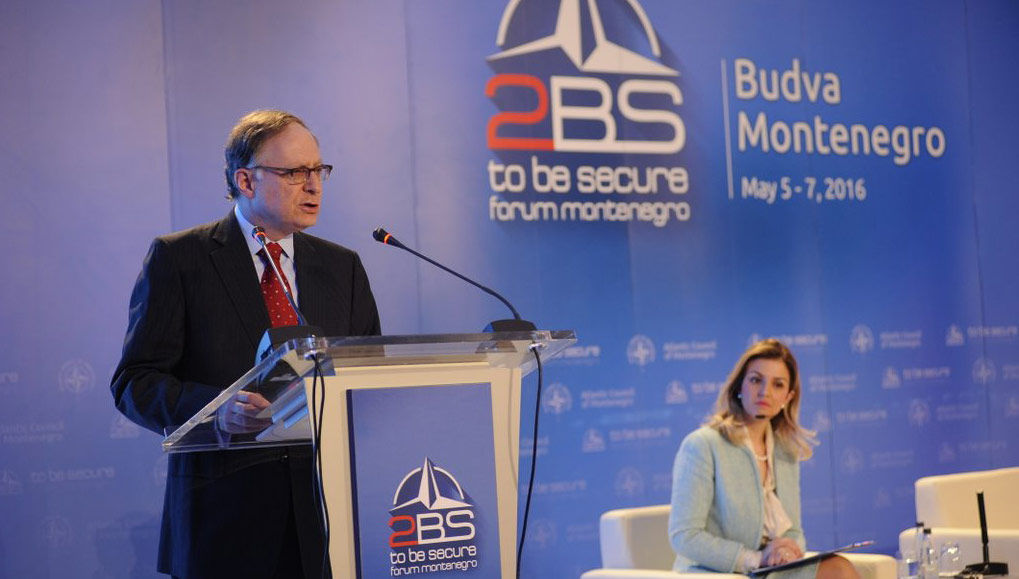
Becoming the 29th member of NATO will ensure Montenegro’s long-term stability, sovereignty and security, NATO Deputy Secretary General Ambassador Alexander Vershbow said during a visit to Montenegro on Friday (6 May).
Delivering a keynote speech at the To Be Secure Conference, Ambassador Vershbow stressed that NATO membership has enabled countries to overcome historic rivalries and work together to reach common goals, “Membership in NATO has enabled countries to pool their resources, to greatly enhance the defence bang that they receive for their tax-payers’ buck. It allows members to join up their forces, intelligence and expertise, making everyone safer”, Ambassador Vershbow said. He added that NATO membership gives Montenegro a seat at the table and the ability to shape NATO policy.
Addressing global security challenges, Vershbow stressed that NATO is responding to challenges on its southern and eastern flank by helping to tackle the root causes of instability in the Middle East and North Africa and by implementing the biggest reinforcement of NATO’s collective defence in two decades. The Ambassador said that NATO’s most significant role in the south is to build up the capacity of partner countries. “I hope that, at the upcoming NATO Summit in Warsaw, the Alliance will commit to an even more ambitious Defence Capacity Building program for our southern neighborhood,” the Ambassador said. “By projecting stability in this way, we can prevent conflict and avoid the need to deploy military forces”, he added. Turning to the east, the Deputy Secretary General stressed that Russia had violated international law by illegally annexing Crimea and through its subsequent military actions in eastern Ukraine. In response, NATO has increased the defence of its members in the East while remaining committed to dialogue with Russia.
Later this month, NATO Foreign Ministers are due to sign Montenegro’s Accession Protocol. Montenegro will then become an ‘invitee’ and will be able to attend almost all NATO meetings, including the Warsaw Summit, as an observer. Every NATO Ally must then ratify the Protocol in their national parliaments in order for it to become a full member.
During his visit, Ambassador Vershbow will also meet with the Minister of Defence of Montenegro, Prof. Milica Pejanović Đurišić.