
Close
Back


From now on you can download videos from our website
If you would also like to subscribe to the newsletter and receive our latest updates, click on the button below.
Enter the email address you registered with and we will send you a code to reset your password.
The password must be at least 12 characters long, no spaces, include upper/lowercase letters, numbers and symbols.
Click the button to return to the page you were on and log in with your new password.
13 May 2015
1 MIN READ
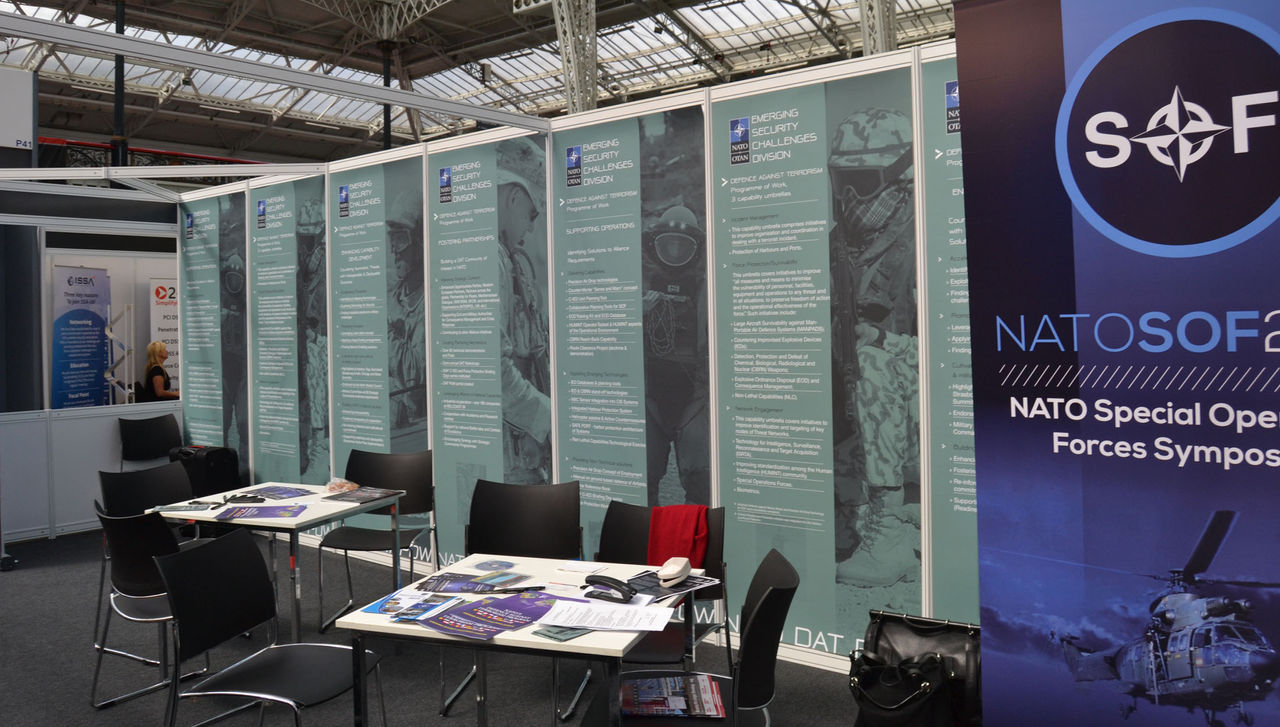
Experts and industry representatives from the field of counter-terrorism gathered at a workshop organised by NATO’s Defence against Terrorism Programme of Work. The event took place jointly with the Counter Terror Expo in London on 20 and 21 April 2015.
Through an exchange of information on the latest technological developments in industry, and priority capability development areas of the Alliance, the workshop was designed to find ways to enhance troop readiness and agility. Participants, including representation from the United Nations Mine Action Service (UNMAS), also reviewed progress of current Defence Against Terrorism Programme of Work (DAT POW) initiatives and examined opportunities for new project proposals.
Issues discussed included route clearance, countering and disposal of improvised explosive devices (IEDs) and explosive ordnance, as well as unmanned aerial vehicles, joint intelligence reconnaissance and surveillance, non-lethal capabilities, and chemical, biological, radiological and nuclear (CBRN) threats. Delegates also examined life-cycle management, ammunition safety, man-portable air defence systems (MANPADS), harbour protection, human intelligence and biometrics.
A stand provided information on the DAT POW as well as on Special Operations Forces, the NATO Communications and Information Agency, and several NATO Centres of Excellence.
Speaking at the Counter Terror Expo, Dr Jamie Shea, Deputy Assistant Secretary General for Emerging Security Challenges at NATO and DAT POW Coordinator outlined the security challenges facing NATO members in the light of developments in Syria, Iraq and Ukraine. He elaborated on NATO’s efforts to counter these threats and stressed the importance of international cooperation on terror threats.
“Once again, the Counter Terror Expo in London has been a great opportunity for NATO to engage with other international organisations and leading industry experts on how we can work better together to develop the future capabilities that the Alliance will need to stay ahead of the terrorist threat and ultimately defeat it,” said Dr Shea.