
Close
Back


From now on you can download videos from our website
If you would also like to subscribe to the newsletter and receive our latest updates, click on the button below.
Enter the email address you registered with and we will send you a code to reset your password.
The password must be at least 12 characters long, no spaces, include upper/lowercase letters, numbers and symbols.
Click the button to return to the page you were on and log in with your new password.
04 June 2014
2 MIN READ
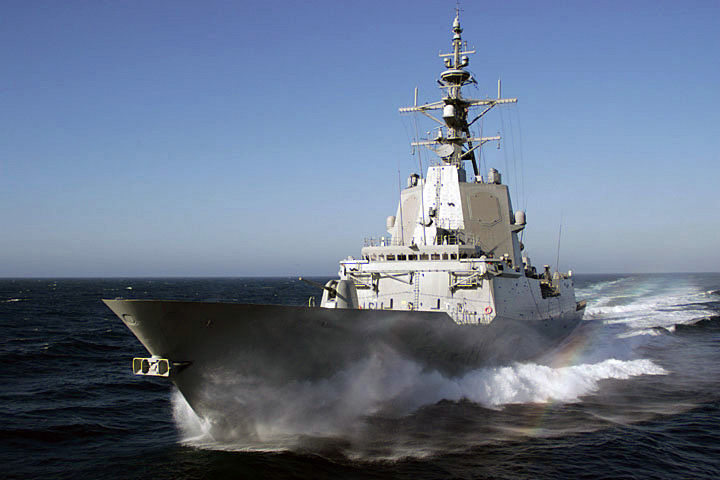
NATO Defence Ministers on Tuesday (3 June) decided to extend NATO’s counter-piracy operation Ocean Shield until the end of 2016.
Since August 2009, NATO ships have patrolled the waters off the Horn of Africa as part of Operation Ocean Shield. Their mission is to contribute to international efforts to fight maritime piracy and to help build the capacity of regional navies. Operation Ocean Shield works closely with other naval forces patrolling the Indian Ocean including US-led maritime forces and EU naval forces.
As part of the broad international effort, Ocean Shield has helped to significantly reduce pirate activity in the region. In 2011, pirates captured 24 ships and NATO recorded 129 pirate attacks off Somalia. In 2012, the number of attacks had fallen to 20. Not a single ship has been captured off Somalia since May 2012, and no merchant ships are currently held by Somali pirates.
Despite the successes, piracy remains a threat. NATO assesses that pirates continue to posses the intent and capacity to attack ships. NATO ships continue to detect attempts by pirates to capture vessels. In addition, the root causes of piracy inside Somalia remain.
Ocean Shields helps to protect one of the world’s busiest shipping lanes. Some 90 per cent of all global trade is carried by sea, about half of that passes through the Indian Ocean. In 2013, the World Bank estimated that piracy costs the world economy $18 billion per year. NATO counter-piracy efforts help reduce that cost.
Ships from Spain, Italy and Turkey are currently part of the NATO fleet which operates roughly from the Arabian Gulf to the north, the Seychelles in the south, the Gulf of Aden to the west and the Maldives in the east, covering an area greater than 2 million square miles or the size of Western Europe.
NATO vessels verify the activity of shipping off Somalia, separating out legitimate maritime traffic from suspected pirate vessels. Commercial ships that are transiting the area are in many cases escorted to ensure their safe passage. NATO ships can actively pursue suspected pirate ships to prevent attacks. NATO boarding teams can board a suspect ship to determine if pirates are on board. As a means of last resort, NATO vessels can use force to stop pirates. Any detained pirates are transferred as soon as possible to national law enforcement agencies.