
Close
Back


From now on you can download videos from our website
If you would also like to subscribe to the newsletter and receive our latest updates, click on the button below.
Enter the email address you registered with and we will send you a code to reset your password.
The password must be at least 12 characters long, no spaces, include upper/lowercase letters, numbers and symbols.
Click the button to return to the page you were on and log in with your new password.
23 October 2013
2 MIN READ
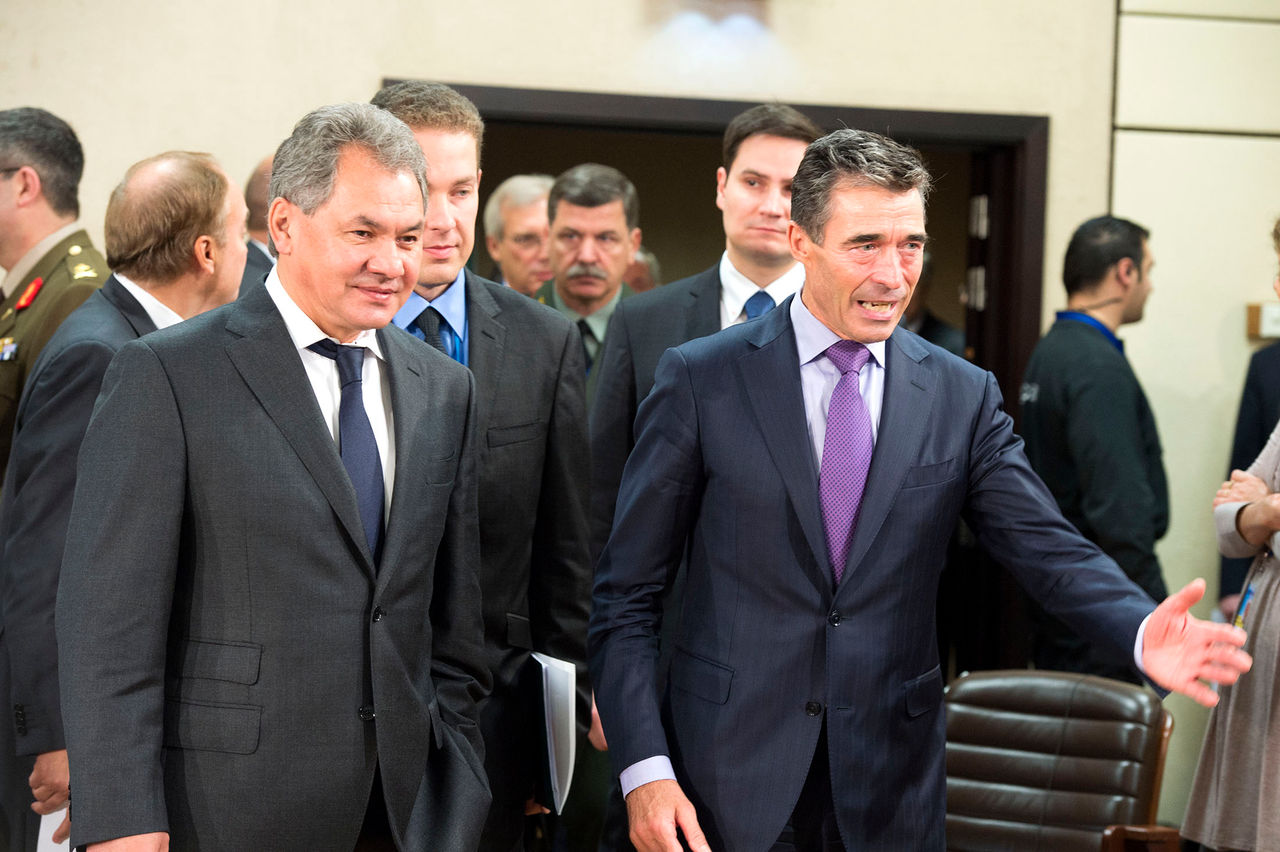
NATO Defence Ministers together with their Russian counterpart, Sergey Shoygu, discussed ways to widen their practical cooperation and exchanged views on pressing events on the international agenda, including Syria, during a NATO-Russia Council (NRC) meeting on Wednesday (23 October 2013). “We are doing more together an ever before and counter-terrorism is a centre-piece of our cooperation,” said NATO Secretary General Anders Fogh Rasmussen.
The ministers condemned the recent terrorist attack on a bus in Volgograd during the meeting. The Secretary General said that all ministers expressed their condolences to the victims and their families and loved ones affected by the 21 October 2013 bombing. “Nobody should doubt the determination of all members of the NATO-Russia Council to stand shoulder to shoulder against terrorism,” he said.
The NRC conducted a live counter-terrorism exercise over the skies of Poland, Russia and Turkey last month involving fighter aircraft, military personnel and command centres from the Arctic to the Black Sea. “The exercise was a great success. We now have a proven joint capacity to respond to the hijacking of civilian aircraft and we have showed how effective the NATO-Russia Council is in this field,” the Secretary General said. NATO and Russia are also working together to develop technology to detect explosives in public spaces such as airports, subways and train stations. This year the NRC took a big step forward in the area by testing the technology in real-life conditions. The NRC is also cooperating on a project to train Afghan helicopter technicians and another project to train counter-narcotics officers from Afghanistan, Pakistan and Central Asia.
Today the Council discussed plans to dispose of excess and unsafe ammunition in Russia. “I expect that we will be able to finalise the details and launch a new trust fund to support the project in the coming months,” said Mr. Fogh Rasmussen.
Regarding cooperation on missile defence, the Secretary General said that “it is no secret that we have not yet found the way to work together” in this area. “However, ministerial discussions are valuable in addressing existing concerns and we need to continue to engage frankly and directly to overcome our differences.”
The NRC also discussed ways to increase transparency on military exercises and international security issues, in particular the Middle East, including Syria.