
Close
Back


From now on you can download videos from our website
If you would also like to subscribe to the newsletter and receive our latest updates, click on the button below.
Enter the email address you registered with and we will send you a code to reset your password.
The password must be at least 12 characters long, no spaces, include upper/lowercase letters, numbers and symbols.
Click the button to return to the page you were on and log in with your new password.
10 June 2010
1 MIN READ
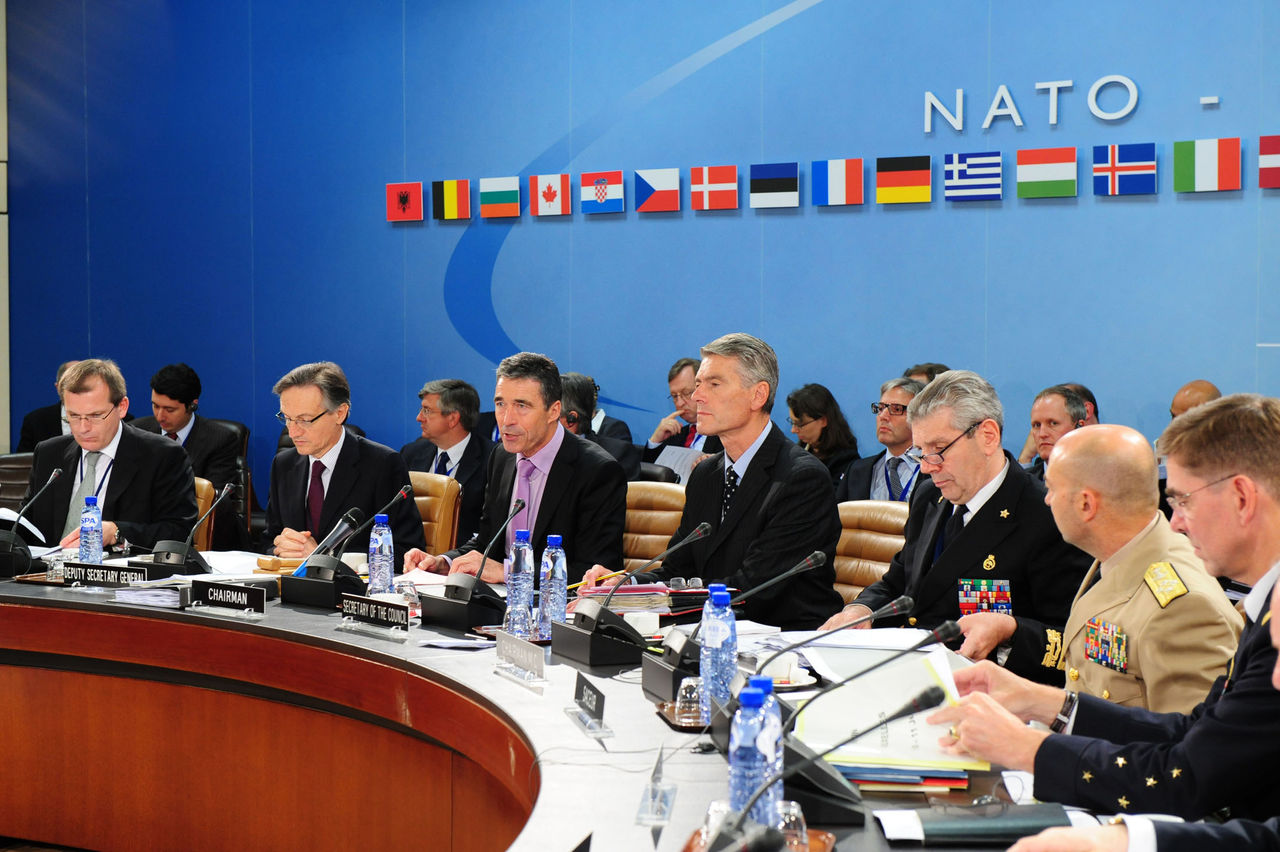
On 10 and 11 June, Defence Ministers from NATO and its partner countries' are meeting at the Alliance’s Headquarters in Brussels, Belgium, to discuss missions in Afghanistan and Kosovo, reform, missile defence and other key issues on NATO’s agenda.
NATO Secretary General Anders Fogh Rasmussen opened the first session, outlining the main topics. The mission in Aghanistan is the highest priority, he said. “Our aim is to help Afghanistan stand on its feet as a sovereign country that can defend itself against terrorism. Because a stable Afghanistan means a safer world.”
The Secretary General also mentioned missile defence, for which Allies are already developing a system to protect troops. National Armaments Directors confirmed that it is technically feasible to expand the system to cover NATO’s populations and territories as well, and at manageable extra costs. “We will discuss all that today with an eye to a decision on whether to do it, which will be taken this November in Lisbon.”
Speaking of the financial environment, he said, “we must ensure that tax payers get value for the money that is spent on defence. But our job is to guarantee that our citizens are defended. Which means spending enough on defence and spending smart.”
“Today we’ll take a hard look at prioritizing, economizing and multinationalizing. Prioritizing on what we need most, in particular deployable capability; economizing by cutting back on concrete and bureaucracy; and multinationalizing to pool our money where it makes sense to get capabilities we need, capabilities we wouldn’t otherwise be able to afford.”
The resource issue dominated the first session of the NATO Defence Ministers’ meeting. The Secretary General, summarizing the discussion at a press conference, drew attention to a shared view around the table on three points. Managing the effects of the financial crisis must involve cutting “fat and not muscle”. Second, Ministers agreed on a need for real priorities. And third, the process has to be coherent across the Alliance to avoid duplication and maximize the benefits of multinational projects.
The Secretary General also highlighted the meetings that would take place later on with the NATO-Ukraine Commission and the NATO-Georgia Commission.