
Close
Back


From now on you can download videos from our website
If you would also like to subscribe to the newsletter and receive our latest updates, click on the button below.
Enter the email address you registered with and we will send you a code to reset your password.
The password must be at least 12 characters long, no spaces, include upper/lowercase letters, numbers and symbols.
Click the button to return to the page you were on and log in with your new password.
08 December 2009
1 MIN READ
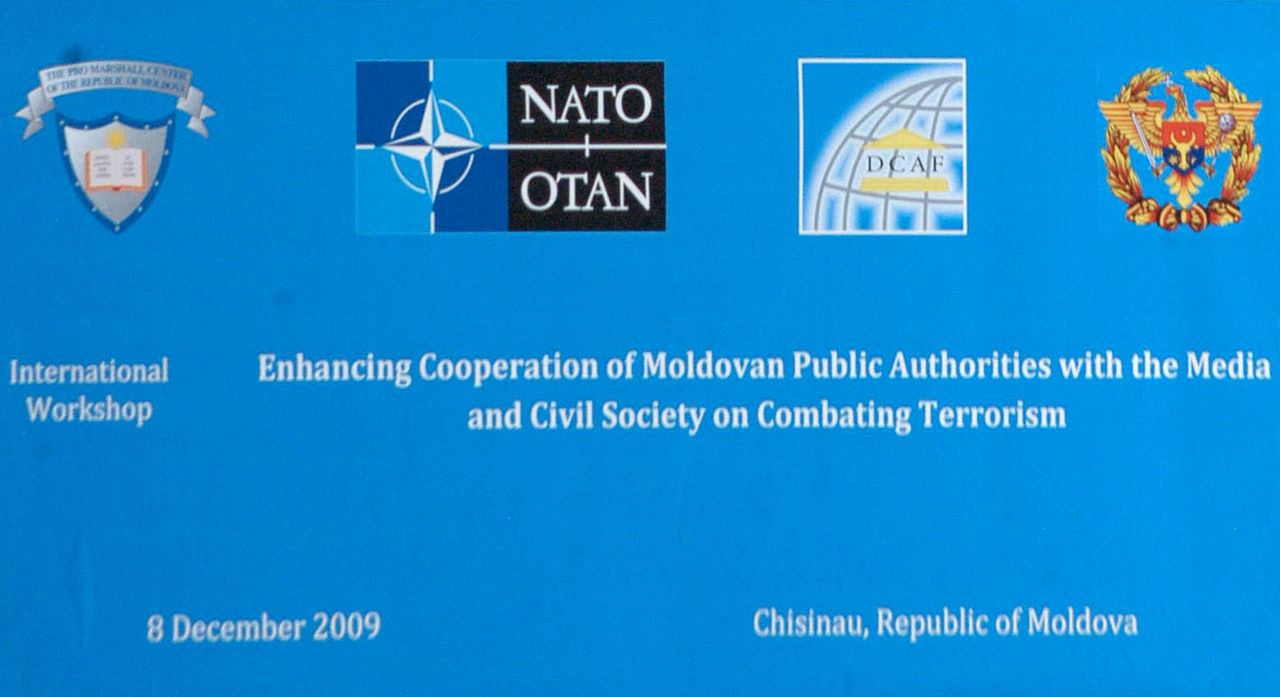
An International workshop taking place in Chisinau, Moldova, on 8 December, explored relations between relevant public authorities, media and civil society in combating terrorism, and looked at ways to improve co-operation and generate advice on practical steps to improve effectiveness.
Jointly organized by the Pro Marshall Center of the Republic of Moldova, the Ministry of Defence of the Republic of Moldova, NATO and the Geneva Centre for the Democratic Control of the Armed Forces (DCAF), the event gathered representatives of state institutions involved in combating terrorism, as well as members of the media and civil society involved in foreign and security affairs. Representatives of diplomatic missions accredited in Chisinau, as well as experts from NATO and selected Partnership for Peace countries, the OSCE and the NATO Parliamentary Assembly also attended.
“Today's workshop is an example of how Allies and Partners can cooperate to address [the challenge of terrorism]. If we are to be successful … civil society must be involved," said Mrs Dagmar de Mora Figueroa, NATO co-chair for the workshop.
“[This workshop] raises fundamental questions … [on] the need to safeguard our societies against the threat of terrorism but to do so in a way that involves civil society and maintains our fundamental rights and freedoms,” said Mr Simon Lunn, DCAF Senior Fellow and former Secretary General of the NATO Parliamentary Assembly.