
Close
Back


From now on you can download videos from our website
If you would also like to subscribe to the newsletter and receive our latest updates, click on the button below.
Enter the email address you registered with and we will send you a code to reset your password.
The password must be at least 12 characters long, no spaces, include upper/lowercase letters, numbers and symbols.
Click the button to return to the page you were on and log in with your new password.
16 November 2009
1 MIN READ
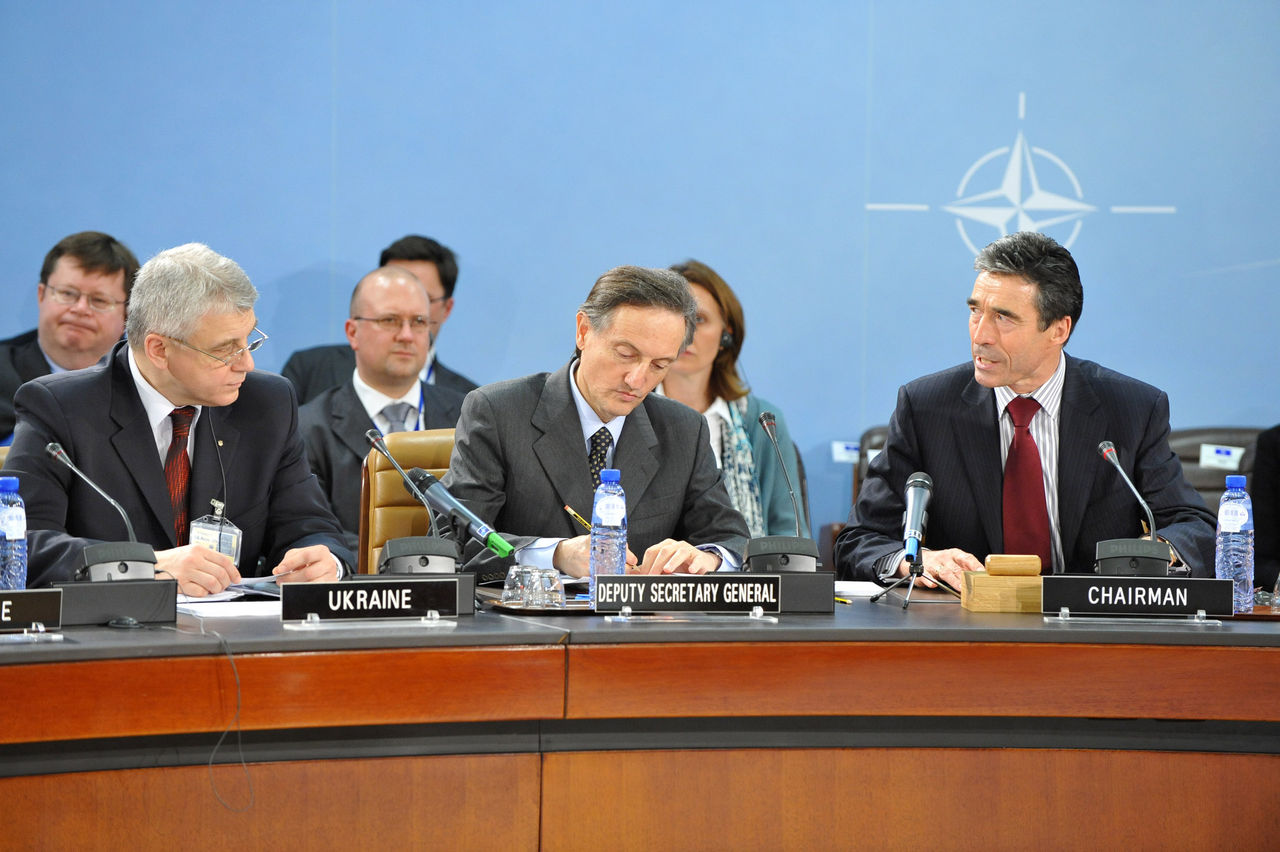
On 16 November, NATO Secretary General Anders Fogh Rasmussen chaired the seventh Informal High-Level NATO-Ukraine Consultations with the participation of Defence Ministers and other senior officials from Ukraine and NATO countries, at NATO HQ in Brussels.
Participants exchanged views on the ongoing transformation of Ukraine’s national defence and security structures and practices, particularly in the context of the current economic climate and Ukraine’s first Annual National Programme.
Earlier this year, Ukraine developed its first annual programme to outline the steps it plans to take to accelerate its Euro-Atlantic integration.
Secretary General Rasmussen noted the significant progress achieved so far on defence reform, but stressed that, even faced with the current economic climate, Ukraine must persist with its goals of internal reform and alignment with Euro-Atlantic standards.
In speaking at the opening of the meeting, Mr Rasmussen said the national programme was an important step because it will help Ukraine to modernise, to the benefit of the Ukrainian people.
He added that the Alliance will continue to support Ukraine along that journey.
Previous meetings in this format were held in Berlin (2002), Washington D.C. (2003), Warsaw (2004), Vilnius (2005), Sintra (2006) and Tallinn (2008).