
Close
Back


From now on you can download videos from our website
If you would also like to subscribe to the newsletter and receive our latest updates, click on the button below.
Enter the email address you registered with and we will send you a code to reset your password.
The password must be at least 12 characters long, no spaces, include upper/lowercase letters, numbers and symbols.
Click the button to return to the page you were on and log in with your new password.
20 May 2009
1 MIN READ
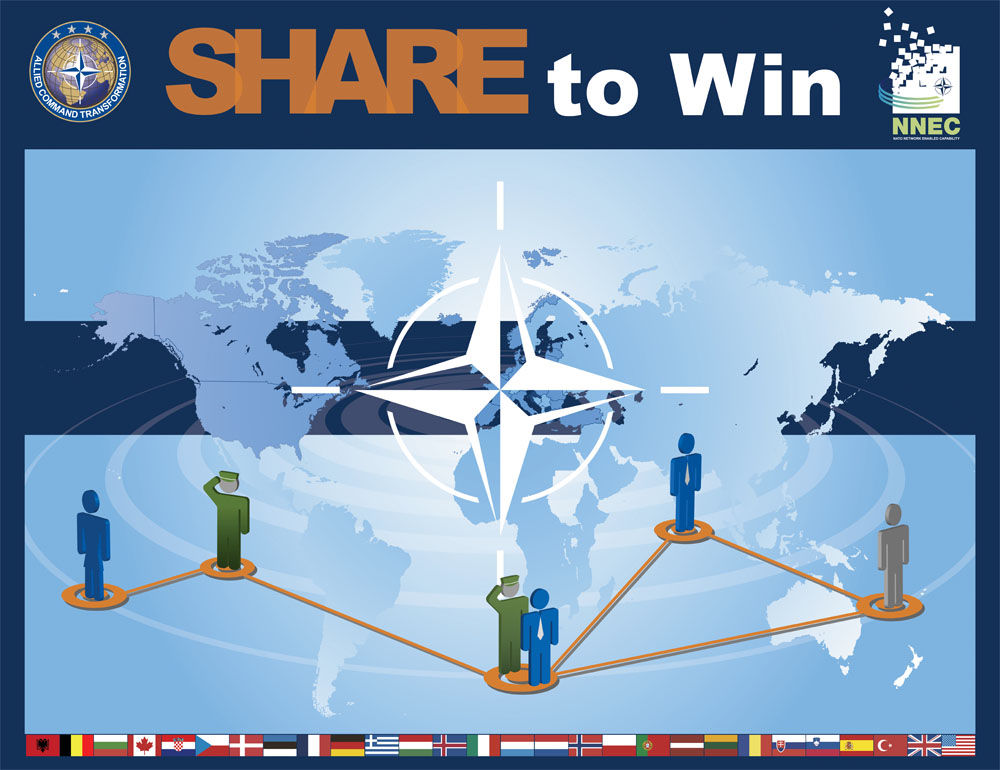
The NATO Consultation, Command and Control Board (NC3B), the senior multinational Committee advising the North Atlantic Council on Consultation, Command and Control (C3) policy, conducted its Spring Meeting on 19 - 20 May 2009 at NATO Headquarters in Brussels.
The Board met in Allied, Euro-Atlantic Partnership Council and NATO Network Enabled Capability (NNEC) format, with attendance of senior national C3 representatives from capitals, and the Group of National C3 Representatives to NATO. The NNEC session formally agreed on the new NNEC governance hierarchy for the Alliance.
In parallel to the meeting, the Supreme Allied Commander Transformation Headquarters provided an overview of the NNEC programme, which is the Alliance’s ability to federate various capabilities at all levels, military (strategic to tactical) and civilian, through an information infrastructure.