
Close
Back


From now on you can download videos from our website
If you would also like to subscribe to the newsletter and receive our latest updates, click on the button below.
Enter the email address you registered with and we will send you a code to reset your password.
The password must be at least 12 characters long, no spaces, include upper/lowercase letters, numbers and symbols.
Click the button to return to the page you were on and log in with your new password.
20 April 2009
3 MIN READ
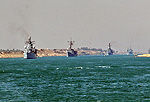
A NATO-led coordinated operation by ships and helicopters of different Task Forces resulted in the boarding of a confirmed pirate vessel, the disruption of their ability to conduct attacks and the seizure and disposal of equipment to carry out their attacks.
On Saturday 18th April, at approximately 3pm local time, a pirate skiff laden with weapons and a ladder approached the Norwegian oil tanker MV Front Ardenne and attempted board her. The Royal Fleet Auxiliary vessel Wave Knight, from the U.K. was close enough to lend assistance. Wave Knight looks like any other auxiliary vessel but is armed and crewed by trained military personnel. It came to the immediate assistance of MV Front Ardenne, and forced them to break-off their attack.
Those events initiated a coordinated NATO operation orchestrated by the Commander Standing NATO Maritime Group One (CTF410) and directly involving the ships HMCS Winnipeg, the USS Halyburton and their helicopters. The two helicopters provided alternating air cover and RFA Wave Knight gave chase as the fleeing pirates headed south away from the shipping lanes to their intended sanctuary at the Somali shore. After failing to cooperate through proven methods of disruption, Winnipeg’s helicopter, Palomino16 escalated its level of force, but to no avail. What the pirates could not have known was that the Canadian warship Winnipeg, on a NATO directed World Food Program (WFP) escort mission was bearing down on the pirate’s position. The SNMG1 commander Rear Admiral José Domingos Pereira da Cunha quickly devised a plan wherein a second ship, the USS Halyburton would assume escort duty freeing Winnipeg to intercept and disrupt the pirates.
In the black of night, with all navigation light extinguished, the Winnipeg set a course to intercept the skiff. After an extended chase that lasted several hours the seven pirates were forced to relent, stopping their boat and raising their hands in surrender. After being interrogated, disarmed they were set free according to national regulations.
“This entire operation is a textbook example of how interoperability ought to function,” said Winnipeg’s Combat Officer Lt(N) Al Compton. “To witness helicopters and ships from four different nations collaborating seamlessly in a night time mission and having a command element that ensures a high speed escape is foiled while maintaining close escort of a UN humanitarian food shipment, it does not get better than this for naval operations.”