
Close
Back


From now on you can download videos from our website
If you would also like to subscribe to the newsletter and receive our latest updates, click on the button below.
Enter the email address you registered with and we will send you a code to reset your password.
The password must be at least 12 characters long, no spaces, include upper/lowercase letters, numbers and symbols.
Click the button to return to the page you were on and log in with your new password.
12 March 2009
1 MIN READ
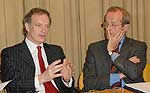
In collaboration with NATO’s Public Diplomacy Division, the Spanish Institute for International Relations and Foreign Policy (INCIPE) organized a working breakfast in Madrid on 12 March. The event is part of a series of activities held by INCIPE in order to promote debate in the run-up to the Strasbourg/Kehl Summit.
Jonathan Parish, Senior Planning and Speechwriter Officer at NATO, provided an overview of the political agenda for the Summit and answered a number of related questions, highlighting the relevance of the Declaration on Alliance Security to be adopted then.
The participants -- think-tankers, officials, academics, foreign diplomats from Allied and partner nations, members of NGOs and opinion-makers -- discussed a wide range of topics, particularly Afghanistan, enlargement, energy security, implications of climate changes for security and other issues. NATO’s relations with the UN and the EU, as part of the Comprehensive Approach, were also key on the agenda.