
Close
Back


From now on you can download videos from our website
If you would also like to subscribe to the newsletter and receive our latest updates, click on the button below.
Enter the email address you registered with and we will send you a code to reset your password.
The password must be at least 12 characters long, no spaces, include upper/lowercase letters, numbers and symbols.
Click the button to return to the page you were on and log in with your new password.
06 February 2009
2 MIN READ
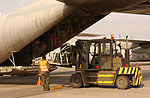
The first seminar on the transport of dangerous goods will take place in Brussels’ Royal Military Academy, Belgium, on 10 -12 February. Civilian and military experts from NATO countries will take stock of what has been done and what remains to be done in safeguarding the transport of dangerous goods, especially in the field of training and standardization.
 Dangerous goods are any solid, liquid or gas that can harm people, other living organisms, property, or the environment. The United Nations (UN) recommendations on the transport of dangerous goods divide them into 9 classes, based on their chemical characteristics. The UN recommendations or Orange Book are also the basis for all national and international regulations ensuring the safe transportation and handling of dangerous goods.
Within NATO these aspects are taken care of by the CNAD Ammunition Safety Group (AC/326) sub-group 4. These transport experts have the mandate to identify and reduce risks related to the transportation of military ammunition and explosives, and develop guidelines, manuals and standardization agreements (STANAGs) based on existing and evolving national and international rules and regulations. They are supported in their work by a NATO project office, the Munitions Safety Information Analysis Center (MSIAC), and the European Air Group (EAG).
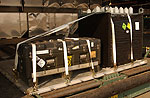 The combined use of military and civil assets and services for the transportation of dangerous goods has now become common practice. This is also influencing agreements with non-NATO nations regarding, for instance, border crossings or host nations support issues.
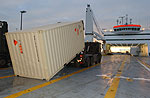 In order to respond to NATO’s call for interoperability the CNAD/AC326 group is now updating the Allied Ammunition Safety and Technical Publication (AASTP-2) to reflect the willingness of NATO members to make maximal use of the civilian rules and regulations but still be flexible enough to cope with the military specifics.
They have also expanded their scope of work to all 9 classes of dangerous goods and are developing practical use for all modes of transport with the NATO Standardization Agency (NSA).
The seminar taking place in Brussels will provide another opportunity for this small community of experts to share best practice and seek further ways to harmonize civilian requirements with those unique to the military.