
Close
Back


From now on you can download videos from our website
If you would also like to subscribe to the newsletter and receive our latest updates, click on the button below.
Enter the email address you registered with and we will send you a code to reset your password.
The password must be at least 12 characters long, no spaces, include upper/lowercase letters, numbers and symbols.
Click the button to return to the page you were on and log in with your new password.
02 April 2008
2 MIN READ
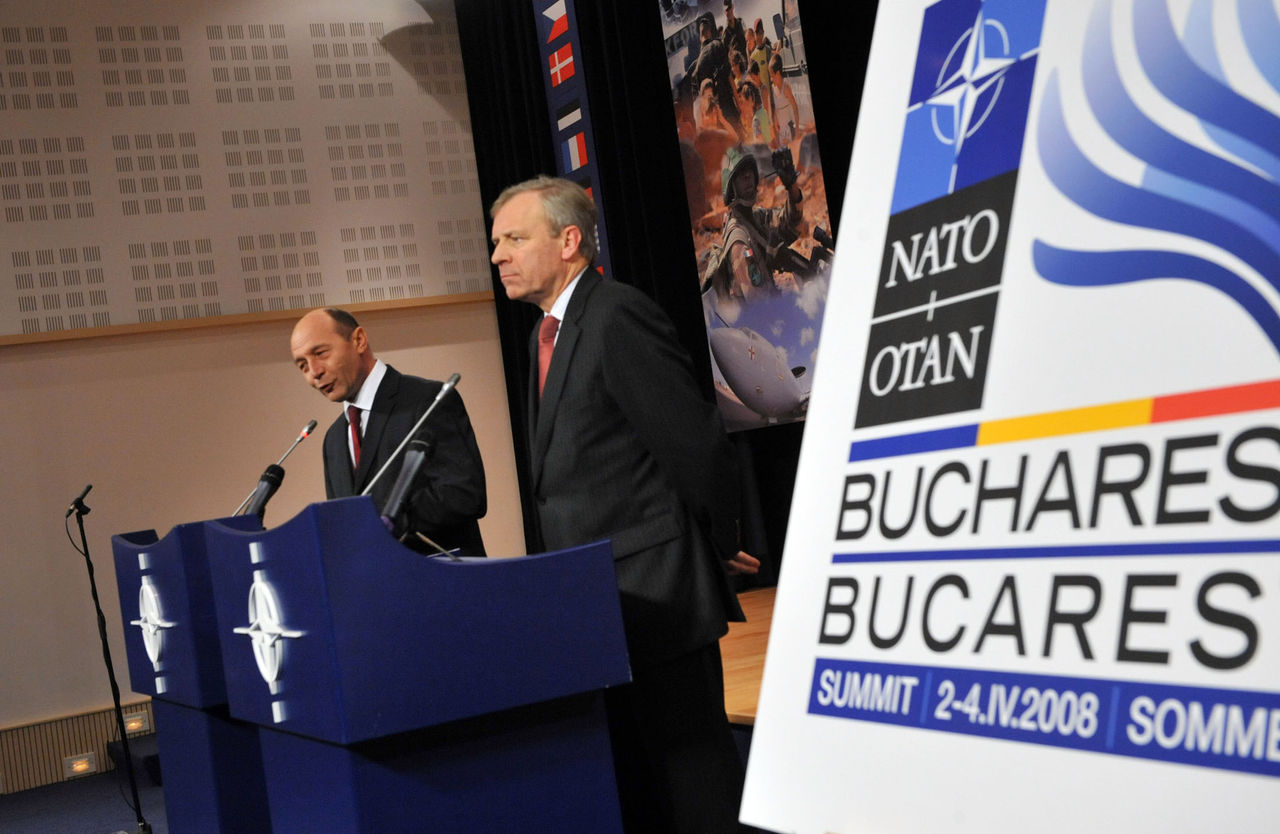
Heads of State and Government from the 26 NATO nations, partners and other representatives from major international institutions will meet in Bucharest, Romania on 2-4 April to discuss NATO enlargement and operations in Afghanistan and Kosovo.
The three-day Summit will include meetings at NATO’s highest level in different formats such as the North Atlantic Council (NAC), the Euro-Atlantic Partnership Council (EAPC), the NATO-Russia Council (NRC) and the NATO-Ukraine Commission (NUC).
The Summit will kick off with a working dinner for NATO Heads of State and Government on the evening of 2 April. Discussions related to NATO operations, enlargement and the development of partnerships are expected.
The discussions will continue the following morning with the meeting of the NAC. Additional topics may include outreach to the Western Balkans and defence transformation.
NATO enlargement will be high on the agenda. Allied leaders are expected to consider the membership of aspirant countries that meet the NATO’s performance-based standards and contribute to Euro-Atlantic security, as outlined in the Membership Action Plan (MAP), during the NAC meeting.
This will be followed by the Euro-Atlantic Partnership Council (EAPC) working lunch. The EAPC brings together 49 NATO and Partner countries for dialogue and consultation on political and security-related issues. It provides the overall political framework for NATO’s cooperation with Partner countries and the bilateral relationships developed between NATO and individual Partner countries with the Partnership for Peace programme.
At present, three countries - Albania, Croatia and the former Yugoslav Republic of Macedonia1- are members of the MAP. In addition, both Georgia and Ukraine are currently engaged in an Intensified Dialogue with the Alliance focusing on their membership aspirations and related reforms.
During the afternoon session on Afghanistan, NATO Heads of State and Government and non-NATO nations contributing troops to the International Security Assistance Force (ISAF) will be joined by Afghan President Karzai, Secretary-General of the UN Ban Ki-Moon, and other major international organizations working in Afghanistan, including the European Union and the World Bank.
The broad high-level international participation at the Summit demonstrates that supporting Afghanistan is not only a military matter, but also requires a comprehensive approach in bringing together improvements in governance, reconstruction, development and security.
The Summit will conclude on 4 April with the meeting of the NATO-Ukraine Commission, followed by the NATO-Russia Council, which will include the participation of President Putin.