
Close
Back


From now on you can download videos from our website
If you would also like to subscribe to the newsletter and receive our latest updates, click on the button below.
Enter the email address you registered with and we will send you a code to reset your password.
The password must be at least 12 characters long, no spaces, include upper/lowercase letters, numbers and symbols.
Click the button to return to the page you were on and log in with your new password.
25 October 2007
1 MIN READ
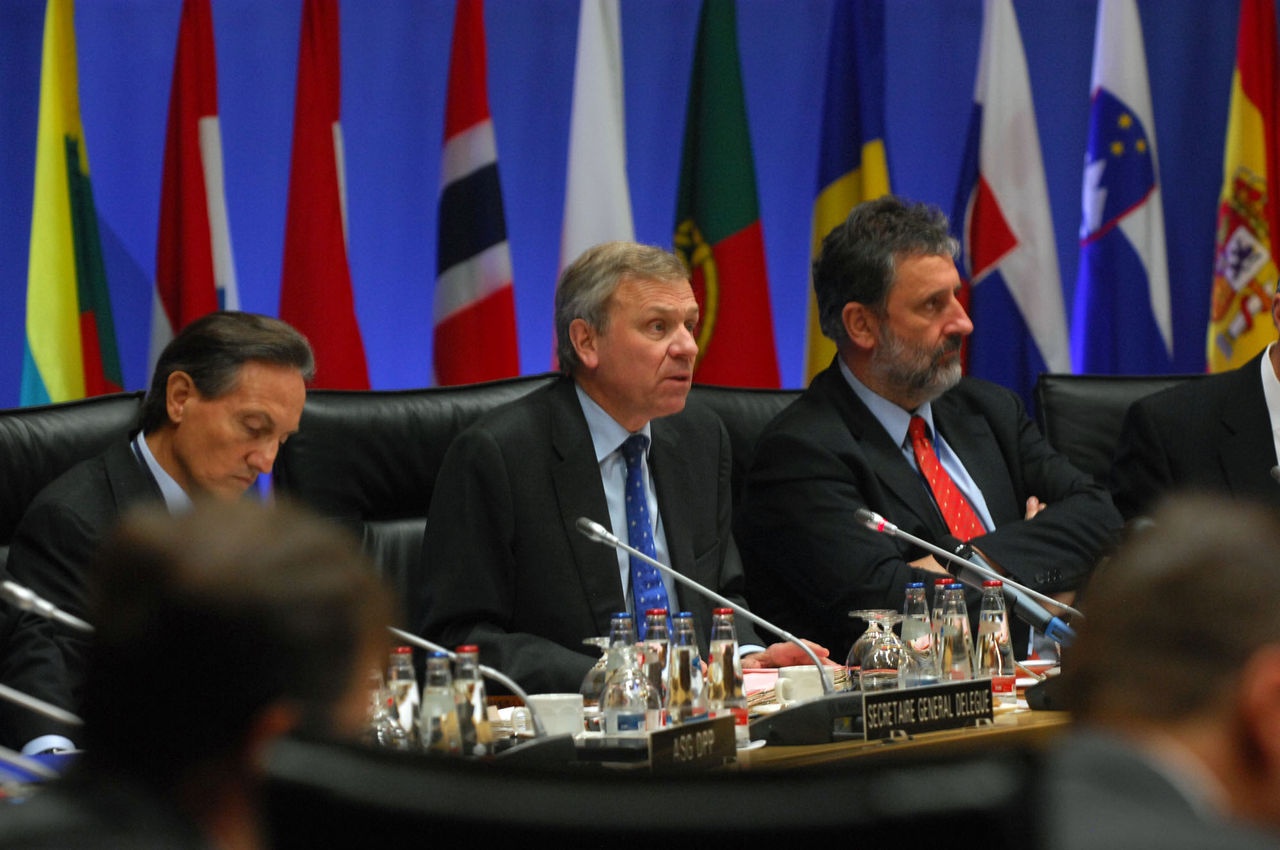
NATO Defence Ministers started their deliberations early on 25 October. At their morning session in the seaside resort of Noordwijk in the Netherlands they focused on transformation issues.
Against the background of the growing pressure and burden being placed on Allied forces participating in many missions across the world, Ministers looked at ways of alleviating the situation.
Force planning procedures, financial arrangements, and reserve forces issues were all debated. These discussions could be seen at the basis for consultations which will lead to fairer burden sharing.
More specifically, Ministers gave the green light to develop a graduated approach to building up the NATO Response Force (NRF), based on a robust permanent core. They reaffirmed their full commitment to the NRF concept and the ability of the NRF to perform the whole spectrum of agreed operational tasks.
Ministers also looked ahead and exchanged views on developing policies and critical capabilities to deal with modern security challenges. Missile defence, cyber defence, elements of energy security were identified as issues where important work will be undertaken in preparation for the NATO summit in Bucharest in April next year.