
Close
Back


From now on you can download videos from our website
If you would also like to subscribe to the newsletter and receive our latest updates, click on the button below.
Enter the email address you registered with and we will send you a code to reset your password.
The password must be at least 12 characters long, no spaces, include upper/lowercase letters, numbers and symbols.
Click the button to return to the page you were on and log in with your new password.
17 December 2015
1 MIN READ
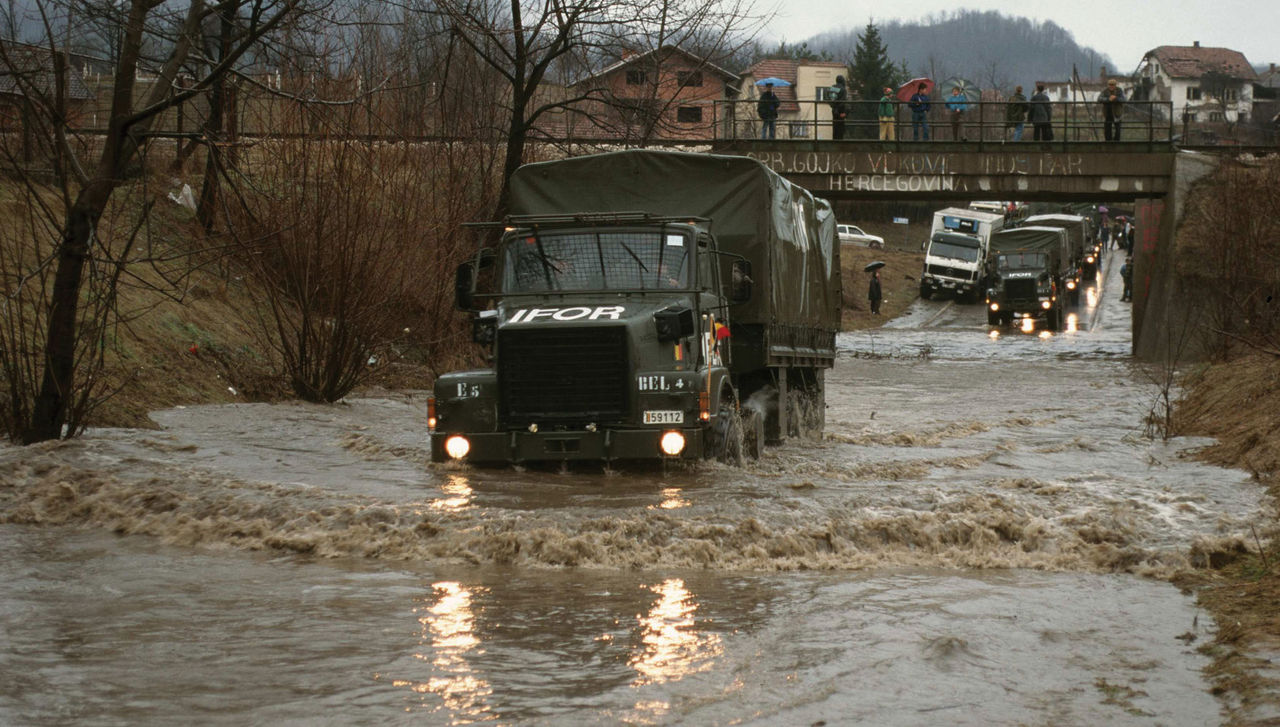
After the break-up of Yugoslavia during the early 1990s, multi-ethnic Bosnia and Herzegovina was thrown into bloody and protracted conflict.
NATO first became involved in the Bosnian conflict in 1992, at the request of the United Nations (UN), to enforce economic sanctions, an arms embargo and a no-fly zone. These measures helped reduce the fighting and save lives, but proved insufficient to end the conflict.
In February 1994, after a deadly mortar attack on a Sarajevo market place, the UN asked NATO to conduct airstrikes against Bosnian Serb air defences, command and control installations and ammunitions facilities. These airstrikes were instrumental in bringing the parties to the negotiating table at Dayton, Ohio (United States) and ending the war.
On 20 December 1995, just six days after the signing of the Dayton Peace Agreement, NATO deployed a UN-mandated Implementation Force (IFOR). It was NATO’s first major peacekeeping operation.